Where to Eat in Sanur: Local Warungs, Fresh Seafood and the Beachfront Scene
From pre-dawn market breakfasts to grilled fish eaten at the water's edge, Sanur's food scene rewards those who look beyond the hotel buffet. This is the honest guide — what to eat, where locals actually go, and which beachfront tables are worth it.
Sanur's food scene does not have a publicist. It does not appear in many best-of lists and it generates few viral food posts — the lighting at a good warung is rarely Instagram-ready. What it has instead is something more valuable: an intact local eating culture sitting within five minutes' walk of the beach, supplemented by a beachfront strip where the seafood is genuinely fresh and the prices remain honest by Bali standards.
This is not Seminyak, where the restaurant economy is oriented almost entirely around visitors. Sanur feeds its own population first and visitors second, and the result is a range of options that covers every budget and every hour of the day.
Morning: The Market and the Promenade
The earliest and most authentic meal in Sanur is at Pasar Sindhu, the wet and dry market that opens before 6am just off the beach on the eastern side of Jalan Danau Tamblingan. Fishermen selling the overnight catch, women laying out tempeh and tofu, stalls with pre-wrapped nasi bungkus — the market operates at full speed before the tourist day begins.
The cooked-food section of Pasar Sindhu serves bubur ayam (rice porridge with chicken and crispy shallots), nasi campur (rice with small portions of multiple dishes), and glasses of kopi tubruk for under 15,000 IDR. Eat at the plastic tables in the market or take it to the promenade and eat watching the boats. This is the Sanur breakfast that most visitors miss entirely.
For those who prefer a more leisurely morning, Kopi Bali House on Jalan Danau Tamblingan does Balinese single-origin coffee seriously — the cold brew and the pour-overs are made with care, and the food menu (avocado toast, banana pancakes, nasi goreng) is well-executed without being precious. The courtyard fills with a mix of expats, digital workers, and travelling families between 7am and noon.
Cafe Batu Jimbar is a Sanur institution — a garden café in a walled compound on Jalan Danau Tamblingan that has been serving breakfast to a loyal crowd for over two decades. The Indonesian breakfast plates (nasi goreng, mie goreng, bubur) are made properly, the garden is shaded and quiet, and the freshly squeezed juices justify the slightly higher price point.
The Local Warung Circuit
Sanur's Jalan Danau Tamblingan and the small lanes branching east from it toward the beach hold most of the serious local warungs. These are family-run, open-fronted, and priced for the people who live here rather than the people passing through.
Warung Pantai Indah is an unassuming room right on the beach path with perhaps eight tables and a changing daily menu written on a board. The sate lilit here — minced fish and coconut mixed onto lemongrass skewers and grilled over charcoal — is among the best in the area. Order it with a cold Bintang and a bowl of the peanut sauce and take your time. Main dishes run 35,000–60,000 IDR.
Sate lilit deserves a particular mention as Sanur's signature dish. Unlike the skewered pork or chicken sate found everywhere in Bali, sate lilit is a Balinese coastal preparation — minced fish (traditionally Spanish mackerel, though mixed fish is common) combined with grated coconut, kaffir lime leaf, galangal, and a long spice paste, then wrapped around a bamboo or lemongrass stick and grilled. The texture is softer than regular sate; the flavour is distinctly coastal.
Warung Mak Beng — established 1941, still run by the same family — is genuinely one of the most famous warungs in Bali, though it has retained its directness: you sit, you get the fish (fried or grilled, depending on the day's catch), you eat. There is no menu. The fish soup, the sambal matah, and the steamed rice come with. Price is fixed at around 50,000 IDR. Arrive before noon or after 2pm; the midday queue is long.
Seafood at the Beach
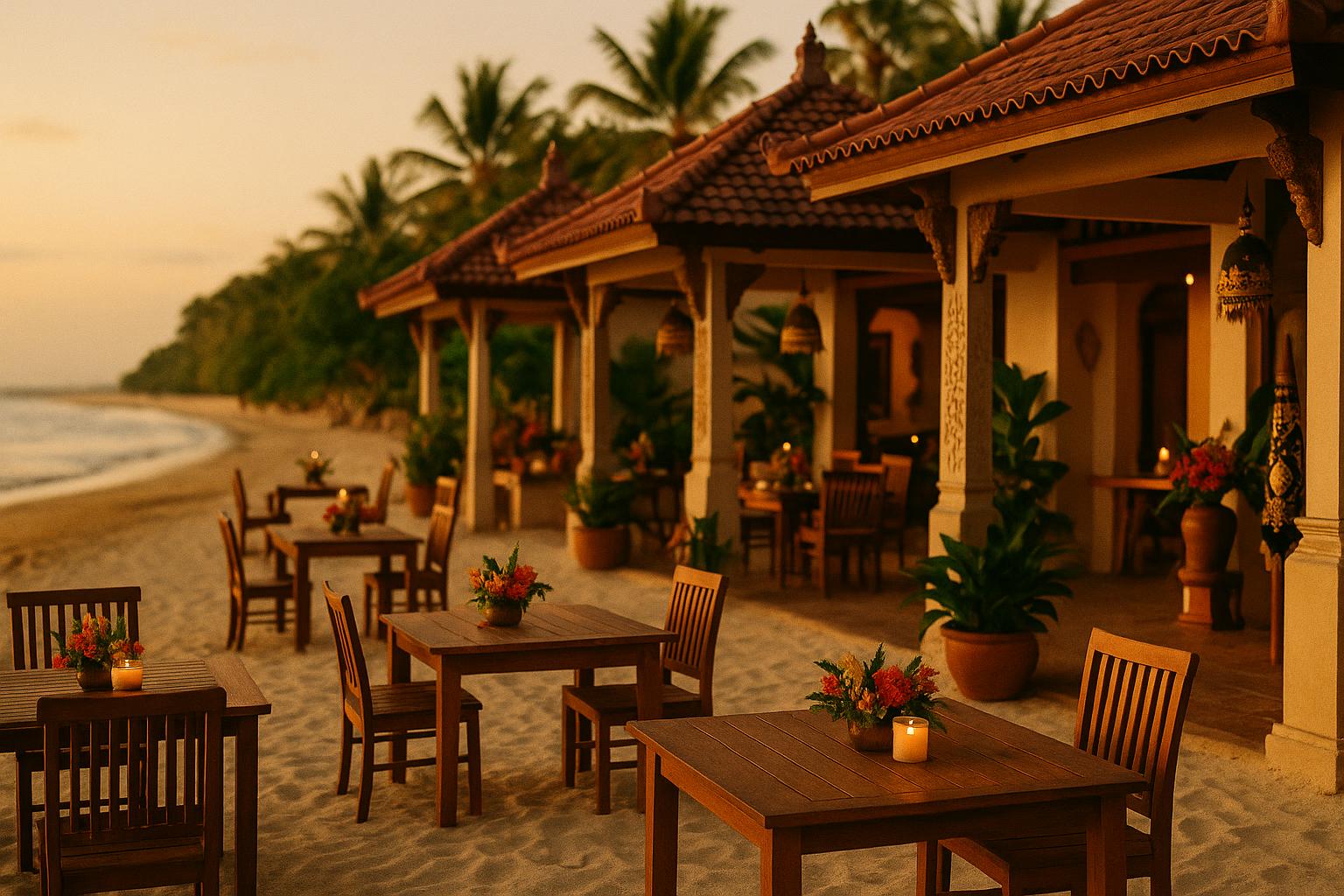
The beachfront strip in Sanur has its share of tourist-facing restaurants, but the seafood at the better ones is legitimately good — the boats in the lagoon supply it directly, and the distance from the kitchen to the source is shorter here than almost anywhere else in the south.
Stiff Chilli on the promenade does grilled whole fish with a rotating selection of sambal at prices that remain fair (100,000–180,000 IDR for a full fish with sides). The outdoor seating faces the beach. The red snapper grilled with sambal matah (raw shallot and lemongrass sambal) is the order.
Massimo stands out for those wanting Italian with a long Bali pedigree — the pasta is made in-house, the pizza dough is proofed properly, and the gelato is the reason the queue outside extends onto the pavement most evenings. It fills a specific need and fills it well.
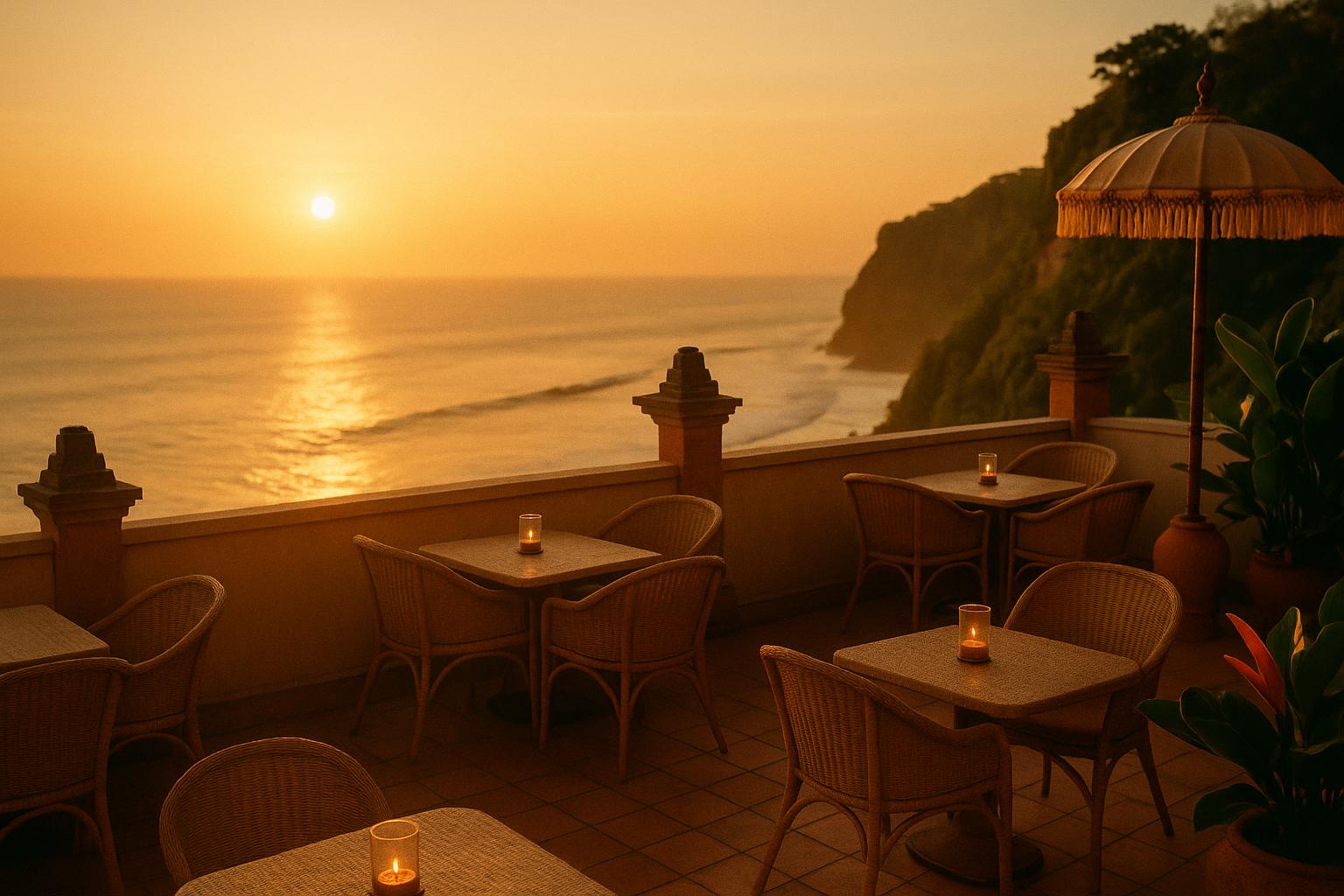
Three Monkeys Beach Club anchors the mid-range beachfront: sunbeds, cocktails, grilled seafood platters, and a view across the lagoon to Nusa Penida. The food is not revelatory but it is consistent, the prices are transparent, and the setting at sunset (or rather, late afternoon on the eastern shore) is reliably good.
Evening: What Locals Do
Sanur's local population eats dinner early and mostly at home or at neighbourhood warungs that are not on any tourist map. But the Sanur Night Market — which assembles near the beach in the early evening — is a worthwhile destination for anyone who wants to eat the way Sanur's residents eat: babi guling (suckling pig), nasi campur, bakso (meatball soup), and fresh-pressed juices at 20,000–40,000 IDR per plate.
Pregina Warung is one of the better evening options that bridges the gap between local and visitor — traditional Balinese cooking in a clean setting, with duck (bebek betutu), pork, and fish preparations done properly. The slow-cooked bebek betutu (duck marinated in a full spice paste and wrapped in banana leaf) takes hours to prepare; order in advance if you want it for dinner.
Practical Guide
Budget breakdown: Market breakfast 10,000–20,000 IDR. Warung lunch 40,000–70,000 IDR per person. Mid-range beachfront dinner 150,000–300,000 IDR per person with drinks. Nothing in Sanur requires the Seminyak budget unless you choose the few fine-dining outliers.
What to order: Sate lilit, grilled whole fish with sambal matah, nasi campur from the morning market, babi guling from the night market, bebek betutu at a proper warung.
When to go: The market peaks between 6am and 8am. Warungs serve lunch from 11am to 2pm and fill up fast. The night market runs from roughly 5pm to 10pm.
Sanur's food scene rewards the curious and doesn't punish the budget. It is one of the few places in southern Bali where eating well does not require choosing between authenticity and comfort — both exist here, often within the same street.
See the /region/sanur guide for the full area overview including accommodation and activities.