Uluwatu's Secret Beaches: Padang Padang, Bingin and the Limestone Coves
Carved into the white limestone cliffs of the Bukit Peninsula, Uluwatu's beaches are among the most dramatically beautiful in Bali — hidden down flights of steep stairs, tucked inside narrow rock passages, and accessible only to those willing to make the descent. Here is how to find them, and what awaits when you do.
Carved into the white limestone cliffs of the Bukit Peninsula, Uluwatu's beaches are among the most dramatically beautiful in Bali — hidden down flights of steep stairs, tucked inside narrow rock passages, and accessible only to those willing to make the descent. The effort is always worth it. These are not polished resort beaches; they are raw, naturally enclosed coves where the turquoise water is clear, the surf is real and the atmosphere ranges from quietly meditative to full-on social surf scene.
Here is a guide to the key beaches of the Uluwatu area — how to get down, what each one is like, and who each suits best.
Padang Padang: Bali's Most Famous Small Beach
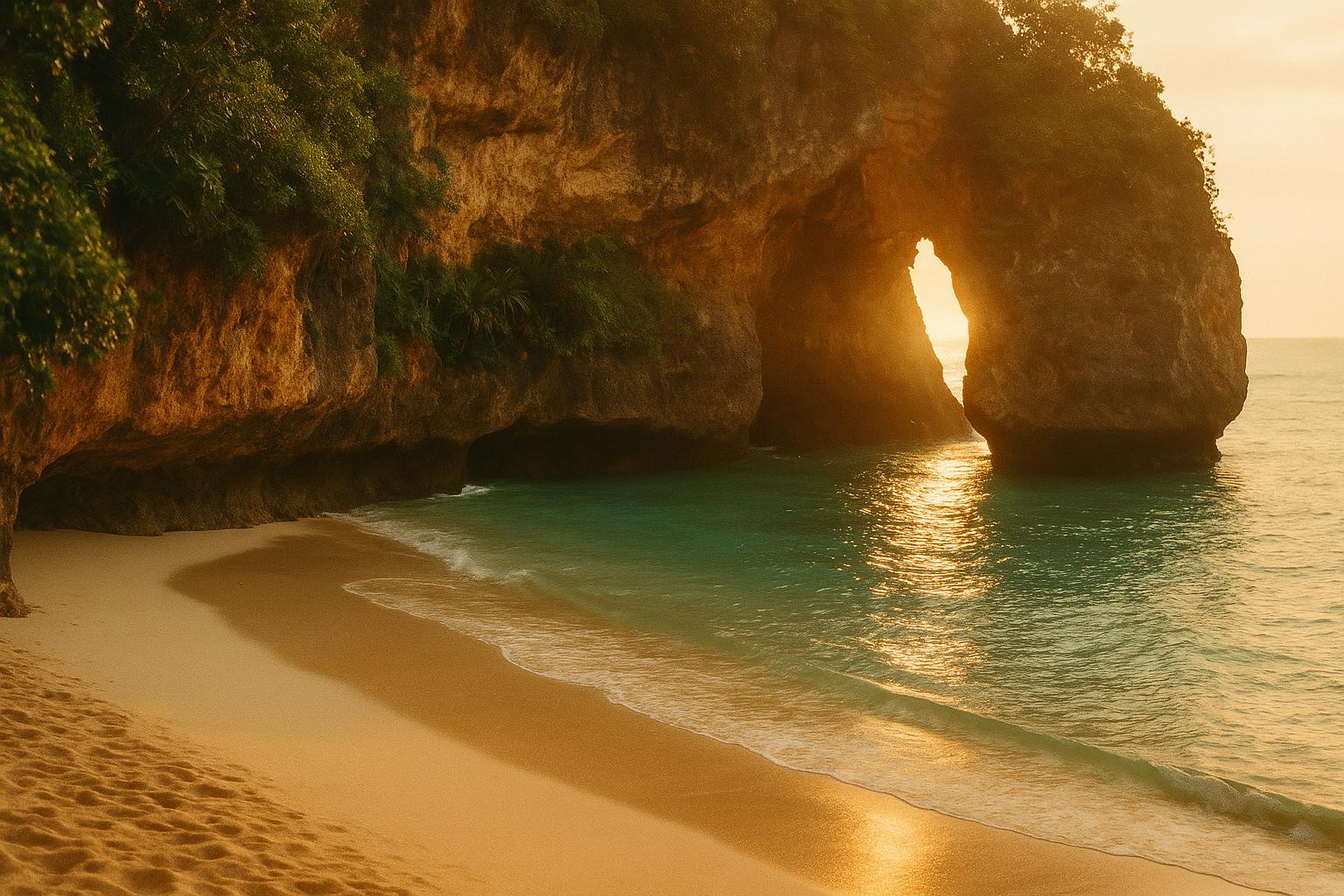
Padang Padang Beach is reached through a narrow crack in the cliff — literally a passage cut through the rock, wide enough for one person at a time, descending via a short staircase to a small, crescent-shaped beach hemmed in by boulders and overhanging cliff walls. The intimacy of the setting is startling: the beach is compact, the water extraordinarily clear, and the surrounding limestone creates a kind of natural amphitheatre.
The beach became internationally known after featuring in the film Eat Pray Love, which brought a wave of visitors that has since levelled into a steady, year-round crowd. It is busiest between 10am and 3pm; arrive before 9am or after 4pm and it is a different experience entirely.
There is good snorkelling around the boulders at the southern end of the beach — bring a mask and fins. The surf breaks offshore at the main Padang Padang reef (a separate beach further along the road), so the small cove itself is relatively protected and swimmable for most of the year. During the wet season or on large swell days, the entry to the cove can get surgy — assess carefully before swimming.
A small entrance fee applies (currently around IDR 15,000). Warungs at the top sell cold drinks and simple meals. There are no sunbeds for hire — bring a towel and a willingness to share space on the sand.
Bingin: The Surf Village with a Soul
Bingin Beach has a different character to Padang Padang — longer, looser, and built around a small community of surf-oriented cafés, guesthouses and warungs that tumble down the cliff face. Getting there requires navigating a steep concrete path and then a series of uneven steps that become increasingly precarious in the final stretch — it is manageable for anyone reasonably sure-footed, but genuinely tricky with a board under your arm.
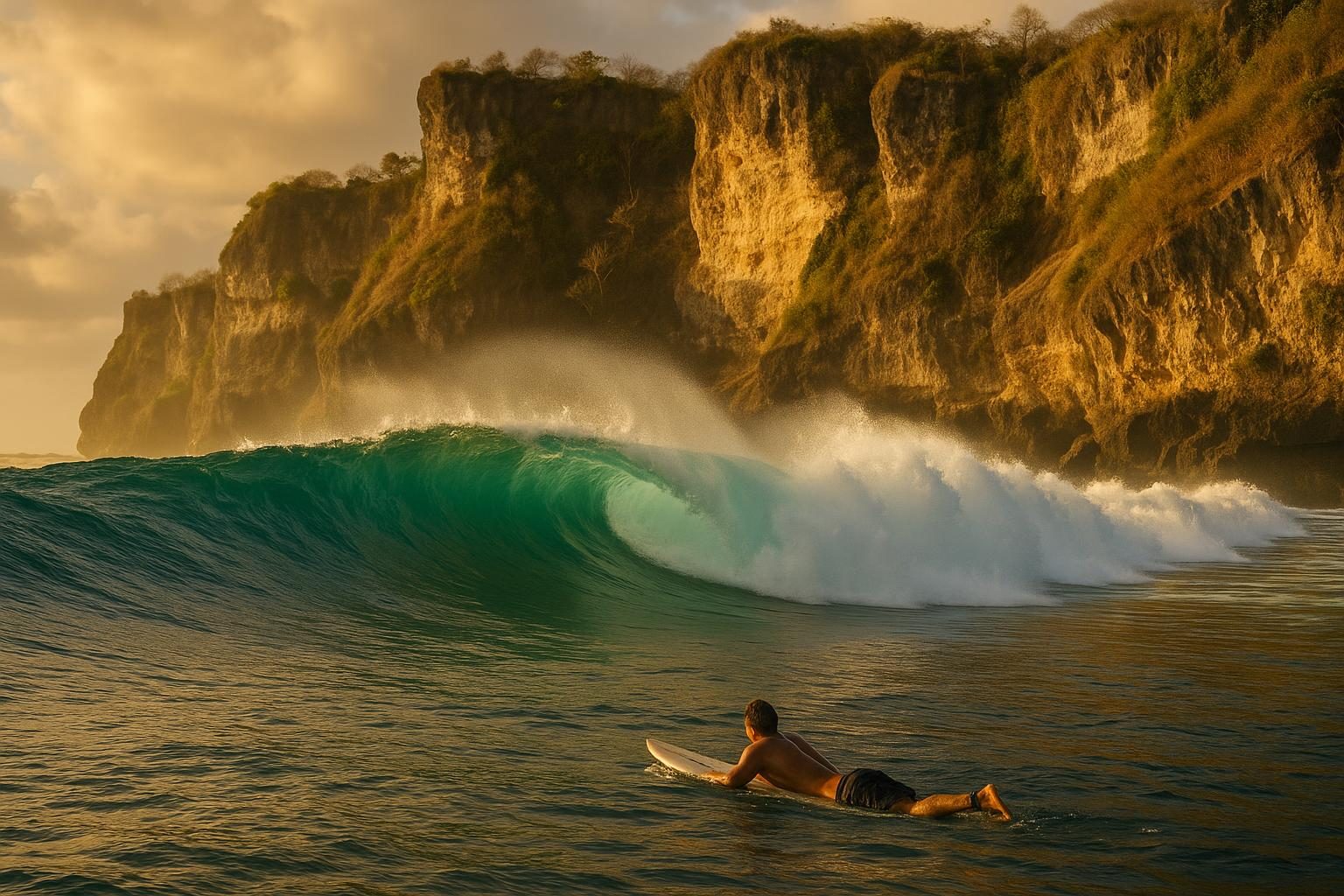
The beach sits at the base of a dramatic cliff and faces a left-hand reef break that is one of the better waves on the peninsula for confident intermediate surfers. At high tide, the beach almost disappears; at low tide, the reef is exposed and the rock pools are interesting. The water colour here — that specific shade of layered green and blue — is exceptional.
For non-surfers, Bingin offers a relaxed afternoon: cold Bintang at one of the cliff-clinging warungs, a swim when the water is calm, and the pleasure of watching the surf break just offshore. Single Fin bar sits at the top of the cliff and is one of the best sunset-watching spots on the peninsula even if you never make it to the beach below.
Suluban: The Cave Beach Under Uluwatu
Suluban Beach — also called Blue Point Beach — is reached via a long descent through warungs selling surf gear and cheap food, ending in a scramble through a series of sea caves and passages in the limestone. At high tide, the cave passages are flooded; at low tide, you can work your way through to a narrow, rocky cove directly beneath the main Uluwatu cliff.
This is the beach that surfers use to access the Uluwatu break — the famous cave entry is here. As a swimming beach, it is exposed and rocky, and best avoided unless you are surfing. But the experience of walking through the caves, hearing the ocean echo in the chambers, and emerging into the light beneath those cliffs is something else entirely. Come at mid to low tide, bring sandals with grip, and treat it as an experience rather than a beach day.
Nyang Nyang: The One That Rewards the Walk
Nyang Nyang Beach is the least visited and arguably the most beautiful beach on the Bukit Peninsula. Reaching it requires a descent of several hundred steps — around 15–20 minutes on the way down, significantly more on the way back up in the heat — but what you find at the bottom is a vast, pale-sand beach that stretches for nearly two kilometres, almost entirely deserted even in high season.
The surf here is powerful and breaks on a shifting sandbar — suitable for strong intermediate surfers upwards but not for casual dipping. The draw is the space and the silence: just you, the sand, the cliffs and the ocean. Bring water, snacks and sunscreen, because there are no warungs at the base and the walk back requires energy.
Nyang Nyang is best in the dry season (April to October) when the access path is dry and the ocean is cleaner. In the wet season, the descent becomes muddy and slippery.
Dreamland (New Kuta Beach): For Those Who Want Facilities
Dreamland Beach (officially New Kuta Beach) is on the western side of the peninsula and has a more developed infrastructure than the other beaches — sunbeds, a surfing school, warungs in a row, and easier vehicle access. The wave here is a short, powerful beach break. As a half-day excursion for families or visitors who want a proper beach without a cliff descent, it works well.
Practical Notes for All Beaches
- Timing: arrive early morning (before 9am) or late afternoon (after 4pm) to beat the crowds and the worst of the heat on the descents
- Footwear: rubber-soled sandals or shoes with grip for the steep limestone stairs — flip-flops are genuinely risky on the wet sections
- Water: bring your own; refilling at warungs at the top is standard, but the small beaches often have no vendors
- Tides: always check the tide before descending to Suluban or Nyang Nyang — a rising tide can cut off the return route in narrow passages
- Sun: the cliffs offer some shade in the morning and late afternoon, but the midday sun at the base of a white limestone cliff is extreme — hat, SPF50 and a covered option are non-negotiable
For the full picture of the area, see our guides to surfing Uluwatu, the temple and Kecak dance, and where to eat on the peninsula.