Pemuteran
Reefs & Menjangan dives
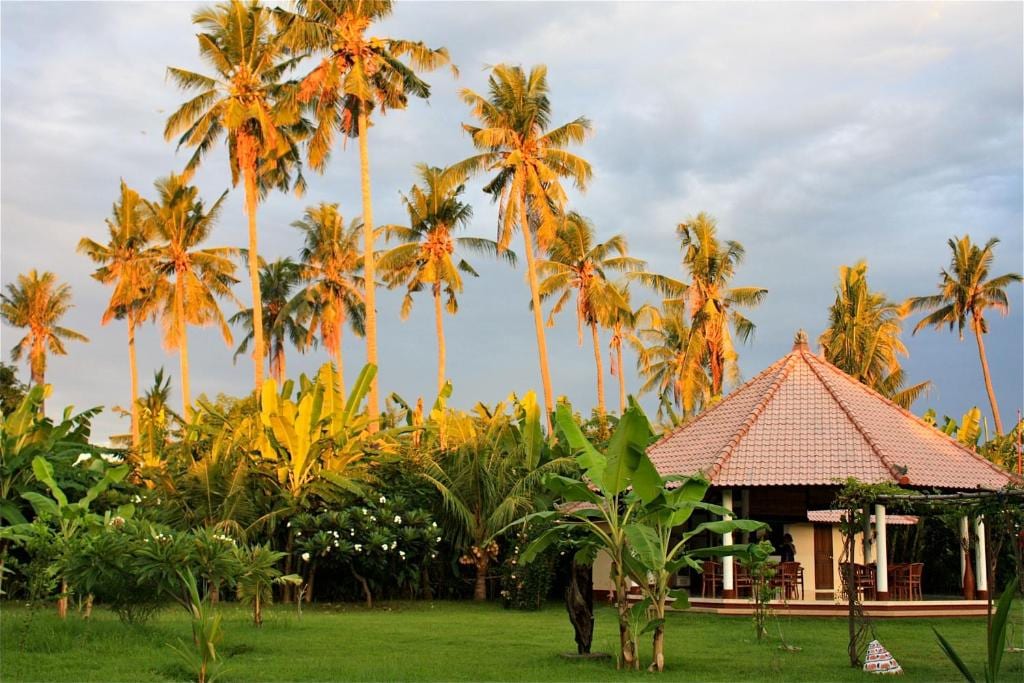
Pemuteran is Bali's best-kept secret — a quiet northwest bay where reef restoration has brought the coral back and the rest of the world feels very far away.
Tucked into Bali's remote northwest corner, Pemuteran is the island's quiet conscience — a small fishing village that chose coral over concrete and community over crowds. The bay is calm, the nights are dark, and the sea holds secrets that took twenty years of patient work to restore.
This is not a destination you stumble upon. You come here deliberately, drawn by the promise of wall dives, turtle-watched shores, and a horizon so uncluttered that the Milky Way feels like it belongs to you. Pemuteran rewards the traveller who slows down.
Where to stay
Coral brought back to life
In the late 1990s, the reefs of Pemuteran Bay were bleached and broken. What followed became one of the great conservation stories of the ocean world. In 2000, local communities and marine scientists planted the first steel structures on the seabed and ran low-voltage electrical currents through them — a technique called Biorock — to accelerate coral growth. Today, the Karang Lestari Biorock Project spans 115 reef structures across two hectares, making it the largest coral restoration project on the planet, larger than all equivalent projects in the Pacific, Caribbean, and Indian Ocean combined. It won the United Nations UNDP Equator Prize in 2012.
Snorkelling above it at golden hour, when the current stills and the light filters jade-green through the water, you witness something genuinely rare: a reef in recovery, teeming with parrotfish, lionfish, and the slow drift of sea turtles. The bay's sheltered waters mean even first-time snorkellers float easily above this living sculpture. The terbaik of second chances.
The island across the strait
Thirty minutes by boat from Pemuteran, across a stretch of open water that turns cobalt in the morning light, lies Menjangan Island — a protected sanctuary inside the West Bali National Park (Taman Nasional Bali Barat), where no one lives and the reefs have never been farmed or dynamited.
The island is famous for wall diving: dramatic vertical drop-offs plunging into deep blue, their faces carpeted in gorgonian sea fans, soft corals in tangerine and violet, and clouds of anthias. Visibility regularly exceeds forty metres. Green and hawksbill turtles cruise the shallows with unhurried dignity, barely registering your presence. Sites like Eel Garden — a sweeping wall dense with coral pinnacles — draw divers back again and again. For snorkellers, the shallow reef flat on the island's south side is a kaleidoscope that needs no certification to enter. Menjangan is, without qualification, among the finest marine encounters in all of Indonesia.
Where the night sky returns
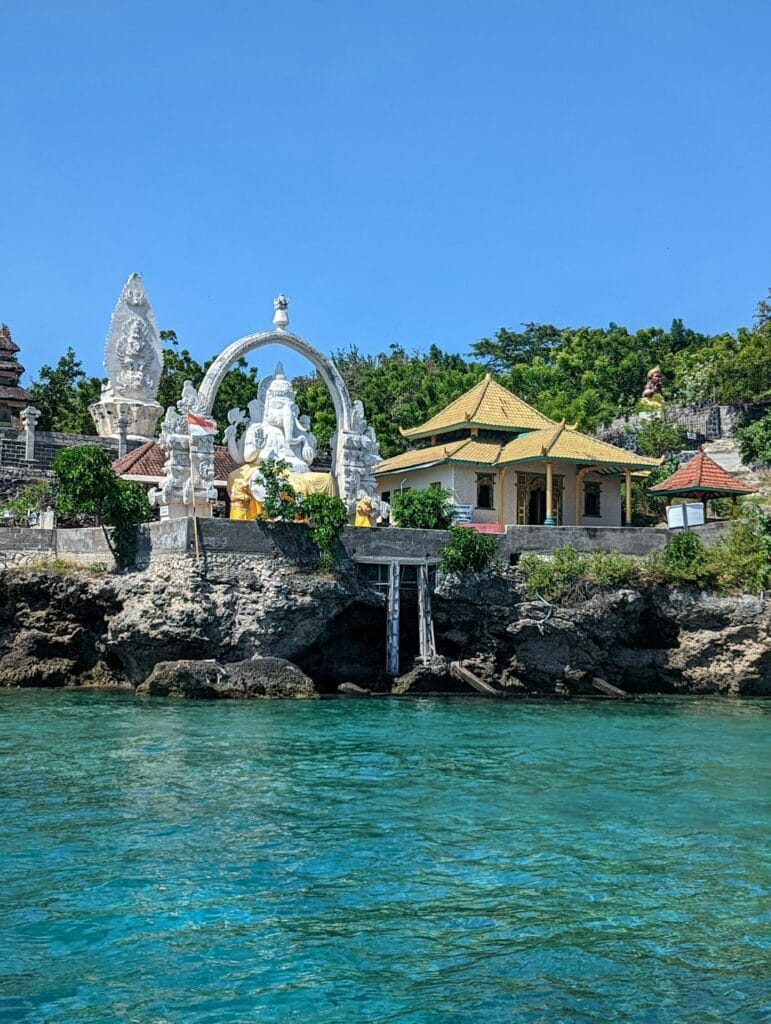
Away from the dive boats and the bay, Pemuteran village reveals another character — deeply Balinese, unhurried, rooted in ceremony and community stewardship. At the eastern edge of the village, the ancient sea temple of Pura Pulaki clings to a coastal cliff, its shrines watched over by a resident troop of long-tailed macaques who have lived here since, legend says, the 16th-century High Priest Dang Hyang Nirartha first arrived. The stone courtyards face the Java Sea; the mountains press close behind.
At Reef Seen Divers' Resort, one of Bali's earliest dive operations, the turtle hatchery has been protecting green, olive ridley, and hawksbill nests since 1991 — rewarding local villagers who report nests rather than poach them, raising hatchlings until they are strong enough to survive open water.
After sunset, with no resort strip to wash out the sky, the stars appear in full — dense, low, and unhurried. In Pemuteran, the darkness is not an absence. It is part of what you came for.