Uluwatu
Cliffs & clifftop bars
Uluwatu perches at Bali's southern edge — limestone cliffs above world-class surf, an ancient clifftop temple and sunsets that silence every crowd.
Uluwatu is Bali's most cinematic peninsula. The Bukit rises from the sea in sheer white cliffs, terraced with hidden coves, world-class surf breaks and temples that have stood on the edge for a thousand years.
This is where surfers chase barrels at dawn, fire dancers perform under a burning sky at dusk, and clifftop bars hold the line between land and ocean. Uluwatu is Bali at its most dramatic — terbaik, in every sense of the word.
Where to stay
Where the cliffs meet the swell
The Bukit Peninsula wears its reef breaks like a crown. Padang Padang Beach — a narrow cove reached by squeezing through a gap in the rock — faces one of Bali's most celebrated left-handers: a heavy, hollow barrel that hosted the Rip Curl Cup for years. A short walk along the clifftop path brings you to Bingin Beach, where short, machine-like lefts peel over a shallow reef, and colourful warungs cling to the terraced hillside like paint flecks. Further along, Impossibles unspools in long, racing walls of water that photographers can't stop shooting — three connecting sections stretching across the reef at once. And above them all, the original break: Uluwatu itself, accessed via a cave at the cliff base, still delivering the long, peeling lefts that put this peninsula on every surfer's map in the 1970s.
Temple at the edge of everything
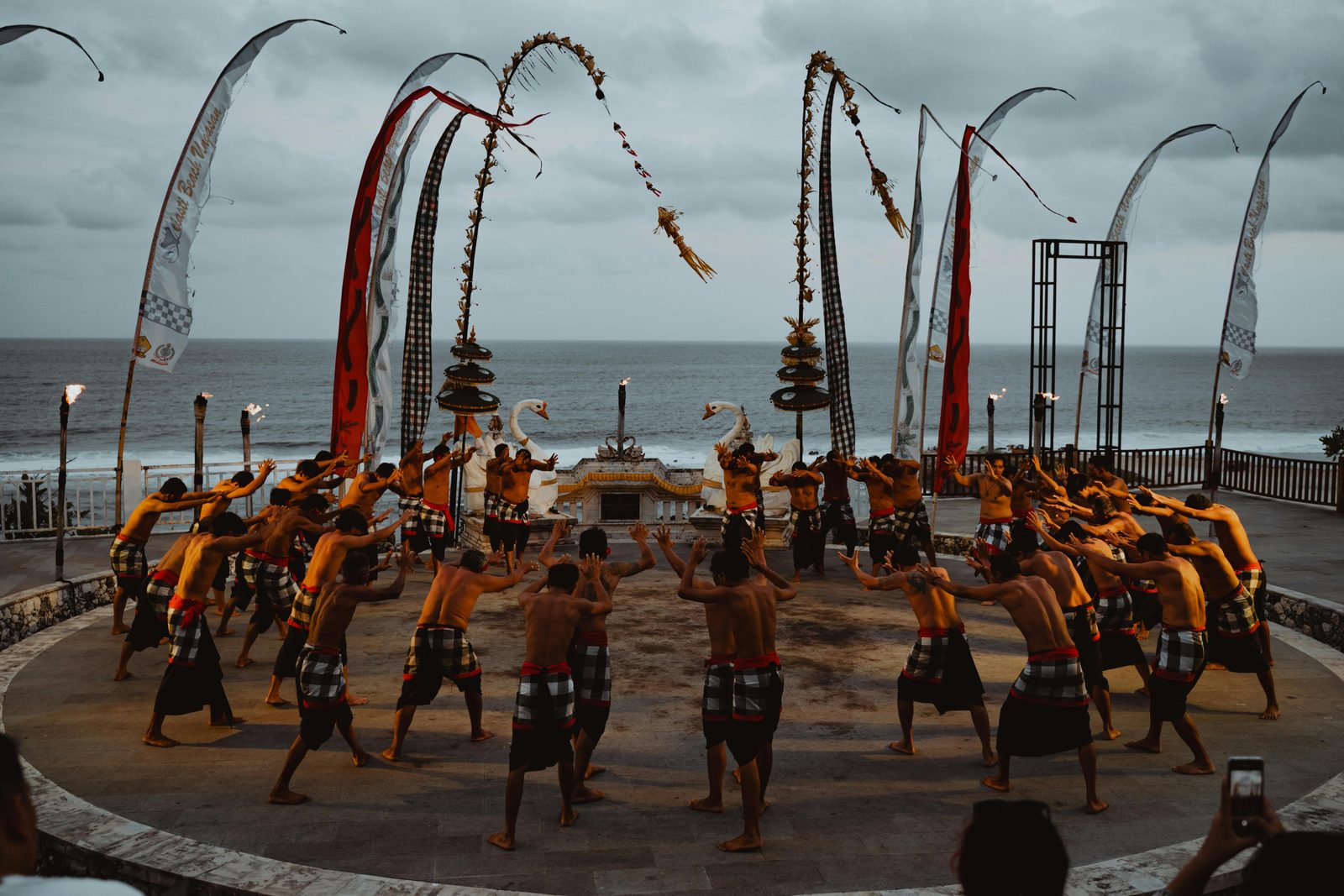
Pura Luhur Uluwatu was built in the 11th century on a promontory 70 metres above the sea, and the Indian Ocean stretches out beneath it in every direction. This is one of Bali's six sacred Sad Kahyangan Jagat temples — a guardian of the island's spiritual corners — and visiting at late afternoon means arriving in golden hour light that turns the limestone walls amber. As the sun dips, the atmosphere shifts completely: every evening at 6 PM, a troupe of over 50 men gathers in a stone amphitheatre carved into the cliff to perform the Kecak fire dance. Dressed in checked cloth, they chant a rhythmic cak-cak-cak that rises and falls like the ocean below as scenes from the Ramayana unfold in firelight. It is one of the most genuinely arresting performances in Southeast Asia — not a tourist trick, but a living ritual enacted against a backdrop of open sea and fading sky.
Sundown from the rocks
When the surf check is done and the sarong has been folded back at the temple gate, Uluwatu's clifftop bars take over. Single Fin perches directly above Suluban Beach — also known as Blue Point — its multi-level terraces carved into the cliff offering a front-row seat to the break below and the horizon beyond. Sundays here are legendary, with DJs soundtracking the last of the light. A few kilometres along the Bukit, El Kabron brings a Mediterranean sensibility to the edge of Indonesia: Spanish seafood, curated cocktails, and a 180-degree ocean view 50 metres above the waves. For a more elevated experience, Savaya sits 100 metres above the Indian Ocean between jungle and limestone — voted among the world's top clubs, its Sunday sessions draw a crowd that arrives for the sunset and stays for the night. And for those who want the cliff entirely to themselves, a private funicular at Karma Kandara descends to a secluded beach only guests can reach.