Yoga à Canggu : Les Meilleurs Studios, Retraites et la Scène de la Pratique Matinale
Canggu est devenue l'une des destinations yoga les plus vivantes d'Asie du Sud-Est — non pas parce qu'elle compte le plus de studios, mais parce qu'elle a construit une véritable culture de pratique quotidienne où les cours du matin ont lieu avant le petit-déjeuner et où les retraites attirent des praticiens sérieux du monde entier. Voici où trouver votre pratique ici.
Il y a quelque chose qui rend la pratique du yoga à Canggu différente de celle qu'on fait chez soi. En partie le climat — les matins sont chauds, l'air sent l'encens et le frangipanier, et il n'y a aucune urgence dans la façon dont la journée commence. En partie la communauté — une masse critique d'enseignants, de praticiens et de studios s'est rassemblée ici au cours de la dernière décennie, et cela se voit dans la qualité et la variété de ce qui est proposé. Que vous souhaitiez un seul cours à la carte ou une immersion d'une semaine, Canggu répond présente.
Le Paysage des Studios
Les studios de yoga de Canggu se regroupent le long de Jalan Batu Bolong et des ruelles qui en partent, avec une deuxième concentration plus au nord près de Pererenan. L'éventail des styles et des prix est vraiment large.
The Practice est le studio dont les praticiens sérieux parlent en premier. Installé sur une terrasse de rizière à Pererenan, il propose une pratique en shala en plein air avec des vues qui rendent difficile de garder les yeux fermés pendant la savasana. La programmation est sérieuse — ashtanga, mysore, vinyasa flow, yin — et les enseignants ont une vraie profondeur. Les cours à la carte coûtent 150 000 à 200 000 IDR. La pratique libre Mysore commence à 6 h 30 et l'énergie des premières heures du matin ici mérite d'être vécue au moins une fois.
Radiantly Alive est un pilier de la scène yoga de Canggu depuis des années. Il propose un programme quotidien chargé dans plusieurs salles — du vinyasa dynamique au yin restaurateur en passant par des ateliers de pranayama — avec un panneau communautaire, une petite boutique et des enseignants qui alternent entre résidents et visiteurs. Les tarifs à la carte sont d'environ 150 000 IDR ; les passes de cours réduisent ce montant de manière significative si vous restez plus d'une semaine.
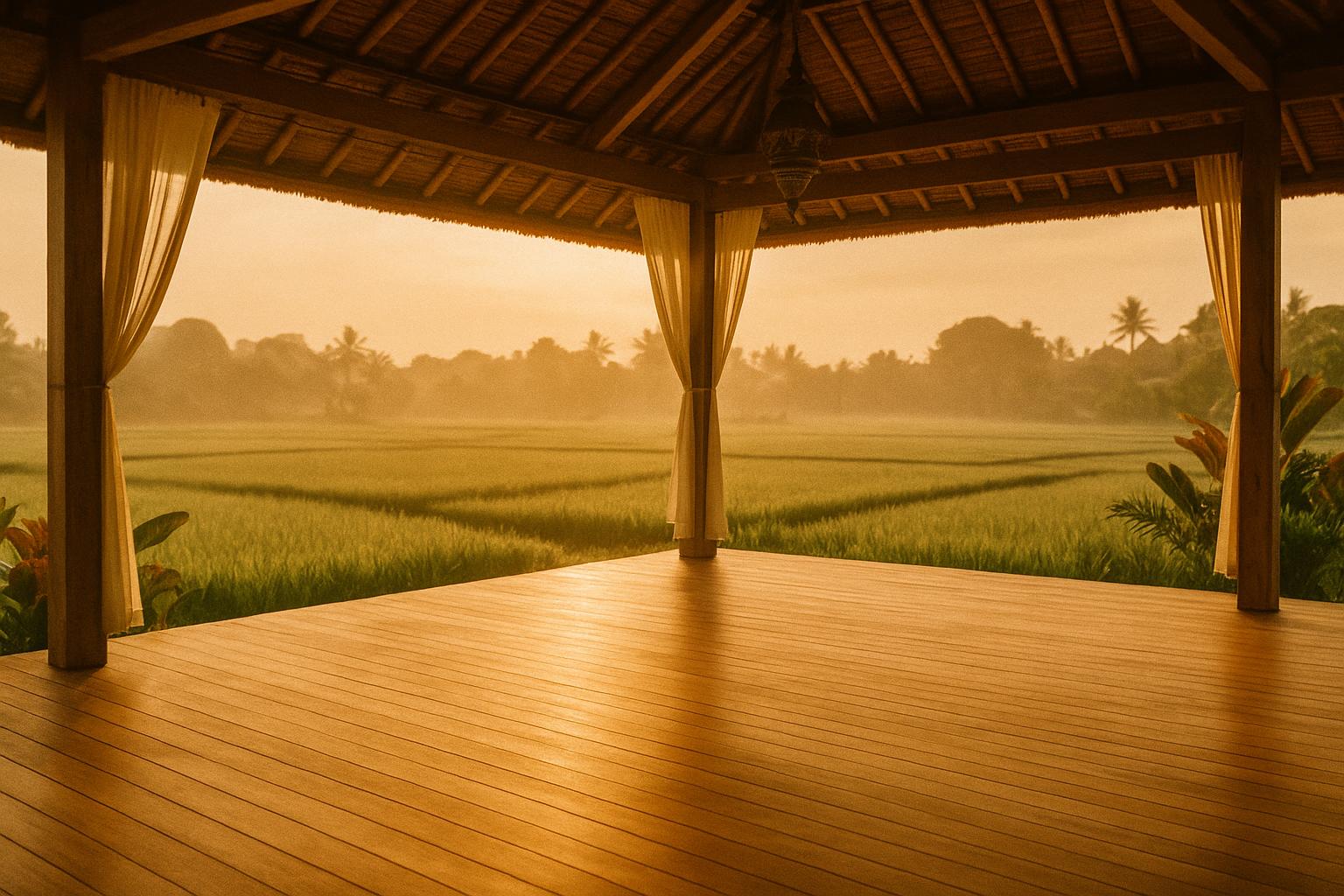
Samadi Bali est légèrement plus éloigné du centre mais mérite les cinq minutes supplémentaires en scooter. La shala est magnifique — bois et chaume, ouverte sur deux côtés sur un jardin — et l'ambiance est plus calme et plus méditative que certains des studios plus fréquentés de la rue principale. Le cours communautaire du dimanche matin remplit la salle.
Shalas dans les Rizières et la Différence du Cadre
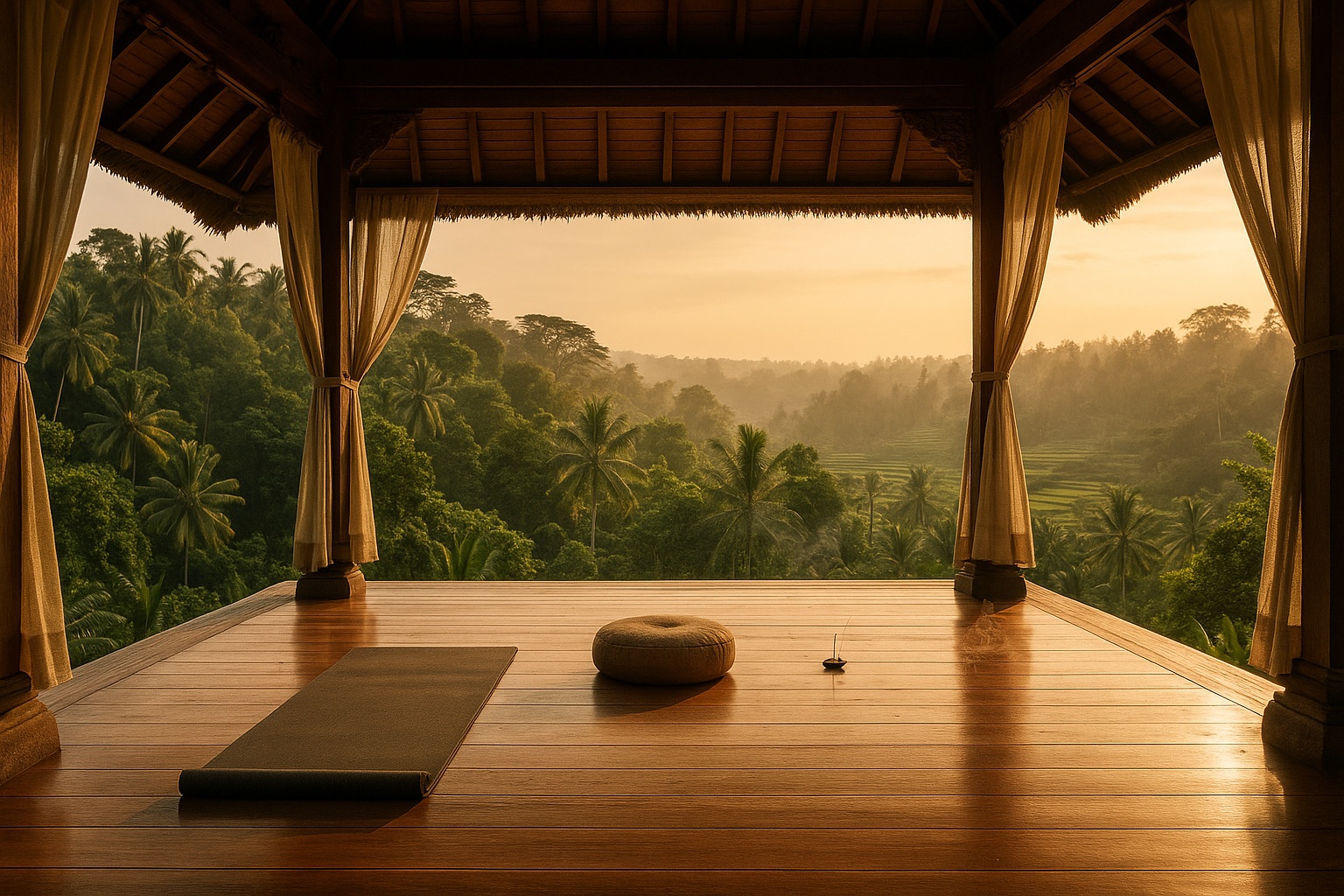
Les meilleures expériences yoga de Canggu se déroulent souvent dans des espaces qui ont tiré parti du paysage. Une shala en plein air au-dessus de rizières en activité, avec une brise et le son des grenouilles et des oiseaux, est une tout autre proposition qu'un studio chez soi — et cela vaut la peine d'être recherché.
The Shala Canggu offre exactement cela : une plateforme en bambou surélevée surplombant des terrasses vertes, avec un programme qui penche vers le hatha et le vinyasa doux. C'est un bon choix pour les praticiens qui souhaitent une session plus douce et plus contemplative plutôt qu'une session physiquement exigeante.
Plusieurs maisons d'hôtes et villas dans la région de Pererenan ont leurs propres espaces studio et organisent des cours du matin en petits groupes — ils n'apparaissent pas toujours dans les applications de réservation mais valent la peine d'être demandés si vous séjournez sur place.
Styles et Ce qu'on Peut Attendre
Le vinyasa flow domine le programme de Canggu — des séquences dynamiques liées à la respiration enseignées à des vitesses variées. La plupart des studios proposent des versions pour débutants et intermédiaires-avancés dans la même journée.
L'ashtanga est bien représenté, particulièrement dans les créneaux matinaux. La pratique libre style Mysore (où chaque élève travaille à son propre rythme dans la séquence) est disponible dans plusieurs studios et convient à ceux qui ont une pratique ashtanga établie.
Le yin yoga a progressé régulièrement — des poses passives maintenues longtemps qui ciblent les tissus conjonctifs, souvent enseignées en soirée comme contrepoint à un surf matinal ou une journée d'activité. Serenity Eco Guesthouse propose de bons cours de yin en soirée.
Les cours de respiration et de méditation figurent au programme de la plupart des studios en plus des asanas — Canggu attire des enseignants avec une formation bien-être plus large, et il est facile de construire une matinée qui combine mouvement et méditation sans quitter le quartier.
Retraites : Format Résidentiel et Journalier
Pour une expérience plus immersive, Canggu et ses environs immédiats accueillent un programme annuel de retraites résidentielles. La plupart durent cinq à sept jours et combinent yoga du matin et du soir avec des repas sains, des excursions et des sessions d'ateliers.
Oneworld Retreats organise des programmes depuis sa propre propriété et travaille avec un groupe tournant d'enseignants visiteurs. L'hébergement est confortable, la nourriture est soignée, et le format tout inclus supprime les tracas quotidiens de trouver des cours et des repas séparément.
Pour des formats plus courts, de nombreux studios organisent des retraites d'une journée le week-end — un sadhana matinal de 7 h à 11 h comprenant méditation, asana, pranayama et brunch — pour environ 350 000 à 500 000 IDR. C'est une bonne façon d'aller plus loin sans s'engager sur une semaine entière.
Cours à la Carte ou Passes
Les cours à la carte à Canggu coûtent 100 000 à 200 000 IDR selon le studio et le format. Les passes de cours (généralement 5 ou 10 cours) réduisent le coût par cours de 20 à 35 % et valent la peine d'être achetés dès votre premier ou deuxième jour si vous prévoyez de pratiquer régulièrement.
La plupart des studios acceptent les visiteurs sans réservation, mais les créneaux populaires du matin — surtout le vinyasa et le mysore du week-end — se remplissent vite. Réserver via le site web du studio ou WhatsApp la veille au soir est la norme et ne prend que deux minutes.
Le Rituel Matinal
La scène yoga de Canggu a un rythme particulier qui se révèle après quelques jours : réveil matinal, cours à 7 ou 8 h pendant que l'air est encore frais, puis petit-déjeuner tranquille dans un café voisin. Ce n'est pas un programme — c'est simplement la façon dont beaucoup de gens choisissent de commencer leurs journées ici, et il s'avère que c'est une très bonne façon de le faire. Les studios, le cadre et le climat conspirent tous pour rendre la pratique matinale sans effort. La partie la plus difficile est de mettre le réveil.