Yoga, Healing & Wellness in Ubud: Studios, Balians, Spas & Sacred Stillness
Ubud is Bali's undisputed wellness capital — from sunrise yoga at The Yoga Barn to traditional Balinese healers, sound baths, and jungle retreats, restoration runs deep here.
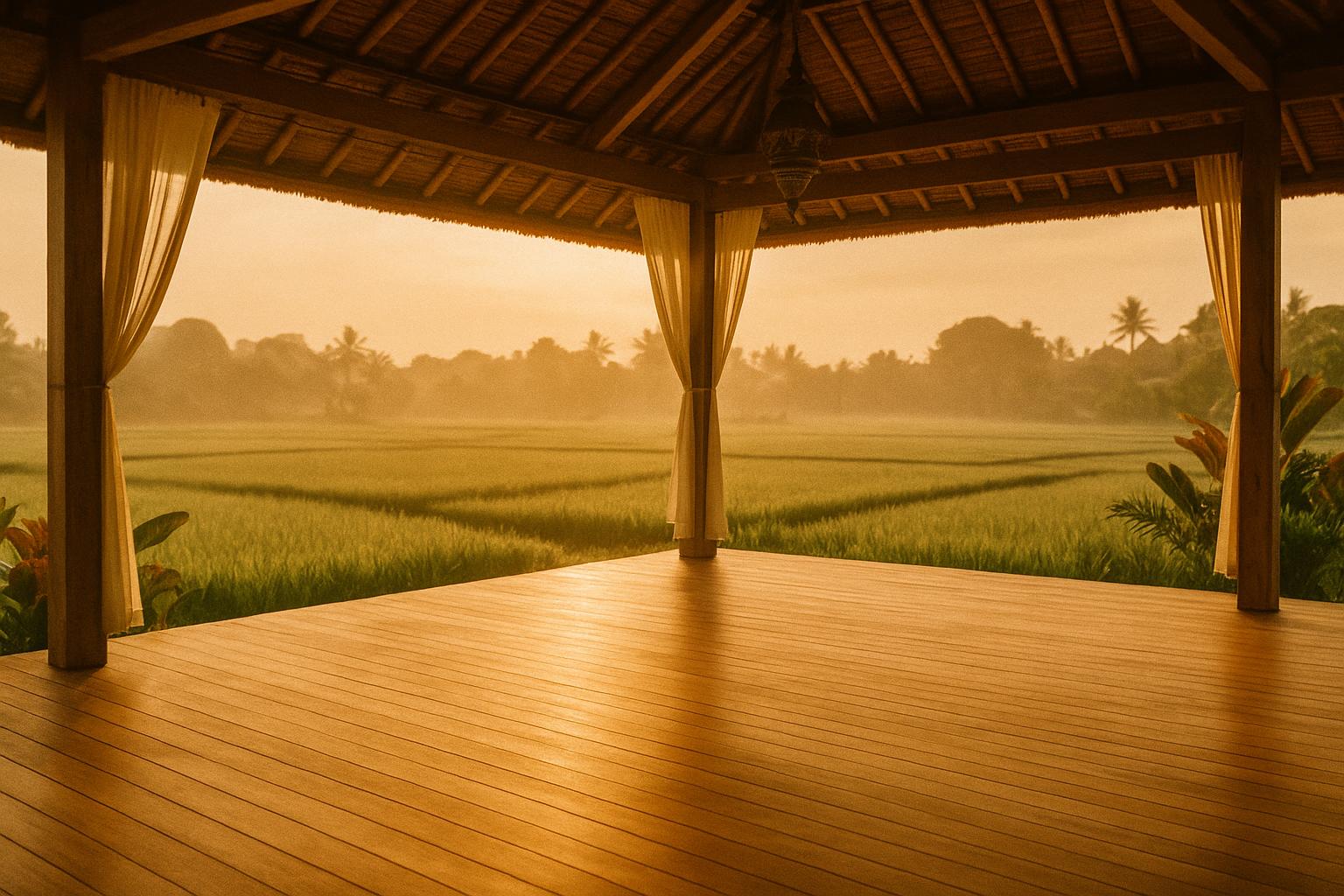
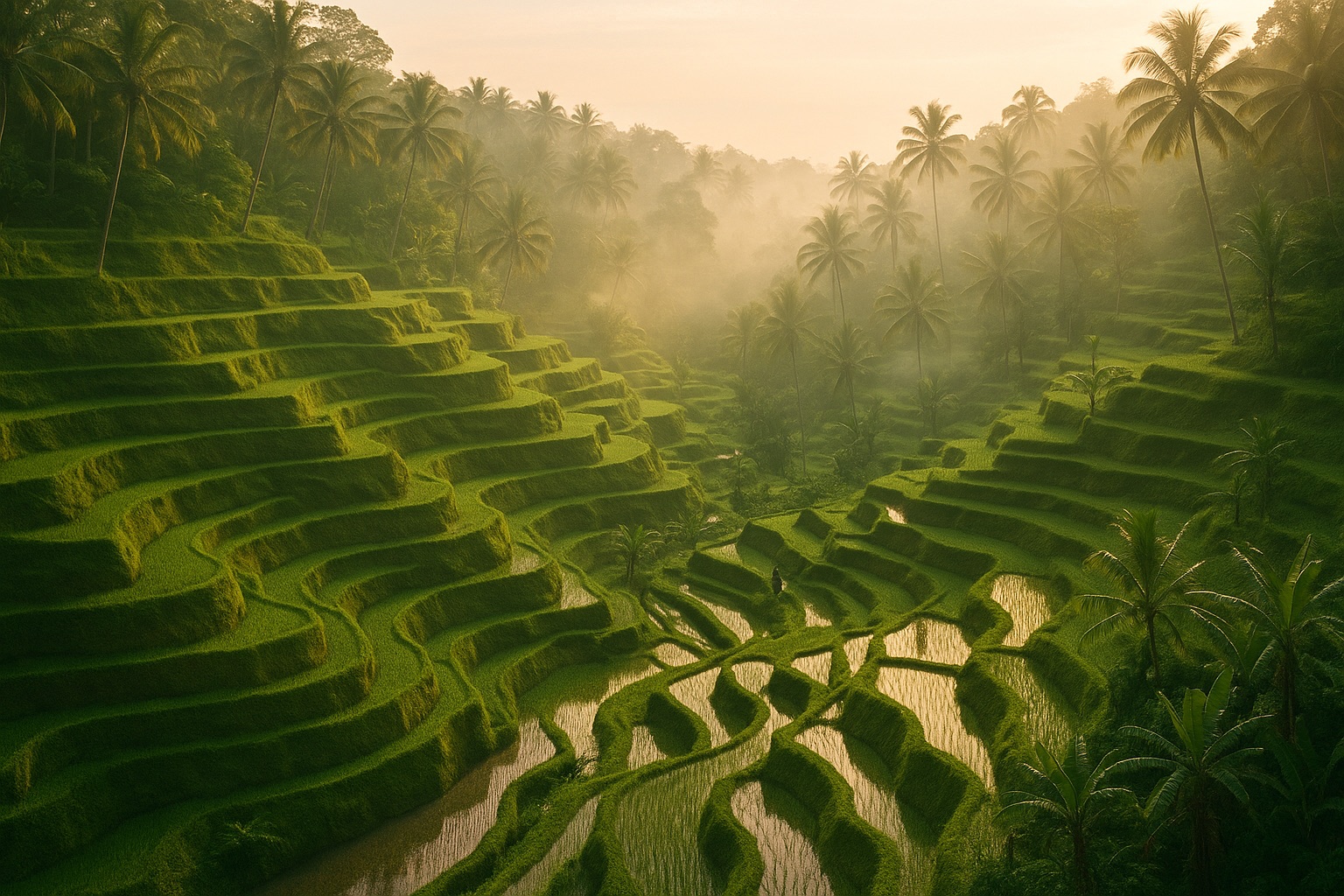
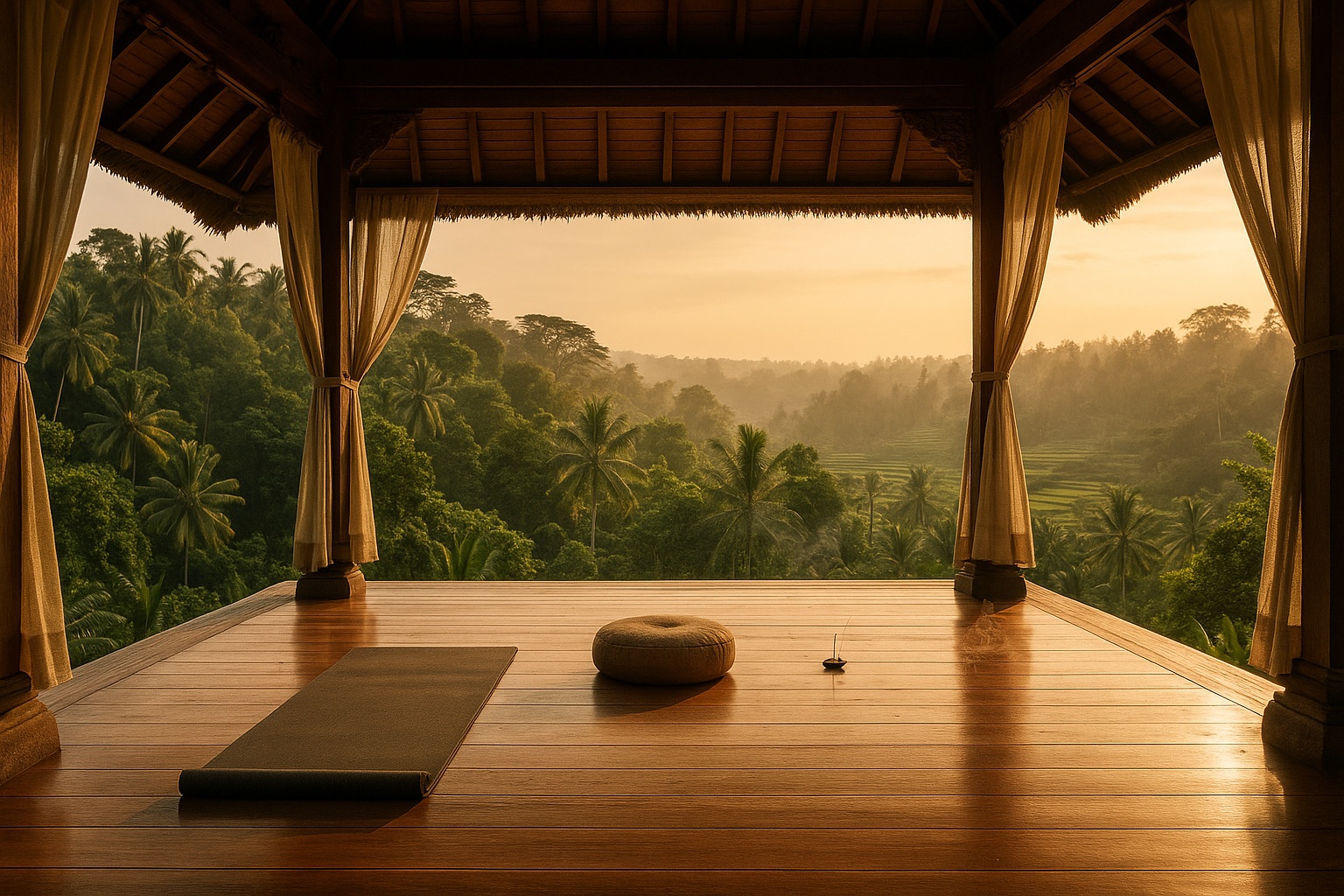
Something shifts in Ubud. It might happen on the first morning when you wake before dawn to the sound of a temple bell and the distant chirp of a gecko, the air cooler and stiller than anything you expected from a tropical island. Or it might happen halfway through a yoga class, the open pavilion warm with bodies and breath, the rice paddies visible in the middle distance, a rooster somewhere making its case. However it comes, the feeling is the same: this place is doing something to your nervous system, and whatever it is, you want more of it.
Ubud has become one of the world's most significant wellness destinations over the past two decades — not because it reinvented itself as a spa town, but because something that was already here turned out to be exactly what the world was looking for.
The Yoga Barn: Ubud's Spiritual Heart
No institution has done more to shape Ubud's reputation as a yoga destination than The Yoga Barn. Founded in 2007, this multi-pavilion centre set in lush gardens near the Campuan ridge has grown into one of the most beloved yoga centres in Southeast Asia, offering dozens of classes per week across multiple disciplines: Hatha, Ashtanga, Yin, Restorative, Kundalini, Aerial, and more. The community it has built over the years draws teachers and practitioners from around the world.
What sets The Yoga Barn apart from a simple studio is its breadth: alongside yoga, it hosts ecstatic dance events, meditation workshops, breathwork sessions, Balinese Hindu ceremonies, and visiting teachers who bring lineages from India, the Americas, and Europe. The in-house café, The Garden Kafe, serves one of the best plant-based menus in Ubud — meals that feel like an extension of the practice.
Beyond The Yoga Barn, Ubud offers a dense network of smaller studios and independent teachers. Radiantly Alive is known for strong Vinyasa and skilled resident teachers. New spaces continue to open as the wellness community grows; ask at your accommodation for current recommendations, as the scene moves quickly.
Balinese Healers: The Balian Tradition
Long before Ubud was on the wellness map, Bali had its own healers. The balian — traditional Balinese healer — occupies a central role in Balinese Hindu society, serving as spiritual counsellor, herbalist, massage therapist, and medium. There are different categories of balian, each with different knowledge and methods: some specialise in physical healing through herbal medicine and massage; others work primarily in the spiritual realm, addressing illness believed to have spiritual causes.
The late Ketut Liyer, made internationally famous by Elizabeth Gilbert's Eat Pray Love, was the most well-known balian to outsiders. Several healers in the greater Ubud area continue to see visitors; some welcome foreigners who approach with genuine openness and respect, while others prefer to work primarily within the Balinese community.
If you wish to visit a balian, do so with an open mind and appropriate humility — this is not spa therapy and should not be approached as exotic tourism. A local guide or your accommodation host can make introductions appropriately.
Sound Healing & Energy Work
Ubud has become a global hub for sound healing practices, particularly the use of Tibetan singing bowls, crystal bowls, and gamelan-adjacent instruments for meditative immersion. Sessions range from intimate one-on-one treatments to group sound baths of thirty or more people lying in a circle while practitioners move through the room with bowls and chimes.
The science behind sound healing is still developing, but the subjective experience of lying in a deep, resonant acoustic field for an hour is genuinely unlike anything else. Several practitioners in Ubud combine sound work with breathwork, reiki, or traditional Balinese energy-clearing techniques.
The Yoga Barn and a number of practitioner-run spaces near the Penestanan and Nyuh Kuning neighbourhoods are known for high-quality sound healing work.
Spas & Balinese Massage
The pijat Bali — Balinese massage — is one of the island's great contributions to global wellness culture: a full-body technique combining gentle stretching, palm and thumb pressure, and skin rolling that has its roots in traditional Javanese and Ayurvedic traditions. A well-executed Balinese massage leaves you feeling simultaneously wrung out and renewed.
Ubud's spa landscape runs from small family-run massage rooms (affordable, often excellent) to the luxury treatment pavilions of properties like COMO Shambhala Estate — a genuine residential wellness retreat set in the Wos River valley, with its own organic kitchen garden, resident practitioners, and programmes lasting multiple days.
For day visitors, Tjampuhan Spa (set beside the Tjampuhan spring, with a pool fed by spring water) and dozens of other mid-range options offer Balinese massage, lulur body treatments, floral baths, and herbal scrubs at prices that feel remarkably accessible by international standards.
Plant-Based Cafés & Nourishment
Wellness in Ubud extends naturally to food. The town has one of the densest concentrations of plant-based and health-focused restaurants in Asia, ranging from raw food cafés to Ayurvedic kitchens to warung-style places serving organic Balinese rice dishes.
Alchemy is a Ubud institution for raw and vegan food — its smoothie bowls and fermented preparations have a devoted following. Clear Café has long offered a broad menu spanning raw, vegan, and whole-food cooking alongside kombucha and herbal tonics. Smaller spots throughout the Penestanan neighbourhood cater to longer-term residents and serious practitioners.
Cacao ceremonies — using ceremonial-grade cacao as a heart-opening ritual rather than a dessert — have become a fixed part of the Ubud wellness calendar. Several practitioners run weekly ceremonies, often combined with meditation or ecstatic dance.
Retreats: Longer Immersions
For those who want to go deeper, Ubud and its surroundings offer retreats ranging from weekend immersions to month-long programmes. Yoga teacher training courses (typically 200 hours over 25–28 days) run year-round at several centres. Detox retreats, silent meditation programmes, and surf-and-yoga combinations with trips to the south are all available.
The Bali Spirit Festival, held annually in Ubud, brings together yoga teachers, musicians, healers, and wellness practitioners from across the world for a multi-day celebration that has become one of the most significant events of its kind in Asia.
Know Before You Go
- Booking: Popular classes at The Yoga Barn and other major studios fill up, especially in high season (July–August, Christmas–New Year). Book online a day or two in advance.
- What to bring: A light layer for air-conditioned studios or early-morning open pavilions; your own mat if you have strong preferences (good rental mats are available everywhere).
- Balian visits: Always arranged through an intermediary who knows the healer; never simply turn up unannounced. Approach as a guest, not a customer.
- Pacing yourself: The Ubud wellness scene can itself become overwhelming if you try to pack too much in. One or two things per day, with unscheduled time in between, is usually wiser than a fully optimised itinerary.
- Neighbourhood tip: The Penestanan and Nyuh Kuning neighbourhoods, just west and south of the centre, have a quieter, more residential feel and a strong concentration of independent teachers and practitioners if you prefer something lower-key than the main strip.
Ubud will not fix everything. But it will slow you down, and in slowing down, it will show you something about what speed has been costing you. That, perhaps, is the real treatment.