Tegalalang Rice Terraces: Sunrise, Subak & the Living Landscape of Ubud
Tegalalang's emerald rice terraces cascade down volcanic hillsides north of Ubud — a UNESCO-recognised landscape where ancient irrigation meets breathtaking natural beauty.
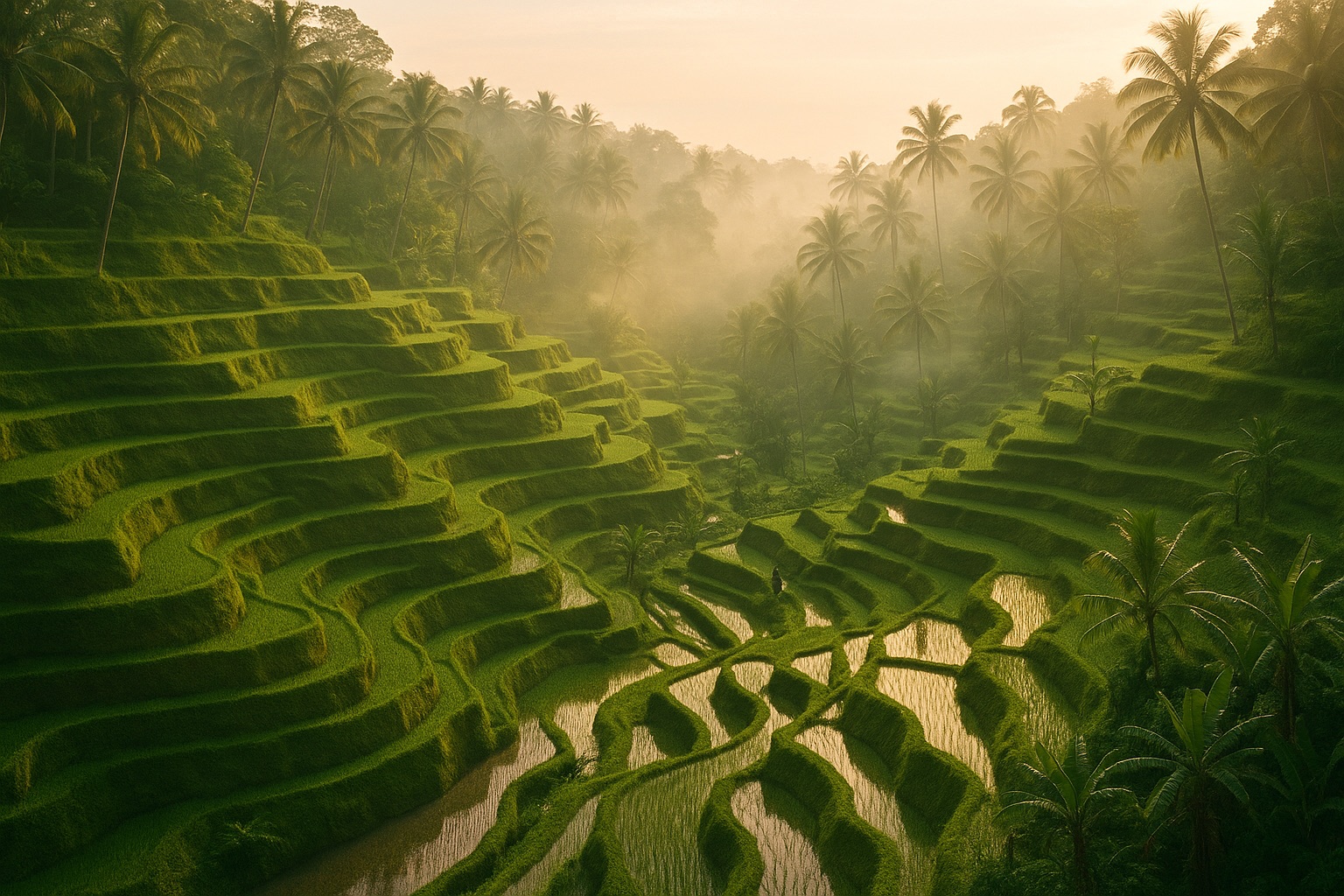
Just before sunrise, the valley north of Ubud holds its breath. A pale mist drifts between the palm trees, and the terraced hillsides — layer upon layer of flooded paddies stepping down toward a river gorge — begin to glow the softest green imaginable. A farmer is already knee-deep in water, guiding it through channels cut into the earth centuries ago. This is Tegalalang Rice Terraces, and it is one of the most photographed — and most genuinely moving — landscapes in all of Bali.
The Subak System: Water as Sacred Engineering
The rice terraces of Tegalalang are inseparable from subak — Bali's ancient cooperative irrigation system that was inscribed on the UNESCO World Cultural Landscape list in 2012. Subak is not simply a network of canals and aqueducts. It is a philosophy of farming rooted in Balinese Hinduism, specifically in the concept of Tri Hita Karana: the three causes of well-being, which describe the relationship between humans, the natural environment, and the spiritual world.
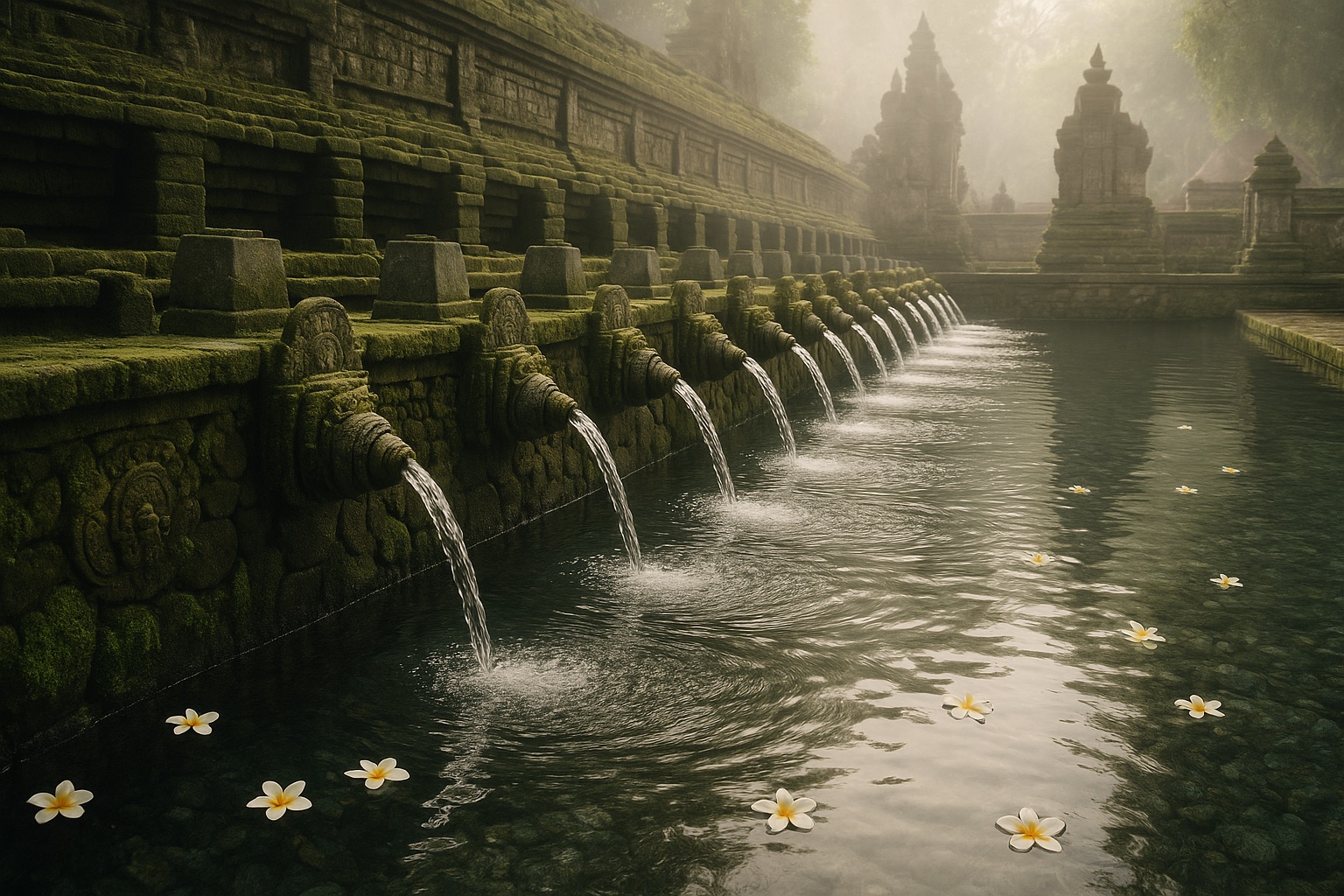
Under the subak system, water is managed collectively by the farming community through a network of water temples, from village shrines up to the great Pura Ulun Danu Batur on the rim of the Batur caldera. The high priests of Batur traditionally coordinated planting cycles across the island, using religious ceremony to synchronise irrigation and prevent the pest cycles that plague mono-culture farming. Modern research has confirmed what Balinese farmers always knew: the subak system optimises both yield and ecological balance in ways that purely secular engineering has struggled to match.
Walking through Tegalalang, you are walking through a living expression of this philosophy.
The Terraces Themselves
Tegalalang Rice Terraces occupy a dramatic valley along the Ceking River, roughly 9 kilometres north of central Ubud on the road toward Kintamani. The paddies are carved into the hillside in graceful, sweeping curves — not the sharp geometric steps you might imagine, but organic, flowing shapes that follow the natural contour of the volcanic soil.
The colour of the terraces changes through the agricultural cycle: electric green when the young rice shoots are freshly planted, deepening as the crop matures, then golden-bronze in the weeks before harvest, before flooding again and returning to the still mirror of open water. There is always something beautiful here, regardless of season.
Coconut palms, banana trees, and the occasional jepun (frangipani) frame the view. Small warungs and cafés line the top of the ridge, their platforms extending over the terraces for an elevated perspective.
Sunrise at Tegalalang
The single best thing you can do at Tegalalang is arrive before the light does. The valley faces east, and sunrise turns the flooded terraces into a sequence of reflecting pools catching rose and amber light. The mist that often collects overnight begins to lift around this time, and the air carries the sound of water moving through the channels below.
By mid-morning, tour buses from the south have arrived and the ridge path fills with visitors. The terraces remain beautiful, but the meditative quality of early morning is largely gone. If you are based in Ubud, it is absolutely worth setting the alarm.
The Jungle Swings & Experiential Tourism
In recent years, a string of Instagram-famous experiences has taken root along the terrace ridge: cliff swings suspended over the valley, bamboo nests, heart-shaped frames, and painted signs. These are privately operated and charge separate fees. Opinions among travellers are divided — they are undeniably photogenic, and they provide income for local families who operate them. What they are not is subtle.
If your goal is the landscape itself, you can walk the main paths and descend into the valley without engaging with the swing operators, who are present but not pushy. The terraces reward those who go beyond the ridge: narrow paths wind between paddies, wooden footbridges cross irrigation channels, and workers move through the fields at their own rhythm, mostly unbothered by visitors who behave respectfully.
The Living Farming Culture
Rice farming in Tegalalang is not a heritage performance — it is still happening. Families cultivate small plots, often using a combination of traditional techniques and modern inputs. Balinese Oryza sativa varieties have been grown here for generations alongside higher-yield modern strains.
Occasionally you will spot small offerings placed at the irrigation channel junctions — a quiet acknowledgment of the water spirits who are thanked for every harvest. These moments are not staged. Observe with respect and do not photograph ceremonies without permission.
Know Before You Go
- Location: On Jalan Raya Tegalalang, approximately 9 km north of central Ubud — a 20–25 minute drive by scooter or hired driver.
- Best time: Arrive at or before sunrise for golden light and tranquillity. Avoid 10 a.m.–2 p.m. if crowds bother you.
- Access: Most viewpoints along the ridge are free to reach on foot. Some privately owned café/swing operators charge a small entry fee for their section of terrace access — a café purchase often covers this.
- Footwear: The paths into the valley are uneven and can be slippery after rain. Closed shoes or sandals with grip are strongly recommended over flip-flops.
- Scooter parking: Available at the roadside; small informal fees apply.
- Photography etiquette: The terraces are a working landscape. Give farmers space, do not wade into paddies, and treat small shrines and offerings with the respect you would give a place of worship — because they are.
Tegalalang is one of those landscapes that photographs cannot quite capture — the scale, the sound, the smell of wet earth and growing rice. It asks to be stood in, not just looked at.