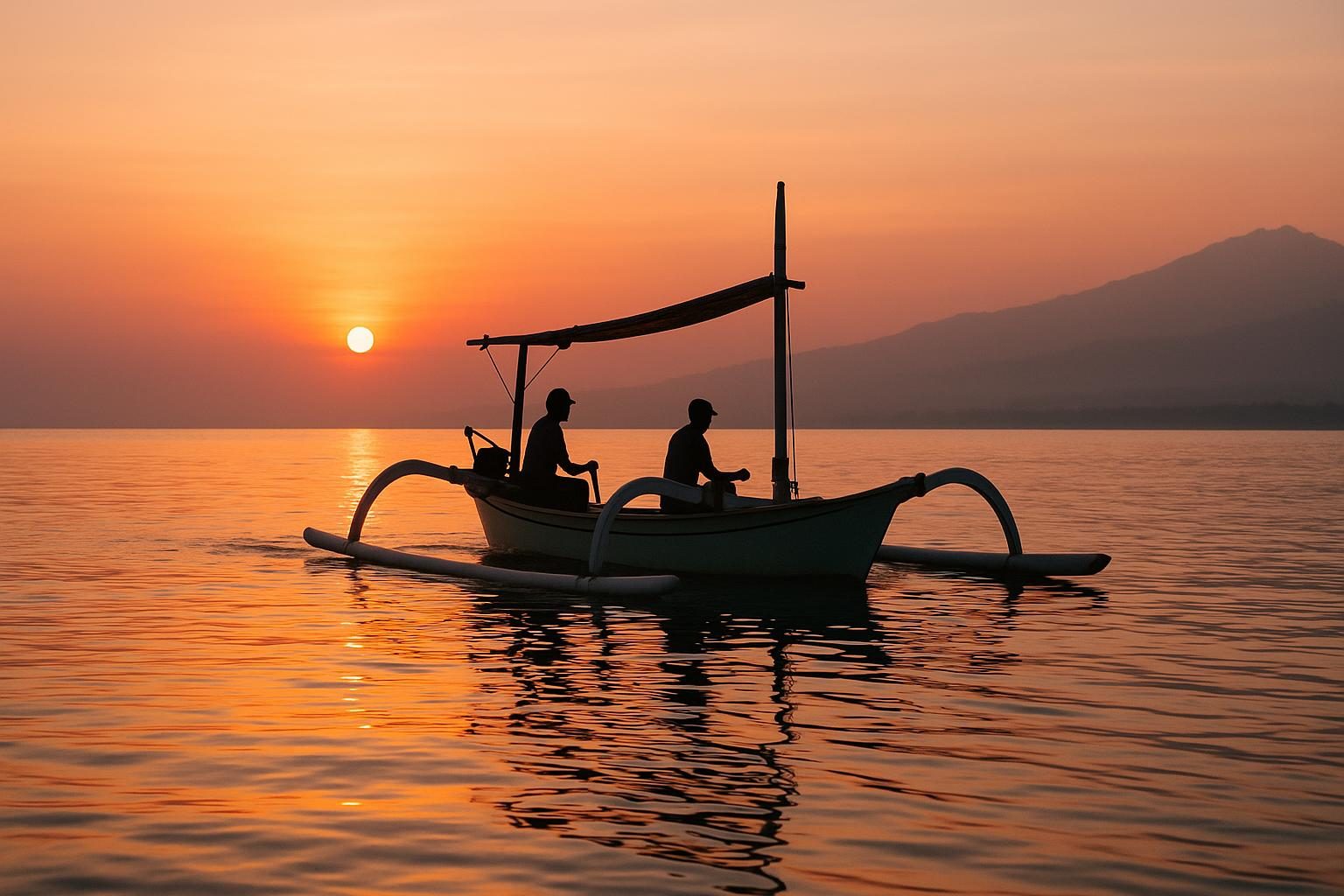
Lovina Sunrise Dolphin Watching: A Complete Guide
Join a traditional Balinese boat at dawn to watch wild spinner and bottlenose dolphins in their natural habitat, then snorkel vibrant coral reefs.
Lovina Beach's most iconic experience begins before sunrise. While the rest of Bali sleeps, a fleet of traditional wooden jukung boats pushes off into dark water, their crews scanning the horizon for the telltale ripples of dolphins. This is dolphin watching season, and it's one of those rare moments where the magic feels genuine—not staged.
What to Expect: Timing & the Boat Experience
Tours depart very early, typically between 5:30 and 6:00 AM, timing the boat's arrival to coincide with first light. Some operators also run a second departure around 9:00 AM if you'd rather sleep in, though the sunrise slot offers the best light and calmer seas.
You'll board a traditional jukung—a wooden outrigger boat with bench seating and a simple canopy for sun protection (though you'll be grateful for it during the return journey, not the departure). These sturdy vessels are designed for Bali's waters and handle the calm offshore conditions well. The trip typically lasts 2 to 3 hours, giving you a full morning without eating your entire day.
Boats accommodate 4–6 passengers on shared tours, or you can charter a private jukung if you're traveling with a group. Indicative pricing: shared boat tours run around IDR 100,000–150,000 per person; a private boat costs roughly IDR 300,000–400,000 for the entire vessel. Package deals with hotel transfers and additional activities (like the snorkeling component described below) often range from USD 20–90 per person.
Meeting the Dolphins
The waters off Lovina's black volcanic sand beach are home to two main dolphin species: spinner dolphins and bottlenose dolphins. Both are wild, not trained or fed—they're simply part of this ecosystem. Spinner dolphins earned their name from their habit of leaping and spinning in the air, a behavior they sometimes display in the early morning. Bottlenose dolphins tend to be larger and more deliberate in their movements.
The best season runs from April through October (Bali's dry season), when the sea is calmer and visibility improves. May through September sees the highest probability of sightings, though dolphins are present year-round. If you visit in April or October, you'll trade peak season crowds for equally strong viewing conditions—a good tradeoff for many travelers.
Adding Snorkeling to Your Morning
Most dolphin tours fold in 1 to 1.5 hours of snorkeling after the dolphin watching portion. The coral reef is vibrant: you'll encounter butterflyfish, angelfish, and anemone-dwelling clownfish in clear water shallow enough to feel safe even for beginners. Equipment (snorkel, mask, fins) is typically provided by the operator.
Practical Tips for a Smooth Experience
Layer up for the water. The Indian Ocean is cool before dawn, and you'll feel it aboard an open boat. Bring a light jacket or rash guard. Once the sun rises and you're active, you'll warm up quickly.
Apply sunscreen—twice. Reapply after your snorkeling swim, since the reef work will wash away the first coat. The reflection off the water intensifies UV exposure, and Lovina's latitude means serious sun.
Use a waterproof phone pouch. Phones and salt spray don't mix, and you'll want to capture the moment safely.
Arrive 15 minutes early. Boats leave on time, and missing the departure defeats the whole purpose of the early start.
Expect black sand, not white. Lovina's beach is volcanic black sand—different from Bali's famous white-sand shores, and warmer underfoot than you might expect.
Choosing an Operator: Sustainability Matters
Lovina's dolphin population has been under pressure from overfishing, pollution, and boat traffic. In 2023, Buleleng's local government issued wildlife guidelines that responsible operators follow:
- 25-meter minimum distance from dolphins
- Engine off when near a pod
- No chasing, crowding, or attempting to intercept dolphins' route
- Absolutely no feeding or attempts to touch or swim with them
- Limited number of boats around any given pod
The cheapest operator isn't always the best choice. Ask directly whether they enforce these rules, limit the number of boats per sighting, and prioritize the dolphins' wellbeing. Local boat cooperatives lined up along Lovina Beach at dawn are usually happy to explain their practices via WhatsApp or email when you book.
How to Book & What It Costs
You can arrange tours the evening before through your hotel reception, or message boat operators directly via WhatsApp. Prices are negotiable, especially if you're booking a private boat or multiple bookings at once. Most operators accept cash (IDR) or Indonesian bank transfer; some take card payments with a small surcharge.
To be ready for a 5:30 AM departure, consider staying nearby the night before. The Lovina Bali Resort, Lovina Beach Hotel, or Aneka Lovina Villas & Spa are all beachfront options that put you steps from the boat lineup.
Sunrise dolphin watching in Lovina isn't about checking a box—it's about witnessing wild animals in their element, in one of the few places where they still thrive in numbers. Go early, choose your operator thoughtfully, and you'll understand why locals still call it one of North Bali's defining experiences.