Brahmavihara-Arama: Bali's Only Buddhist Monastery
Visit Bali's sole Buddhist monastery near Lovina—dragon staircases, a mini Borobudro, and mountain calm.
Tucked into the hills above North Bali, Brahmavihara-Arama is the only Buddhist monastery on an island otherwise defined by its Hindu temples. Set in Banjar Tegeha, in the Banjar sub-district of Buleleng regency, it sits about 11 km from Lovina and roughly 22 km west of Singaraja—close enough for an easy half-day trip, far enough to feel like a genuine escape into the mountains.
For visitors exploring Bali's quieter north coast, it's a rare chance to step away from the beach and into a working monastery, where saffron-clad monks still live and practice today.
History & Architecture
The monastery's origin story varies depending on the source. Some accounts trace it to Ida Ketut Jelantik, with an official establishment date of 1917. Others point to a more recent founding, saying construction began in the late 1960s under Indonesian monk Bhante Girirakkhita Mahathera, with the monastery formally inaugurated in 1973. Whichever timeline you go by, Brahmavihara-Arama follows the Theravada tradition, one of Buddhism's oldest schools, and remains an active place of worship and residence for monks.
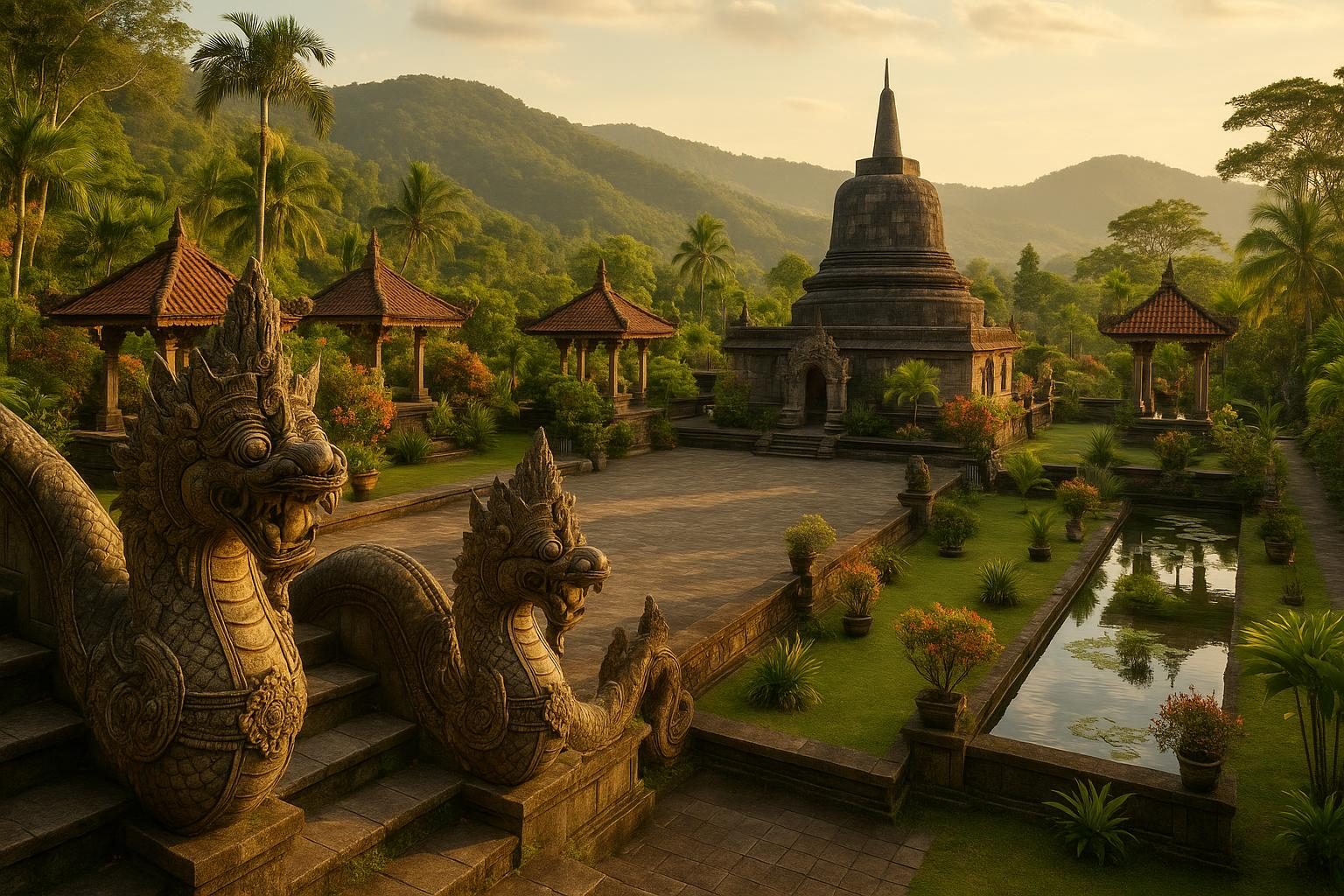
Architecturally, it's a striking blend of Balinese and Buddhist elements. Twin dragon sculptures flank the staircase leading into the first courtyard, setting an appropriately dramatic tone. From there, the grounds open into a series of terraces dotted with Buddha statues and a large bell-shaped stupa. Climb to the highest point of the complex and you'll find a miniature replica of Java's Borobudur temple, surrounded by ornamental ponds and gardens—a favorite spot for photos and quiet reflection.
What to See & Do
Most visitors spend 30 to 45 minutes wandering the courtyards, statues, and gardens, though photographers and anyone hoping to sit quietly for a while should budget extra time. The site also functions as a meditation and retreat center, and it's genuinely open to foreign visitors interested in learning more about Buddhist practice—worth asking about at the entrance if that interests you.
Because it's an active monastery rather than a museum piece, the atmosphere shifts depending on when you visit. Arrive early morning or late afternoon and you may catch monks going about daily routines, along with cooler air and fewer crowds.
Practical Info
Brahmavihara-Arama is open daily from 8am to 6pm, though hours can flex around ceremonies and religious observances. Entrance costs are inconsistently reported: some sources cite a ticket price in the range of 20,000–25,000 IDR, while others note there's no fixed fee and visitors are simply encouraged to leave a donation toward the temple's upkeep. Treat any figure as indicative and bring a small amount of cash for a contribution either way.
A dress code applies, as at most Balinese temples: shoulders and knees should be covered. Sarongs are available to borrow at the entrance if you arrive without one.
Getting there from Lovina takes about 20–30 minutes by road. The route climbs into the hills, so hiring a car or scooter with a driver is the more relaxed option if you're not confident navigating mountain roads yourself.
Nearby: Banjar Hot Springs
Just a few minutes from the monastery, Banjar Hot Springs makes a natural pairing for the same trip. Naturally heated pools flow through a series of tiered, sculpture-lined basins—a good way to unwind after the walk around the monastery grounds. Entrance is indicatively around 30,000–45,000 IDR, with children typically charged half price, and the springs are generally open from about 8:30am to 5:30pm. If you can, avoid visiting during Indonesian school holidays, when the pools get considerably busier.
Where to Stay
Lovina makes the most practical base for visiting Brahmavihara-Arama, keeping the monastery, hot springs, and coastline all within easy reach. For a comfortable stay in the area, The Lovina Bali Resort is a solid option—close enough to the coast to enjoy Lovina's laid-back pace, while putting you within a short drive of the monastery and springs inland.
Etiquette & Respect
Brahmavihara-Arama is a living place of worship, not a stage set for photos. Keep your voice low, move calmly through the courtyards, and always ask permission before photographing monks. Respecting the dress code and general quiet of the space goes a long way here—this is someone's spiritual home, not just a sightseeing stop.
Best Time to Visit
For North Bali generally, the dry season from April to October brings the most reliable weather, making it the best window for combining the monastery with other regional highlights like Lovina's dolphin-watching boat trips, which run best in those same drier months. For the monastery specifically, aim for early morning or late afternoon: the light is softer, the air is cooler, and you'll likely have more of the courtyards to yourself.
Whether you're passing through en route to the hot springs or making a dedicated trip from Lovina's black-sand shoreline, Brahmavihara-Arama offers a genuinely different side of Bali—one built on quiet, contemplation, and centuries-old tradition rather than surf and sunsets.