Surfing Uluwatu: The Cliff Break, Cave Entry and World-Class Waves
Uluwatu is one of the most revered surf breaks on the planet — a thundering left-hander peeling beneath a 70-metre limestone cliff that has drawn the world's best surfers for half a century. This is your complete guide to riding it safely, respectfully, and at the right moment.
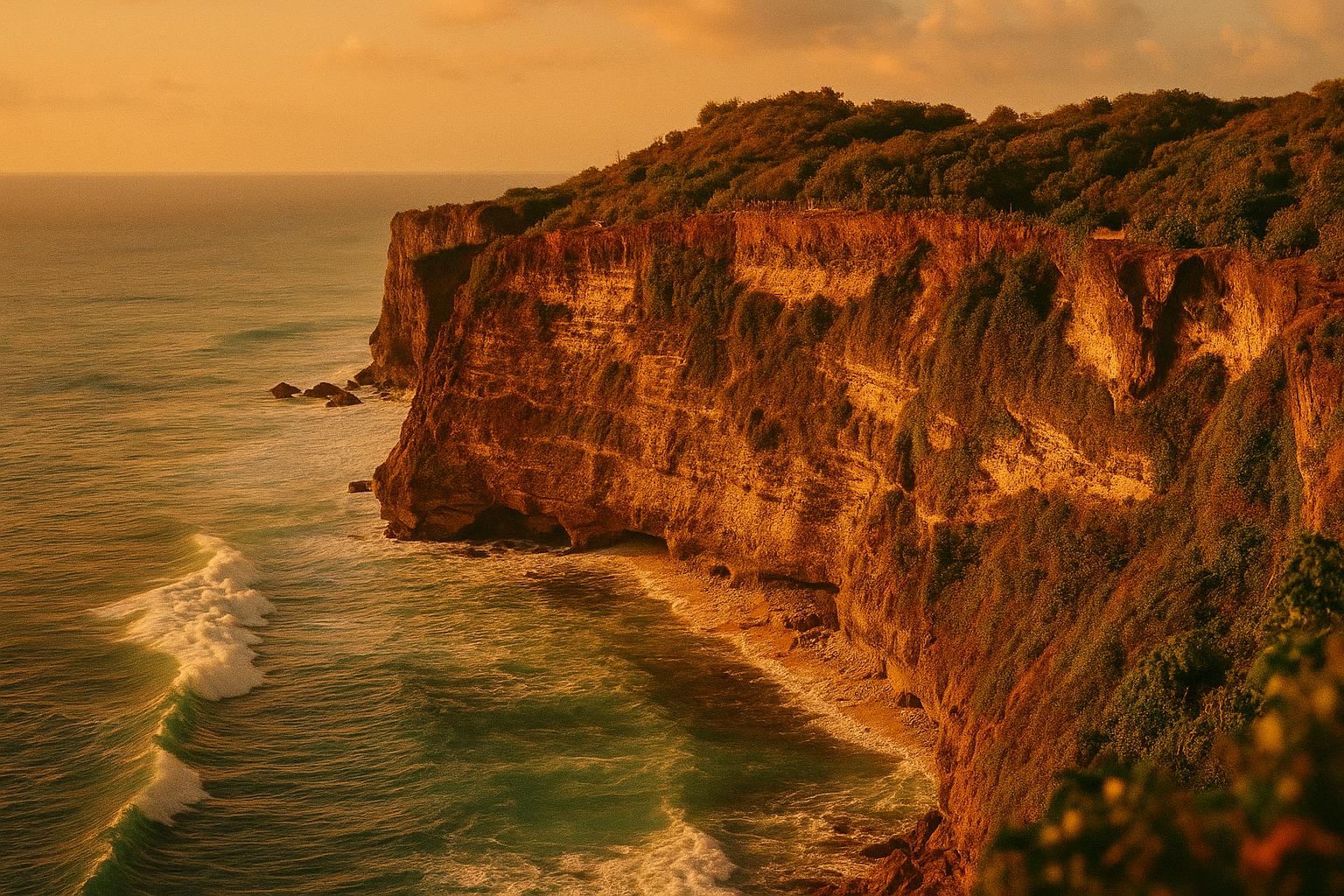
Uluwatu is one of the most revered surf breaks on the planet — a thundering left-hander peeling beneath a 70-metre limestone cliff that has drawn the world's best surfers for half a century. Whether you've watched the footage a hundred times or you're paddling out for the first time, nothing fully prepares you for the cave entry, the roar of the sets, and the sheer scale of the place.
This is your complete guide to surfing Uluwatu — the wave itself, how to get in, what level you need to be, the surrounding breaks of the Bukit Peninsula, when to go and what to watch out for.
The Wave: What Makes Uluwatu Legendary
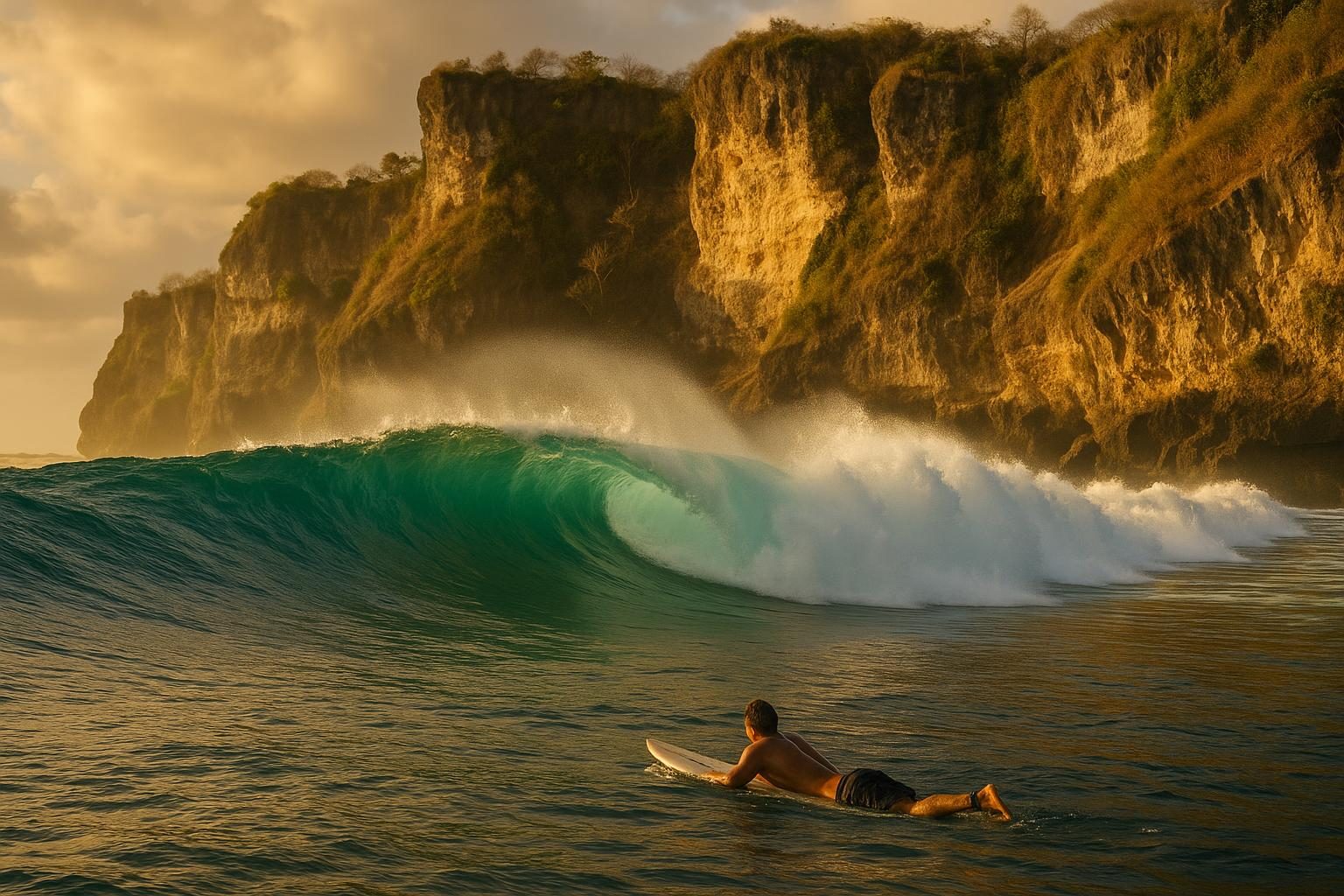
Uluwatu sits at the southwestern tip of the Bukit Peninsula, where the Indian Ocean sends long-period southwest swells straight into a horseshoe-shaped reef. The result is a world-class left-hander that can hold waves from two feet to double overhead and beyond.
At its best — medium swell, light offshore winds, incoming tide — Uluwatu produces long, barrelling lefts that peel across three distinct sections: The Peak, The Racetrack, and The Bombie, each with its own personality. The Racetrack is the most photogenic, a fast, spinning wall that rewards surfers who can read the reef and hold their line. The Bombie, which activates on larger swells, is for experienced big-wave riders only.
The wave breaks directly over a shallow, uneven reef. Wipeouts at Uluwatu are punishing — you will hit the coral, and the hold-downs can be long on bigger days. This is emphatically not a beginner or intermediate break.
The Cave Entry: How to Get In and Out
The most iconic — and occasionally terrifying — part of surfing Uluwatu is the access. From the clifftop, you follow a steep, narrow path down through a cave carved into the limestone. At the bottom, you wait for the right moment, then jump from a concrete ledge directly into the water. Timing is everything: go too early and a surging wave slaps you back; go too late and the sucking backwash leaves you stranded on the rocks.
Watch a few surfers exit before you enter — experienced locals read the rhythm instinctively. The same cave is the exit point, and getting back in on a big day, with a leash wrapped around your ankle and the surge working against you, is where many surfers come unstuck. Stay calm, wait for the lull, and let the wave carry you onto the platform rather than fighting it.
At low tide, the approach becomes more technical. At very low tide, the cave can be difficult even for experienced surfers — check the tide table before you paddle out.
Skill Level: Advanced Surfers Only
Uluwatu demands a minimum of solid intermediate-to-advanced surfing ability, and even that undersells it on bigger days. You should be able to:
- Confidently surf hollow, punchy reef breaks
- Read a fast-moving left and position yourself on the peak
- Handle a hold-down and remain calm underwater
- Duck-dive heavy, close-out sets
If you are still working on your pop-up, surfing beach breaks, or have never ridden a reef, Uluwatu will hurt you. There are better places on the peninsula to progress first.
The Surrounding Breaks: Bukit Peninsula
The peninsula around Uluwatu is arguably the most concentrated collection of quality surf breaks in Bali. Within 15 minutes of the main peak, you have options for every level:
Padang Padang — A short, powerful left barrel that only turns on with a solid swell. When it's on, it's one of the best waves in Bali. More selective about the swell than Uluwatu, but even more intense when it fires.
Bingin — A punchy, hollow left that breaks just offshore from the beach. More forgiving than Uluwatu, ideal for competent intermediate surfers wanting to experience reef surfing without the extreme consequences. The beach itself is one of the most beautiful on the peninsula.
Impossibles — Between Padang Padang and Bingin, Impossibles is a long, sectiony left that connects beautifully on the right swell. Named for supposedly being impossible to link — it isn't, on a good day, and the rides are incredibly long.
Balangan — A mellower left on the north side of the peninsula, more accessible for intermediate surfers and less crowded than the main breaks.
Getting There
From Seminyak or Kuta, Uluwatu is roughly 45 minutes by motorbike or car, following the toll road south to the Bukit. The last section of road narrows and winds — a motorbike is the easiest option.
Parking is available near the temple entrance. Board rentals and surf schools operate at the clifftop warungs, though the boards on offer are basic — bring your own if you're serious. Surf guides who will paddle out with you can be arranged through the beach cafés and are worth every rupiah for a first visit.
Best Season
The southwest swells that power Uluwatu arrive most consistently from April to October, with the peak months being June, July and August. These months also bring offshore winds in the morning — typically until around 10 or 11am before the sea breeze picks up. Dawn patrol at Uluwatu, arriving before the crowds and the thermal wind, is one of those surf experiences that stays with you.
The wet season (November to March) can still produce surf, but swells are less consistent and the winds are less cooperative. On the other hand, crowds thin considerably.
Risks and Practical Notes
The reef at Uluwatu is sharp and shallow, and cuts are common. Reef boots are worth considering on smaller swells when you might be walking the reef. Board shorts alone leave a lot of skin exposed — full-length boardies and a rash vest give some protection.
Theft from lockers and bags left at the warungs is occasionally reported — take only what you need. Monkeys from the temple nearby are notorious for opportunistic grabs, so keep food, sunglasses and anything shiny out of reach.
Respect the locals and the line-up. Uluwatu has a strong local surfing culture, and the etiquette of not snaking sets, waiting your turn and reading the pecking order applies here more than most places.
For more on the broader peninsula, see our guide to Uluwatu's beaches and surfing in Bali.