Lovina's Black Sand Beach: Snorkelling, Jukung Rides and the Quiet North Coast
Lovina's black volcanic beach is everything the south of Bali is not — calm, local, unhurried, and genuine. Here is how to make the most of the north coast's most underrated stretch of shoreline.
A Beach That Doesn't Perform for You
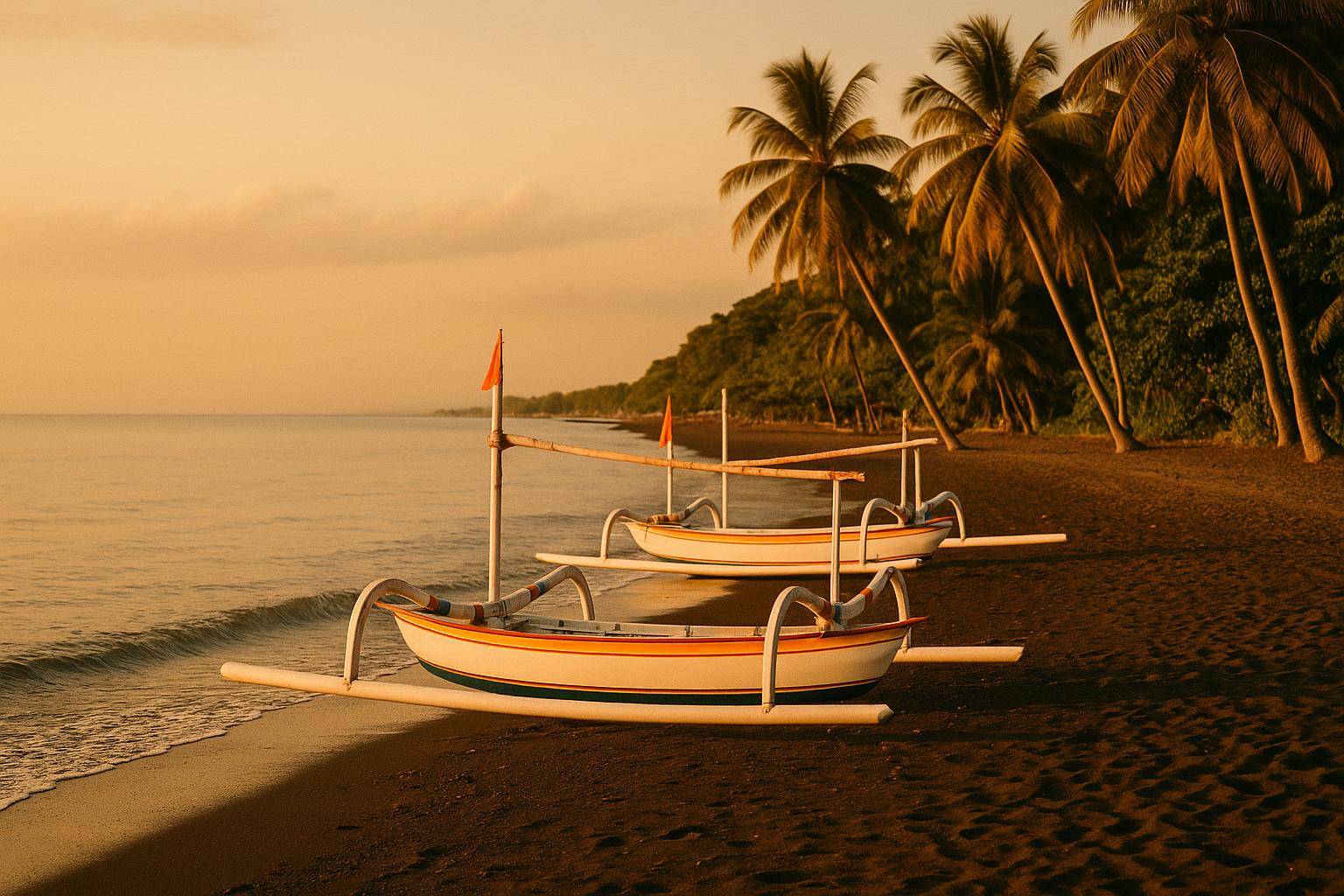
The first thing most people say about Lovina Beach is that it is not what they expected. There are no waves. The sand is dark — almost black in the wet, a warm charcoal grey when dry. There are fishing boats pulled up in long rows and fishermen mending nets in the late afternoon. The sea is glassy and flat and shallow for a long way out. Children play in the shallows. Cats sleep under the outriggers.
It is not a beach for sunbathing and cocktails. It is a beach for people who want to understand what a Balinese fishing village looks like when it has not been landscaped for tourism.
The Black Sand: Volcanic Origins
The dark sand that defines Lovina's coastline is the result of its geology. North Bali sits closer to the active volcanic systems that created the island — Gunung Agung and the older Gunung Batur lava flows have been carried by rivers and coastal erosion to the northern shore over millennia, resulting in beaches with a characteristic dark mineral composition. The sand is fine and clean; it is not the coarse grey grit of some volcanic beaches. In morning light it catches a subtle dark shimmer.
For visitors arriving from the white sands of Seminyak, Kuta, or Nusa Dua, the contrast is immediate and genuinely striking. Lovina's beach is one of the most visually distinctive in Bali.
Snorkelling the Reef
What most day-trippers miss: Lovina has a snorkelling reef. It sits roughly 200–400 metres offshore — far enough that you need a jukung to reach it, close enough that the trip takes ten minutes. The reef is shallow (3–8 metres at most points) and sheltered from current by the natural configuration of the bay, which makes it accessible to beginner snorkellers without a guide.
Conditions are best in the dry season (April–October). Visibility runs 5–15 metres on a good day. The coral is not pristine — some bleaching from warmer El Niño years is visible — but fish life is abundant: parrotfish, wrasse, damselfish, the occasional small reef shark resting on the sandy floor. Hawksbill turtles are reported sporadically.
How to arrange snorkelling: Walk the beach in the morning and approach a jukung captain directly. A standard snorkelling trip (boat + equipment) runs IDR 100,000–150,000 per person on a shared basis, or IDR 250,000–300,000 for a private boat. Most captains include basic mask and fin rental. Bring your own snorkel if you prefer.
Jukung Rides: The Best Way to See the Bay
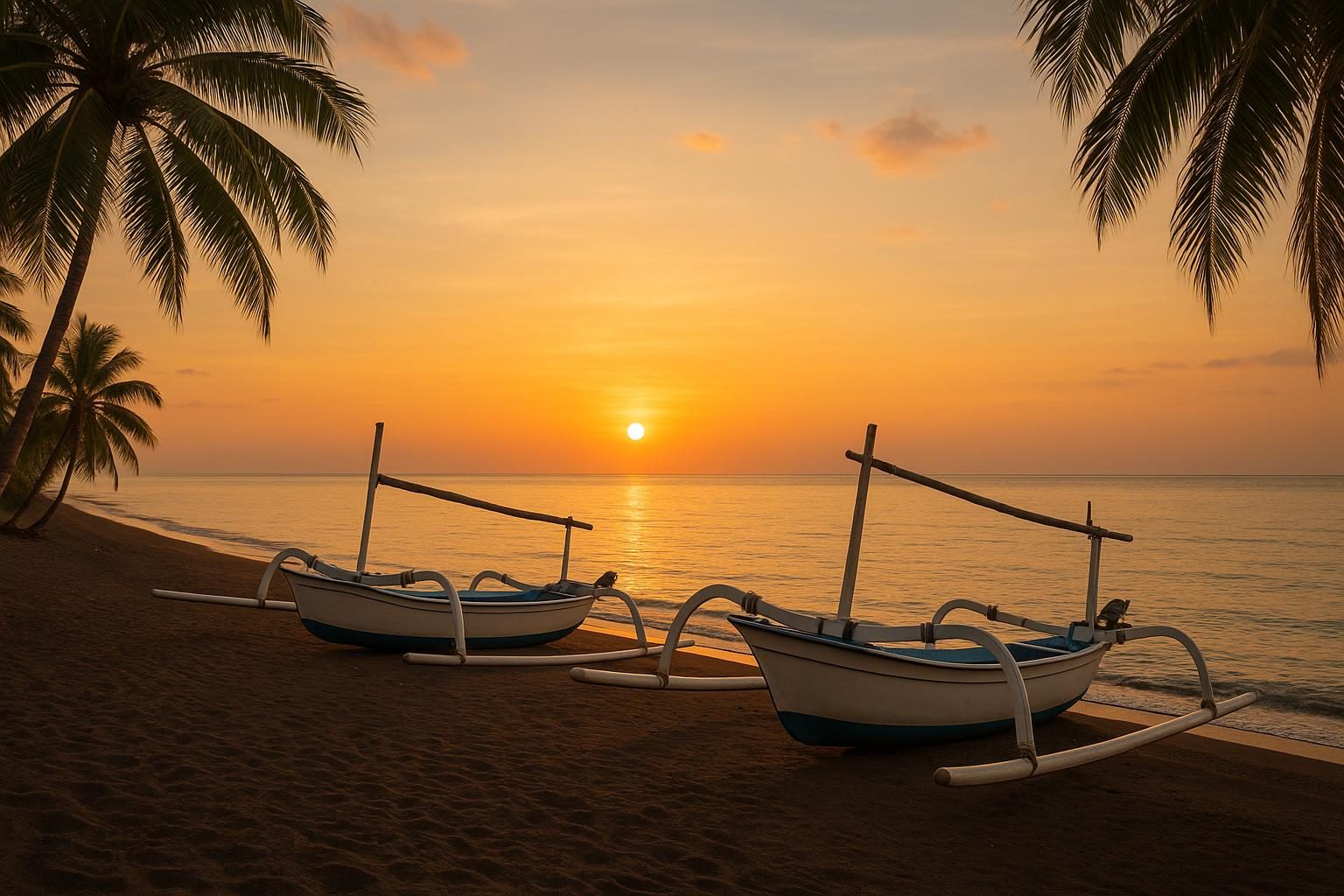
Even if you do not snorkel, a jukung ride at dawn or dusk is one of the defining Lovina experiences. These traditional outrigger canoes — narrow, painted in bright colours, stabilised by twin bamboo floats — are the same boats used for the dolphin trips and the same design that has worked these waters for centuries.
A one-hour sunset jukung ride, drifting along the coast with the sky going orange over the Bali Sea, costs IDR 80,000–120,000 per person. The north-facing orientation of Lovina's bay means you see the sun descend toward the horizon over open water — one of the few sunset-over-sea views in Bali, which faces east on its famous surf beaches.
The Fishermen and the Morning Market
Arrive at the beach before 7:00 am and you will catch the fishing boats coming in. The catch is sold directly on the beach — local women with plastic tubs of reef fish, prawns, and the occasional cephalopod, negotiating with restaurants and households in rapid Balinese. It is not theatrical. It is not staged for tourists. That is the point.
The adjacent Lovina morning market (just inland from the promenade, near the dolphin statue roundabout) runs until around 8:30 am and sells the same fish alongside tropical fruit, tempeh, and fresh-made offerings. A Balinese coffee here — thick, sweet, poured over grounds that settle to the bottom of the glass — costs IDR 8,000–12,000 and tastes like it was made specifically for this kind of quiet morning.
How Lovina Compares to South Bali
The comparison is useful because it is absolute:
| Lovina | South Bali (Seminyak/Kuta) | |
|---|---|---|
| Sand | Black volcanic | White/cream |
| Waves | Calm, almost none | Atlantic-style shore break |
| Crowds | Low–moderate | Dense in peak season |
| Water sports | Snorkelling, jukung | Surfing, jet ski, parasail |
| Sunsets | Over the sea | Over the sea |
| Atmosphere | Local, fishing village | Tourist infrastructure |
| Price | Lower | Higher |
Lovina is not better or worse than south Bali beaches. It is a fundamentally different thing: a working coast that happens to be beautiful, rather than a beautiful coast that has been arranged for tourism.
Practical Details
- Beach location: Central Lovina, Kalibukbuk — main access point with parking, warungs, and sunbeds for rent (IDR 20,000–30,000)
- Swimming: Safe year-round in the main bay; gentle entry, no rip currents. Water is warm (27–29°C)
- Best time of day: Dawn (for fishing activity and dolphin boats) or late afternoon (jukung rides, golden light)
- Sunscreen: Apply reef-safe only if you plan to snorkel — the reef is close and fragile
- Nightlife: Minimal — a few beachside warungs serving cold Bintang and grilled fish. Lovina goes to sleep early and that is part of its appeal
For the full picture of the north coast, our [/region/lovina] guide covers accommodation, temples, and day trips inland. The coast west toward [/region/pemuteran] offers world-class diving if you want to continue along the shore.