Lovina Dolphin Watching: Dawn Boat Trips and the Quietest Morning in Bali
Lovina's dolphin sunrise is unlike anything else in Bali — no crowds, no noise, just jukung boats on a glassy sea and wild spinners leaping at first light. Here's how to do it right, ethically and memorably.
Why Lovina Dolphin Watching Is Different
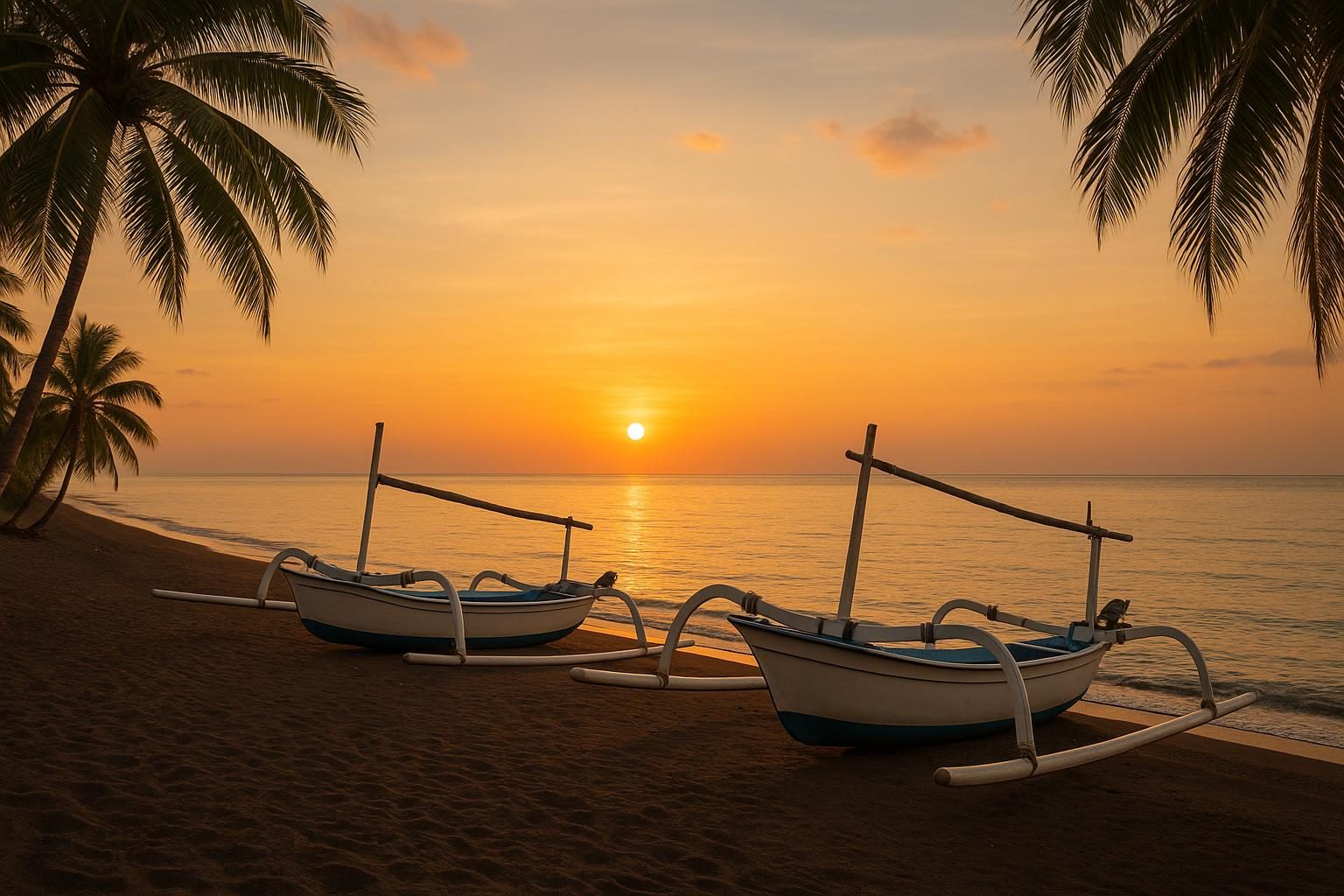
Most of Bali's famous experiences arrive pre-packaged with crowds, queues, and Instagram scaffolding. Lovina dolphin watching is the exception. You wake before the world, walk to the dark beach, climb into a narrow outrigger, and push out onto a sea so flat it looks painted. By the time the sky turns amber over the Bali Mundi mountains, spinner dolphins are arcing out of the water thirty metres from your bow. There is no soundtrack except the motor's idle and the occasional gasp from the boat.
This is the quietest morning in Bali, and it has been for decades.
The Logistics: When, Where, How Early
The trip runs on dolphin time, not tourist time. Boats leave from Kalibukbuk Beach — the main strip of Lovina — starting around 5:00–5:30 am. Most operators agree that earlier is better: dolphins are most active in the hour before and after sunrise, feeding close to the surface in the cooler water. By 7:30 am the show is usually over and boats are heading back.
Kalibukbuk Beach, Lovina is the main departure point. You will find boat captains either waiting on the sand the evening before (to negotiate) or arriving at 4:45 am. Book through your accommodation the night before — this is genuinely the smoothest option and the price difference is minimal.
The journey to where dolphins are typically found takes 15–25 minutes offshore. The captain will kill the engine and drift. You wait. If the spinner dolphins (the local species — Stenella longirostris, recognised by their acrobatic full-body spins) are around, you will know within minutes.
Choosing an Ethical Operator
This is where it matters. Lovina dolphin watching has an ethical spectrum, and you should know where to position yourself on it.
The problematic version: dozens of jukungs rev their engines and chase the pod aggressively, circling in until the dolphins dive deep and disperse. You see them, briefly, in a scene that looks chaotic and feels wrong.
The better version: a single boat, a patient captain, engine off, drifting. The dolphins approach on their own terms. Spins happen at their own rhythm.
Questions to ask your operator before booking:
- How many boats will go out at the same time?
- Will you chase the dolphins if they move away?
- Do you cut the engine when dolphins are nearby?
Operators affiliated with local guides associations — look for laminated certificates in their office — tend to be more regulated. Rates in 2025 run from IDR 100,000–150,000 per person (roughly CHF 5–8) for a shared boat, or IDR 300,000–400,000 for a private jukung for two. The private option is worth it for the quieter experience alone.
Lovina Dolphin Boat Departure Area
What to Expect on the Water
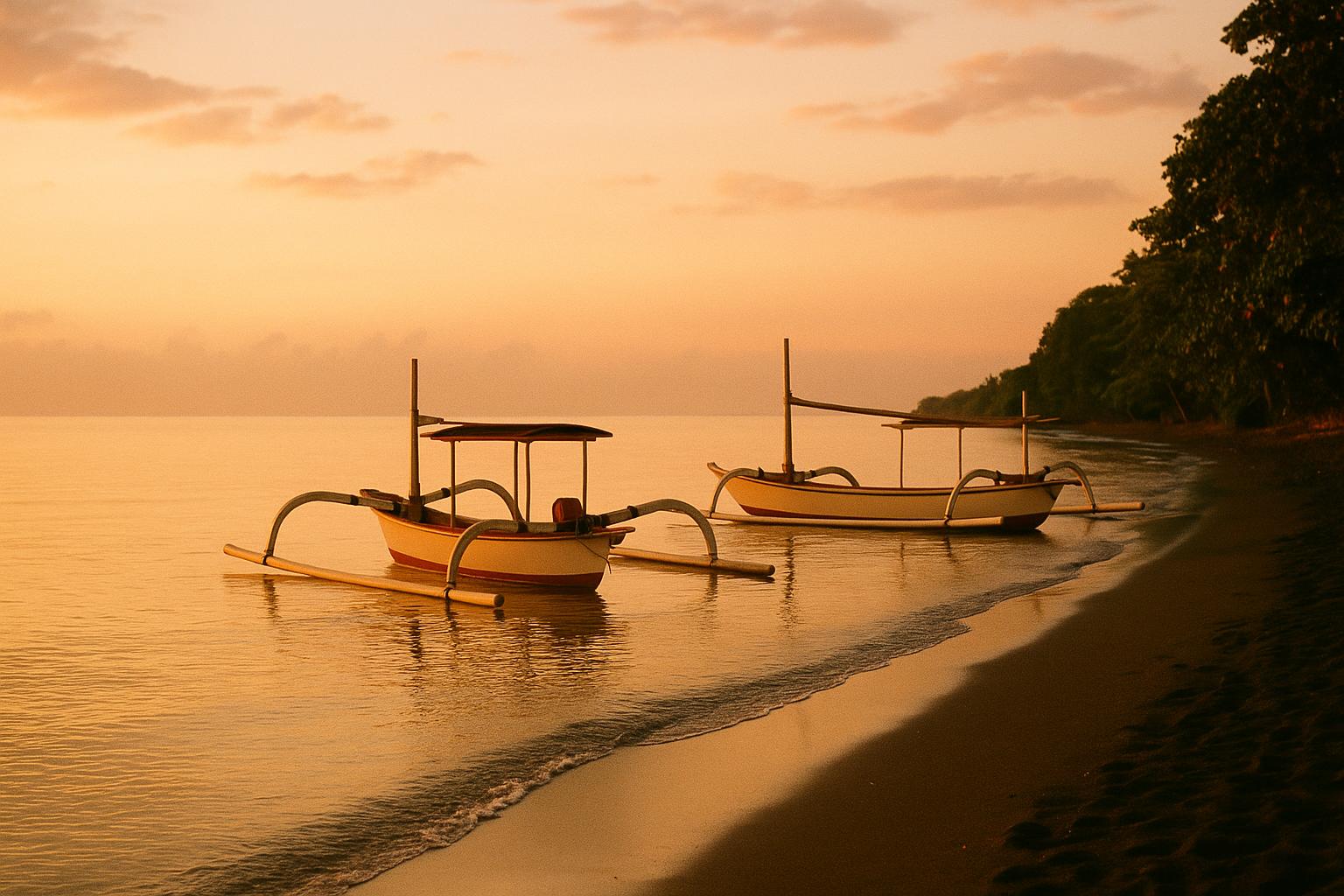
The jukung — a traditional Balinese outrigger in electric blue or yellow — is small, low to the water, and has no railing. Bring a light jacket: it is genuinely cool before sunrise on the north coast, even in the dry season. Bring a dry bag for your phone.
The dolphins that visit Lovina are spinner dolphins in resident pods, not occasional migrants. Sightings are reported on roughly 80–90% of trips during the dry season (April–October). Wet season (November–March) sees lower frequency but the sea is usually still calm enough to go out — Lovina sits in a sheltered bay and rarely gets the swell that closes south Bali beaches.
The spinners here perform their namesake move with apparent joy — launching clear of the water and rotating on their body axis before splashing back. A full spin can happen within arm's reach of the boat. It is not staged. It is not for you. That is precisely what makes it remarkable.
What to Do if There Are No Dolphins
It happens. No reputable operator will guarantee a sighting, and you should be wary of anyone who does.
If the dolphins are elsewhere, the trip is still worth taking for the sunrise alone. The north Bali coastline at 6:00 am — the light turning gold over the black-sand beach, the silhouette of Menjangan Island on the horizon to the west, the fishing boats coming in — is one of the quieter beautiful scenes on the island. Most captains will offer a partial refund or a free repeat trip the following morning, depending on your arrangement. Ask about this when booking.
After the Boats: Returning to Lovina Village
By 7:30 am you are back on the beach. The village is just waking up. Warung Dolphin and a handful of beachside cafés serve Balinese coffee and banana pancakes to returning passengers — this is the local post-trip ritual and one of the more pleasant breakfasts you will have in Bali.
If you have energy, the mornings in Lovina are genuinely good for walking the beachside promenade north toward Anturan village — quieter, more residential, with coloured fishing boats pulled up on the black sand and women selling fresh catch from plastic tubs. No souvenir stalls, no surf schools. Just a working coastal village doing what it has done for centuries.
Practical Summary
- Departure: 5:00–5:30 am from Kalibukbuk Beach, Lovina
- Duration: 1.5–2 hours on the water
- Price: IDR 100,000–150,000 shared / IDR 300,000–400,000 private
- Sighting rate: ~85% dry season, lower in wet season
- Best months: May–September for calm seas and high dolphin activity
- What to bring: Jacket, dry bag, motion sickness tablet if prone, camera with decent zoom
- Ethical rule: Engine off when dolphins approach. Leave if they dive. One boat, not a fleet.
Lovina will not give you the curated luxury of a Seminyak resort sunrise. It will give you something rarer: an actual wild encounter at the edge of a sleeping island, before the day has decided what it wants to be.
Staying nearby? Explore our guide to [/region/lovina] and what else the north coast offers around [/region/pemuteran].