Kelingking Beach: How to Visit Nusa Penida's Most Iconic Cliff
Kelingking Beach is the photograph everyone takes home from Bali — a jagged limestone headland shaped like a T-Rex, framing a crescent of untouched white sand far below. Here is everything you need to plan your visit safely and make the most of every minute.
Kelingking Beach: How to Visit Nusa Penida's Most Iconic Cliff
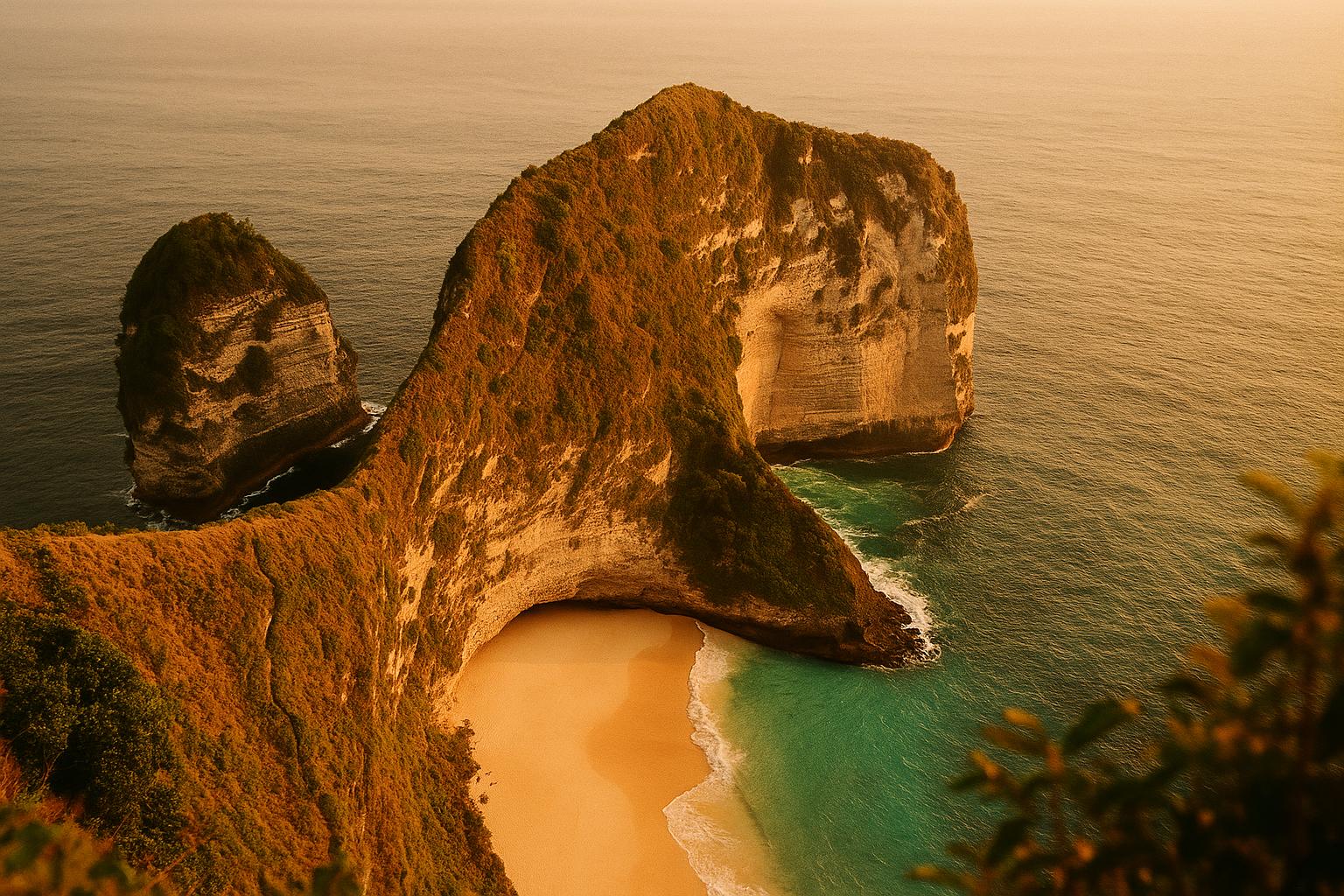
There is a viewpoint on the western edge of Nusa Penida where the ground simply disappears. One moment you are walking through sparse scrub, the next you are standing on the lip of a 200-metre limestone cliff, staring down at a headland shaped, impossibly, like a Tyrannosaurus Rex. Beneath its "neck", a sliver of perfect white sand curves into water so blue it looks painted. This is Kelingking Beach — and no photograph does it justice.
Nusa Penida's most iconic landmark draws visitors from across Bali, but most travellers have no idea what to expect beyond the Instagram image. This guide covers the viewpoint, the descent, the beach itself, and every practical detail you need to visit well.
What You Are Actually Looking At
The Kelingking formation is a limestone promontory that juts out into the Indian Ocean on Nusa Penida's southwest coast. Waves carved the peninsula into its distinctive shape over millennia, and the erosion is still very much ongoing — which is part of why the descent is so consequential. The beach at its base is technically reachable, but the route down is steep, unstable, and demands genuine respect.
Most visitors come for the viewpoint. From the cliff edge, you look straight down at the T-Rex silhouette, the beach beyond it, and open ocean stretching to the horizon. On a clear morning, the colours — turquoise shallows, deep navy beyond the reef, white limestone — are genuinely otherworldly.
The Viewpoint: Go Early, Go Patient
Kelingking Beach Viewpoint is accessible via a short walk from the small car park area where drivers and scooters congregate. The path is easy, the views immediate. Entry is a nominal fee collected at the entrance.
The single most important piece of advice: arrive before 7:30am. By 9am, tour groups fill the viewpoint platform, selfie sticks collide, and the quiet awe of the place evaporates. In the early morning, with soft golden light raking across the limestone and mist still clinging to the sea, Kelingking is close to perfect. By midday it is a crowd management exercise.
If you are arriving on the first ferry from Sanur (roughly 7am), hiring a driver who takes you directly to Kelingking first — before any other stop — is the smartest move you can make on Nusa Penida.
A secondary viewpoint exists to the right of the main platform, down a short rocky path. It is less visited, offers a slightly different angle on the T-Rex, and is worth the two-minute detour.
The Descent: Real Talk About the Risk
Below the viewpoint, a rope-assisted path drops steeply down the cliff face toward the beach. This is not a hike. It is a scramble on loose rock and compacted soil, with sections requiring both hands on the rope, and drops that would be serious if you slipped.
People do get injured here. The path degrades with every rainy season and sees almost no formal maintenance. In wet conditions — or in flip-flops, which is what half the tourists who attempt it are wearing — it is genuinely dangerous. A number of visitors have required evacuation.
If you decide to attempt the descent:
- Wear proper footwear — trail shoes or at minimum closed-toe shoes with grip. No sandals, no flip-flops.
- Go in the dry season (May through October) when the path is at its most stable.
- Allow 45–60 minutes down, 60–90 minutes back up — the ascent is significantly harder than the descent.
- Bring water — more than you think you need. The climb back in heat is exhausting.
- Do not attempt it alone. If you twist an ankle, there is no easy rescue.
- Assess honestly — if you are not comfortable with exposed scrambling, the viewpoint is extraordinary in its own right. You are not missing the "real" Kelingking by staying at the top.
The Beach Below
Kelingking Beach at the base is one of the most beautiful stretches of sand in Indonesia. It is also nearly uninhabited — a few local fishermen, occasionally a handful of visitors who made the descent, and nothing else. No sunbeds, no cocktails, no services.
Swimming, however, is extremely hazardous. The Indian Ocean swell hits this bay without mercy, and the beach faces directly into the open ocean. Rip currents are powerful and unpredictable. Do not swim at Kelingking Beach unless conditions are utterly flat and you are a very confident open-water swimmer — and even then, exercise significant caution.
The beach is a place to sit, to feel the scale of the cliffs above you, and to appreciate the silence. That is more than enough.
Getting to Kelingking from the Ferry
The fast boats from Sanur dock at Toyapakeh harbour on Nusa Penida's north coast. Kelingking is on the island's southwest tip — roughly 45 minutes to an hour by scooter, longer if you hire a driver in a car.
Toyapakeh Harbour is where virtually all tourist boats arrive, and drivers and scooter rentals are immediately available at the dock. Agree a price before you get in.
- Scooter rental: around 70,000–100,000 IDR per day. The roads on Nusa Penida's west side are steep, narrow, and occasionally hairy — only hire a scooter if you are a confident rider.
- Private driver: 350,000–600,000 IDR for a full day west circuit, including Kelingking, Broken Beach, and Angel's Billabong. Worth every rupiah for the peace of mind.
- Organised day tours from Sanur or Bali include Kelingking as a stop, though you will have less time and will almost certainly arrive mid-morning.
Practical Details
Entrance fee: approximately 20,000–30,000 IDR per person (subject to change — bring small denominations).
Best months: May through October for dry, clear skies. November through March brings rain, rough roads, and more slippery conditions on the descent.
What to bring: sunscreen (the viewpoint offers no shade), hat, at least two litres of water per person, trail shoes if you plan to descend.
Photography: the classic shot is taken from the main platform looking southwest. For different angles, explore the path to the right of the main viewpoint. Golden hour — around 7am — produces the best light.
Time to budget: 45 minutes at the viewpoint alone; 3–4 hours minimum if you descend to the beach.
A Note on Sustainability
Kelingking is under pressure. The path erodes faster than it recovers, litter has become a problem, and the sheer volume of visitors is changing the character of the place. Come early, take your rubbish with you, and treat the site with the same care you would want others to bring.
The cliff will be here long after the tourists are gone. The least we can do is make sure it stays worth visiting.