Sanur with Kids: Calm Waters, Activities and Why It's Bali's Best Family Base
Sanur's protected lagoon, traffic-free promenade, and short hop to Nusa Penida make it the most sensible family base in southern Bali. Here's an honest breakdown of why it works — and how to make the most of it with children in tow.
The question every parent asks before booking a Bali holiday is some version of: will the beach actually be safe for my kids? The honest answer for most of Bali's famous beaches — Kuta, Seminyak, Canggu — is: probably not ideal. Those beaches face the open Indian Ocean. The waves are real, the rips are real, and the children's paddling zone is limited to the few metres of flat water before the shore break begins.
Sanur is different. The reef lagoon changes the calculation completely.
The Lagoon: The Reason Sanur Works for Families
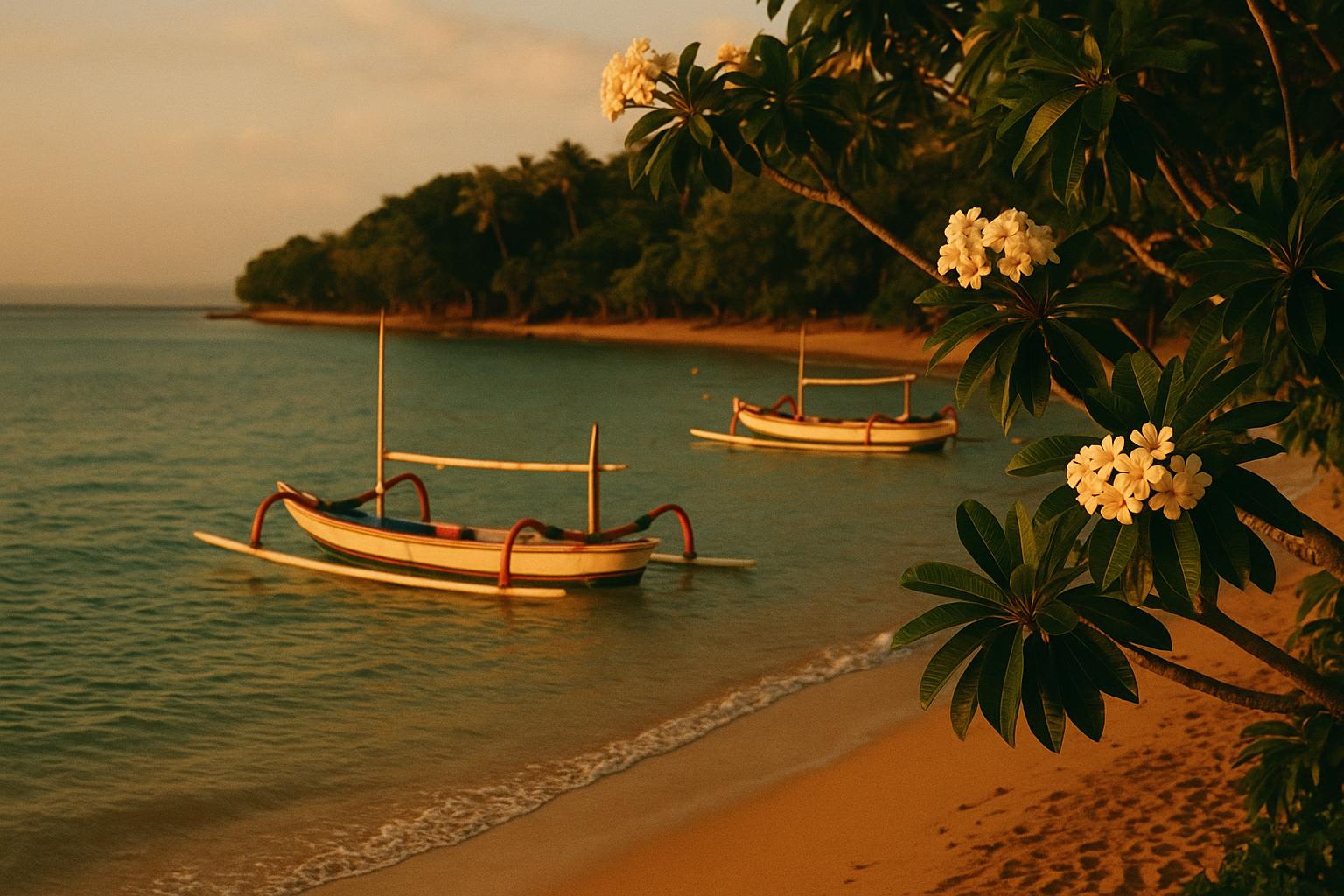
A coral reef running parallel to Sanur's shore creates a natural breakwater. The result is a flat, shallow lagoon that extends 200 to 400 metres offshore — calm enough to wade, clear enough to see the bottom, warm enough to spend hours in. This is not manufactured safety; it is genuine geography.
Sanur Beach along the main promenade strip is where most families gravitate. The water here is knee-to-waist depth for a significant distance, with a sandy bottom and minimal current. Children who cannot yet swim can move around the lagoon with confidence. Children who can swim have a large, contained area where the ocean behaviour is entirely predictable.
Compare this to Kuta, where the shore break is powerful enough to knock adults off their feet, and the lifeguard flags are not decorative. Sanur does not require the same level of vigilance at the water's edge, which is an enormous practical difference for parents who want to sit for twenty minutes without actively monitoring every wave.
The Promenade: A Logistical Gift
Sanur Beach Promenade is 4km of paved path running the full length of the beach, largely free of motorbikes and with enough shade from mature trees to be walkable even in the late morning heat. For families, this is unusually valuable infrastructure.
It is wide enough for pushchairs and prams. It is level throughout. It has warungs and small cafés at regular intervals for drinks and snacks. It has beach access at every 100 metres or so, so getting from the path to the water and back is immediate.
Children can be put on hired bicycles and ridden the full length safely — the path has enough space that faster cyclists and slower family groups coexist without conflict. Bicycle rental is available at multiple points along the promenade for 30,000–50,000 IDR per bike per day, with child seats and attached trailers available at the larger hire shops.
Activities for Different Ages
Toddlers and young children are well served by the lagoon itself — no additional activity required. The Sanur Beach Play Area near the central promenade section has some basic equipment. Most hotels in the area have pools that are genuinely usable for young children.
Older children (6–12) have more options. Kite surfing lessons — Sanur is one of the best kite surfing spots in Bali due to its reliable onshore winds and flat lagoon water, and there are operators at the northern end of the beach offering introductory lessons from age 8 upward. Sanur Kite Surfing School gives an idea of what's available; operators cluster at the northern beach section. Stand-up paddleboarding is available at most beach clubs and is achievable from around age 7. The calm lagoon makes it far more successful for beginners than open ocean spots.
Snorkelling in the lagoon near the reef line is accessible from around age 6–7 with basic instruction. The marine life is modest — reef fish, small coral gardens, the occasional turtle — but for children seeing tropical fish for the first time it is memorable. Equipment rental is available from beach vendors along the promenade.
Teenagers with more independence will find Sanur less stimulating than Canggu's surf culture or Seminyak's beach clubs, but the fast boat to /region/nusa-penida (25–40 minutes from the Sanur terminal) opens up a full day of cliff viewpoints, snorkelling with manta rays, and scenery that holds attention at any age.
Day Trip to Nusa Penida
From Sanur, the crossing to Nusa Penida takes 25–40 minutes on a fast boat. Sanur Boat Terminal is at the southern end of the promenade — no pre-dawn transfer across the island required, which is one of the most significant logistical advantages of staying in Sanur.
For families, a Nusa Penida day trip via private driver is recommended over a group tour. The island's famous viewpoints (Kelingking, Angel's Billabong, Broken Beach) involve cliff-edge paths that require close adult supervision with young children. The views are extraordinary; the safety infrastructure is minimal. Go with a hired driver who knows the road conditions, and keep toddlers in arms at the viewpoints.
The snorkelling at Crystal Bay and the manta ray encounter at Manta Bay are suitable for children who are comfortable in open water. Life jackets are provided; the boat operators manage the safety aspect.
Accommodation Logic
Sanur's accommodation range skews toward established mid-range and heritage hotels rather than the villa-rental circuit that dominates Seminyak and Canggu. For families this often works in favour — proper hotels have pools with shallow ends, restaurants that accommodate early dinner times, and staff familiar with family logistics.
Inna Grand Bali Beach at the northern end has large grounds, multiple pools, and direct beach access. Puri Santrian is set in mature tropical gardens with a beach club and calm pool complex suited to families. Both are established enough to have worked out family logistics over decades.
For families wanting villa space and privacy, the lanes behind the main strip have a number of smaller properties with private pools in the 800,000–2,000,000 IDR per night range — local rates that would be significantly higher for equivalent space in Seminyak.
The Practical Case vs Kuta
The comparison is worth making directly. Kuta is cheaper. It is also louder, harder to navigate with pushchairs, beach-swimming is more dangerous, the street environment is more chaotic, and the distance to quieter parts of Bali is greater.
Sanur costs slightly more. The beach is genuinely swimmable. The promenade is safe for children on bicycles. The neighbourhood functions as an actual community with real restaurants and a morning market. The fast boat to Nusa Penida is at the end of the promenade. The general noise level in the evenings allows children to sleep.
These differences compound over a week-long stay. Sanur is not marketed as a family destination the way Kuta once was. The result is that it has avoided the worst of that association while offering the actual infrastructure that families need.
For families making their first Bali trip, or for parents who want a holiday that functions for adults as well as children, Sanur is not the compromise. It is the considered choice.
See the /region/sanur guide for full accommodation picks, transport, and what to do when the beach is enough.