Sanur Beach: The Calm, Unhurried Side of Bali and Why It's Better Than You Think
Sanur is Bali's best-kept secret — a protected lagoon, a 4km seaside promenade, and sunrises over open water that no other beach on the island can offer. Here's why the unhurried side of Bali deserves far more credit.
Mention Sanur to most first-time visitors and you'll get a polite nod followed by a pivot to Seminyak or Canggu. It's the beach people skip on the way to somewhere else — the sensible choice, the quiet option, the one their parents liked. That reputation is both entirely understandable and profoundly unfair.
Spend a few days at Sanur and something shifts. The absence of hard-sell hawkers starts to feel like luxury. The flat, protected water becomes something you actually want to swim in. The long promenade threading past fishing boats and banyan trees earns the morning walk you keep putting off. Sanur is not trying to be Kuta. It succeeds at being exactly itself — and that turns out to be quite a lot.
The Lagoon: Why the Water Actually Matters
The single most underrated feature of Sanur is its reef. A coral barrier running roughly parallel to the shore creates a lagoon that is calm, shallow, and warm at virtually all hours. Where Kuta Beach smashes waves directly onto the sand and Seminyak churns with rips and undertow, Sanur's water is flat enough to wade out 200 metres and barely reach your chest.
For swimmers who are not confident in surf, for families with young children, for anyone who wants to float rather than fight, this is transformative. The lagoon temperature sits between 27°C and 30°C year-round. Visibility on a calm morning is good enough to spot reef fish from the surface — no snorkel mask required, though bringing one rewards you with parrotfish, sergeant majors, and the occasional sea turtle drifting along the bottom.
The best snorkelling sits just inside the reef line at Sanur Reef Snorkel Area, roughly a 15-minute paddle from the main beach. At low tide the coral is close enough to the surface to warrant care; at high tide it opens up into a proper drift along the wall.
The Promenade: Four Kilometres of Actual Pleasure
Sanur Beach Promenade runs the full length of the beachfront — approximately 4km from Inna Grand Bali Beach in the north down to the boat terminal at the southern end. It is paved, shaded in sections by mature trees, lined with low-key cafés and art shops, and almost entirely free of motorbikes. In a country where pavements are optional and pedestrians rank below stray dogs in the road hierarchy, this is remarkable.
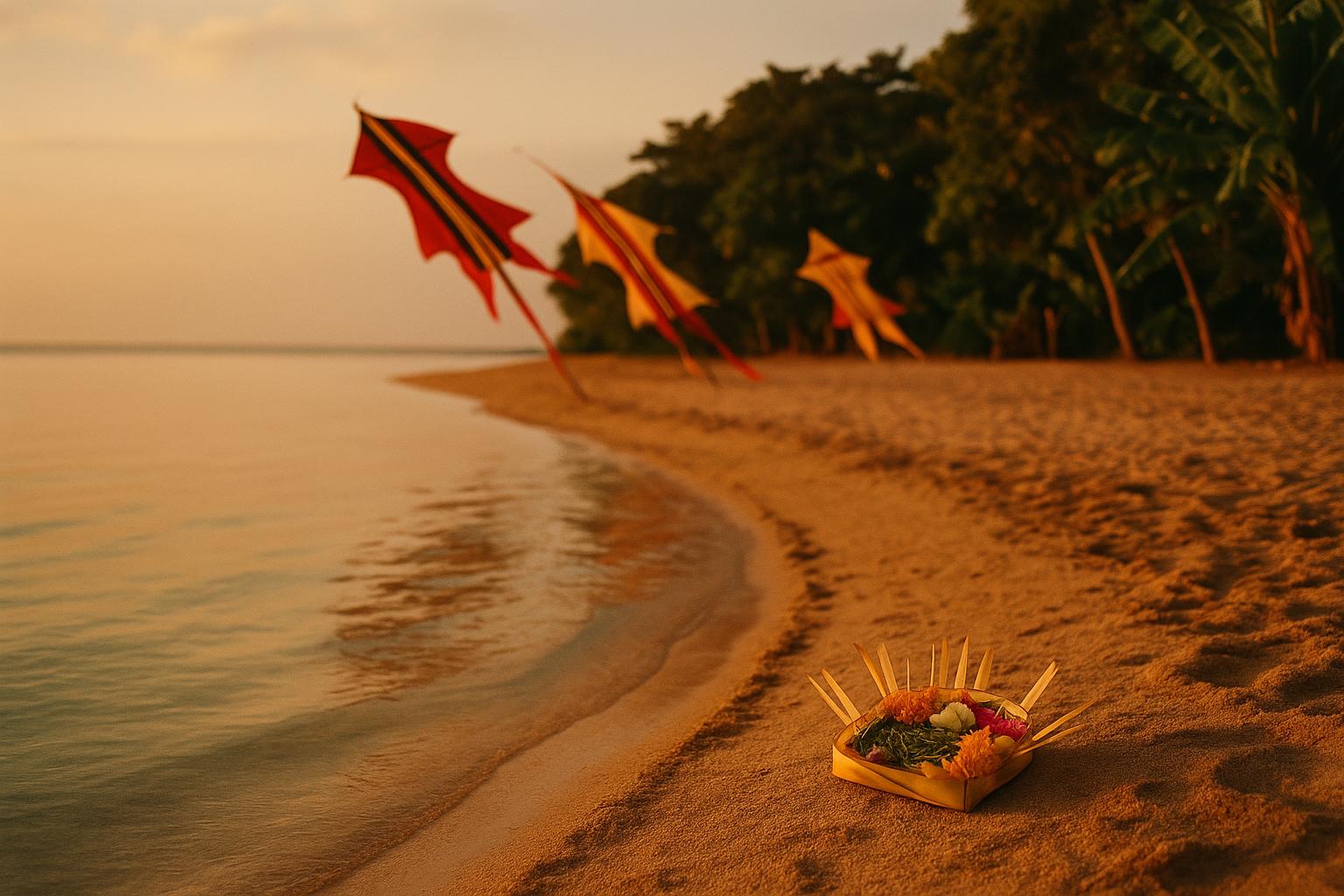
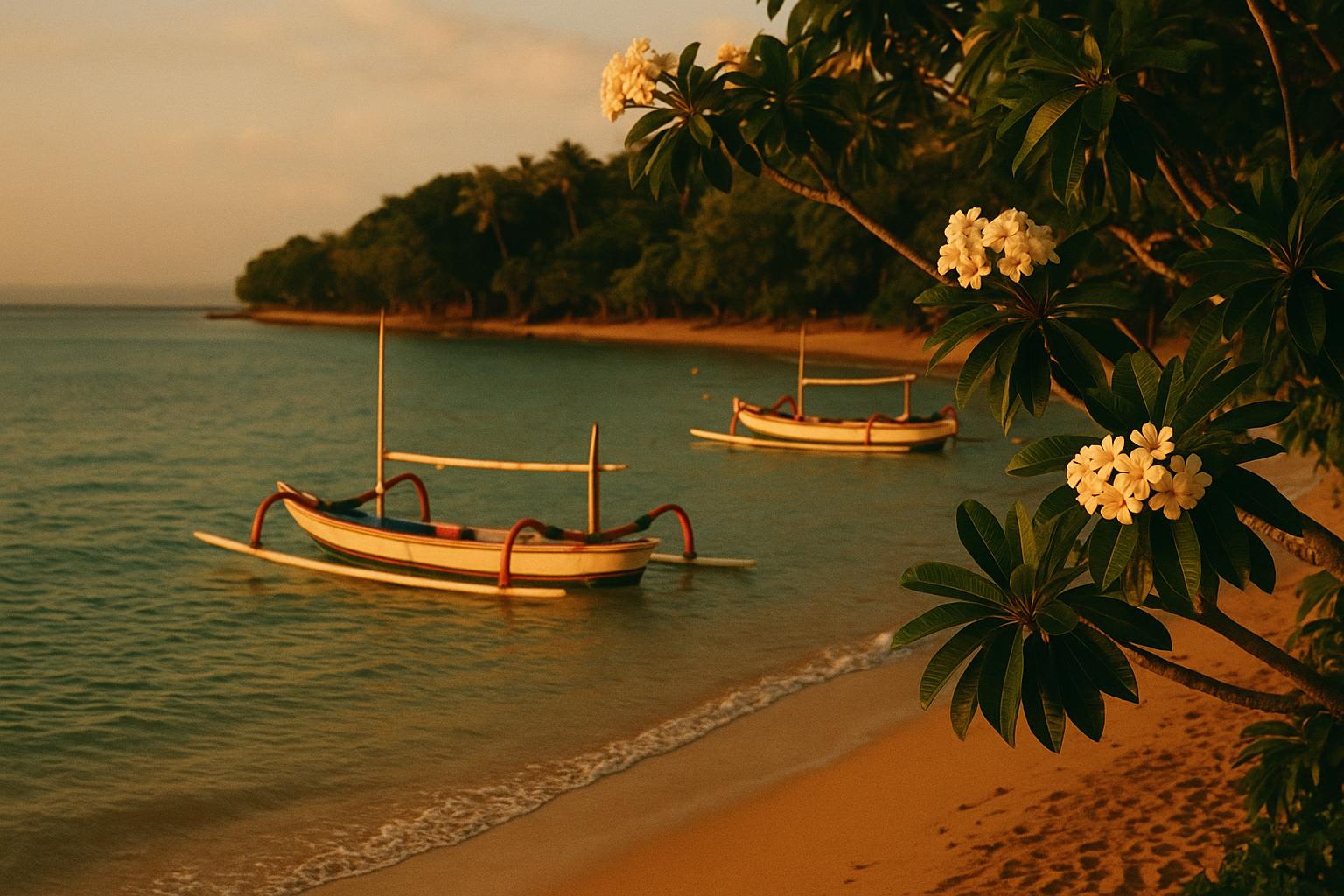
The promenade works at every speed. Joggers use it at 6am before the heat arrives. Families rent bicycles and pedal it end to end. Elderly couples stroll it after dinner. The surface is even enough for pushchairs. At intervals, traditional jukung outrigger boats are pulled up onto the sand between the path and the water — not for show, but because fishermen actually use them.
Vendors here are present but unhurried. You will be approached; you will not be followed. The contrast with the beach hustle of southern Kuta or the boutique pressure of Seminyak is immediate and significant.
Sunset Facing East: The Geographic Surprise
Bali's east-coast beaches face east, which means the island's famous golden-hour light catches Sanur in the morning rather than the evening. This is well understood when it comes to sunrise — Sanur is rightly celebrated for it. What is less often mentioned is that late afternoon at Sanur has its own quiet magic.
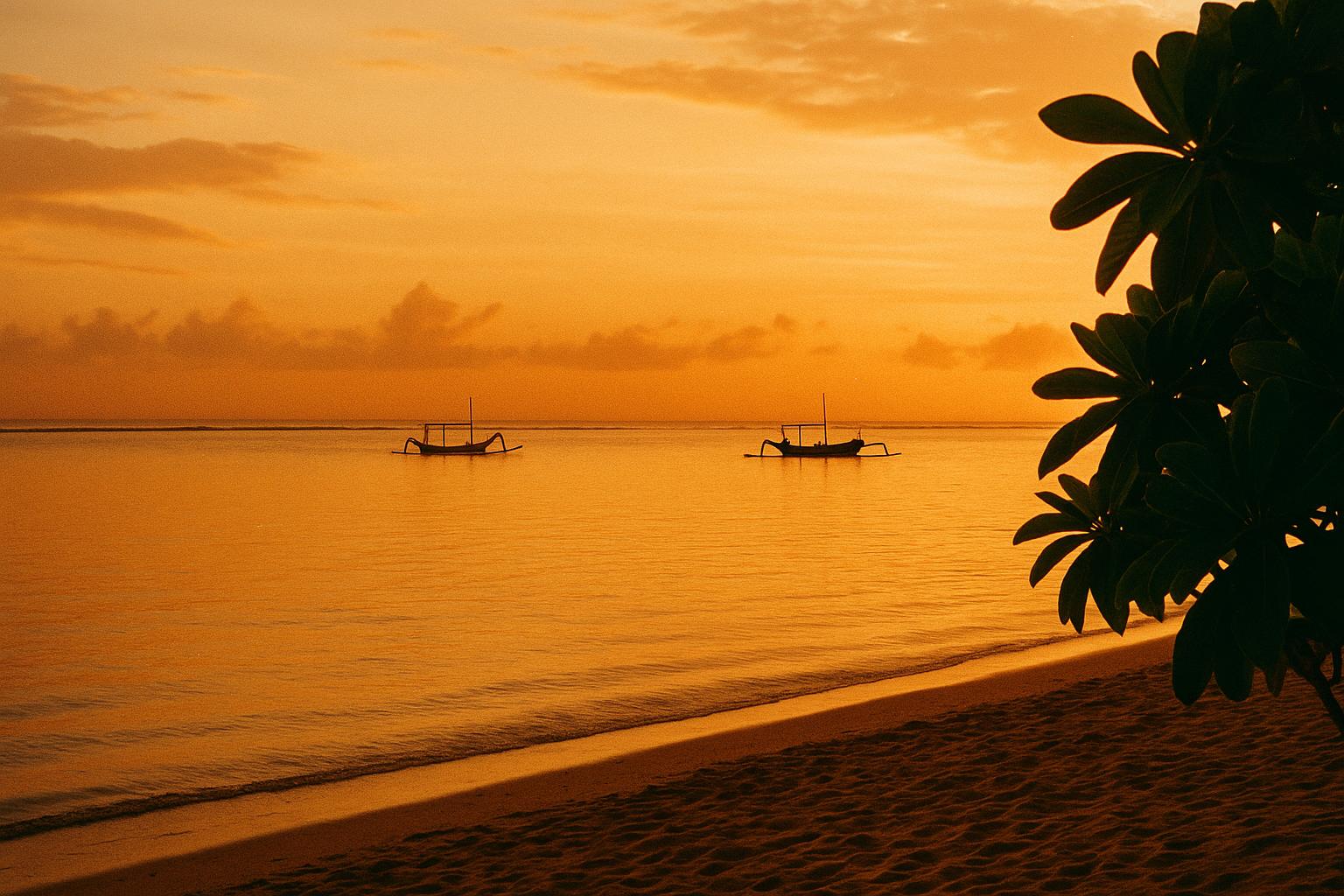
The sky over the Bali Strait turns a deep copper as the sun drops behind the island behind you, and the silhouettes of Nusa Penida and Nusa Lembongan materialise across the water to the south-east. It is not the postcard sunset of Tanah Lot or Uluwatu, but it is something more unusual: calm water, offshore islands catching the last of the light, and fishermen pushing their jukungs back into the lagoon for the evening run. The view from the beachfront tables at Bonsai Café just as the sky goes amber is worth arriving early for.
The Local Texture
Sanur has been a village before it was a resort, and it retains that layering. Sanur Village proper sits just back from the beach — a grid of lanes with temples, family compounds, and the warungs that local families have been running for decades. The morning market at Pasar Sindhu opens before 6am and is as far from tourist infrastructure as you can get while still being five minutes' walk from the waterfront.
This dual character — functioning community alongside beach resort — gives Sanur a groundedness that purely tourist beaches lose. There are ceremonies here that pause traffic. There are banjar meetings that close lanes on weekday evenings. The sea is not backdrop; it is livelihood.
The Practical Case
Beyond atmosphere, Sanur makes logistical sense in ways that matter. It sits at the eastern edge of Denpasar's spread, making it genuinely closer to Ubud and Amed than Seminyak or Canggu by 30 to 45 minutes. The fast boats to /region/nusa-penida and Nusa Lembongan leave from Sanur's southern boat terminal — staying here means no early-morning transfer across half the island.
Accommodation ranges from simple guesthouses at 250,000–400,000 IDR per night up to established heritage hotels with serious gardens and pools. Nothing here reaches the eye-watering rates of Seminyak's villa circuit, and the quality-to-price ratio throughout is honest.
The beach itself is clean, collected daily, and largely free of the plastic-surge problems that periodically hit Kuta and Legian. The lagoon shelters it from direct ocean drift. It is not perfect — no Bali beach is — but it is consistently good.
Why People Overlook It (And Why That's Your Advantage)
Sanur has an image problem rooted in its own success from a different era. It was Bali's original resort beach in the 1970s and 1980s, drawing an older European clientele who came for months at a time. That demographic association stuck even as the beach itself moved on. The result is a place that the Instagram algorithm underweights and travel trend cycles ignore — which means it remains uncrowded, unhurried, and priced fairly.
If you want to surf, go to Canggu. If you want nightlife, go to Seminyak. If you want to swim without fighting waves, walk a four-kilometre promenade in peace, watch Nusa Penida materialize at dusk, and eat well without anyone rushing you — Sanur is not the backup plan. It is the right call.
Visit the /region/sanur area guide for accommodation picks, day trips, and practical transport.