Sunrise in Sanur: Bali's Best Dawn Walk and the Seaside Promenade
Sanur faces east across the Bali Strait — making it the only beach in southern Bali where the sun rises directly over open water. Here's how to time the perfect dawn walk along the promenade, where to stand, and where to find coffee before the rest of the island wakes up.
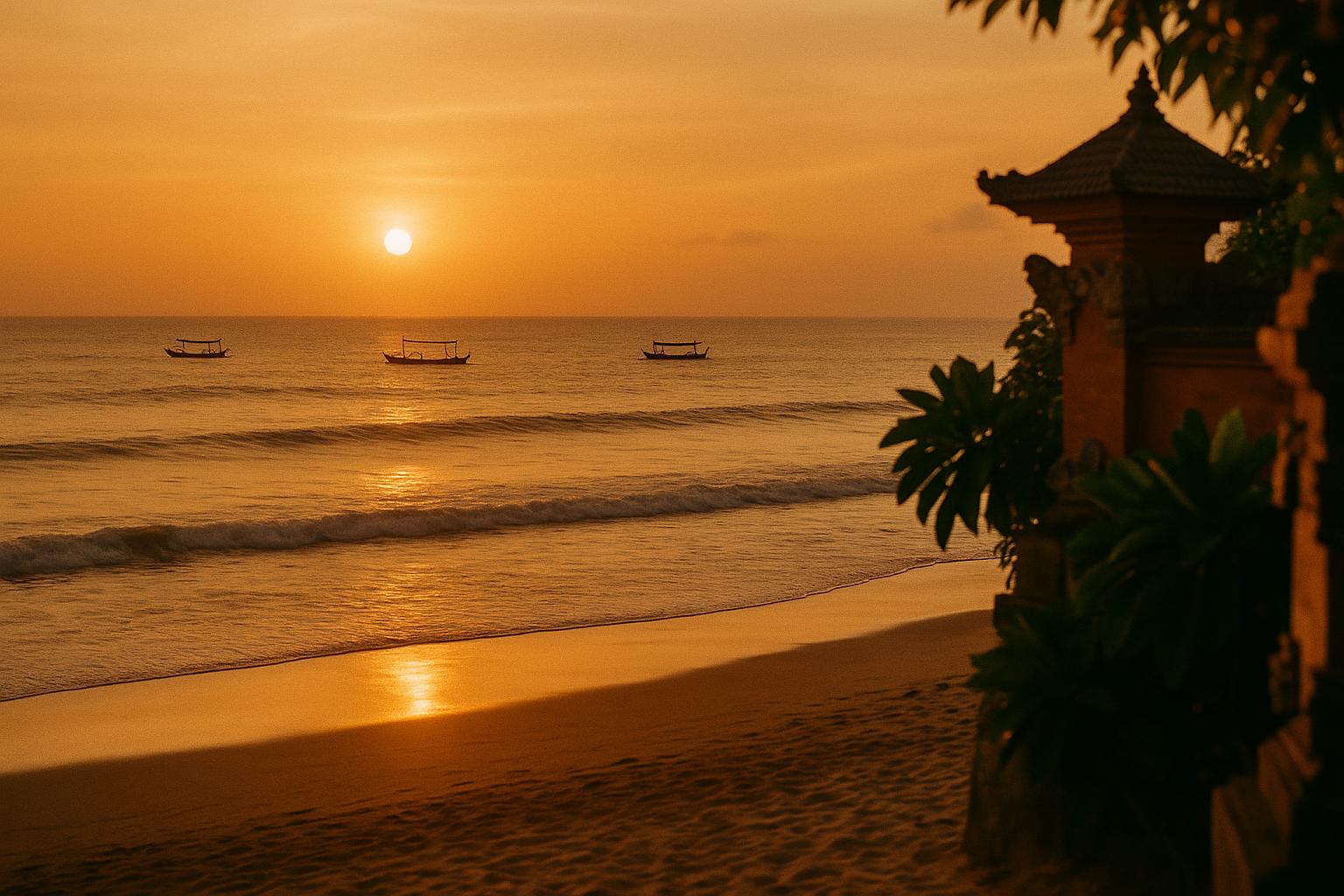
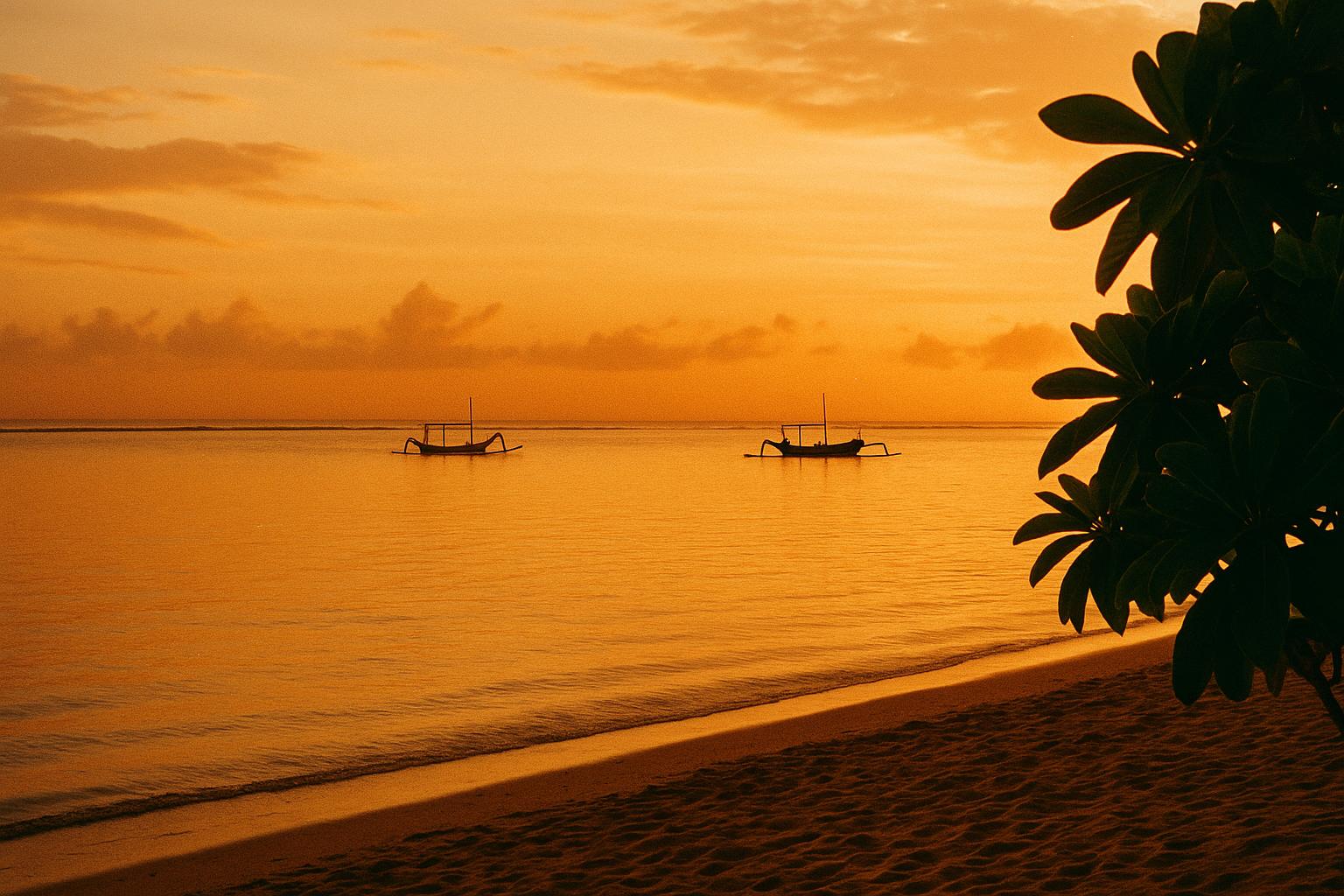
There is a specific quality of light that exists for about twenty minutes after the sun clears the horizon on the Bali Strait. It is not the dramatic amber of the tropics at noon, not the purple-blue of pre-dawn, but something in between — a pale rose-gold that turns the water almost silver and catches the sails of the jukung fishing boats before they head out to the reef. You can only see it from Sanur. Every other beach in southern Bali faces west.
That geographical fact makes Sanur's morning the most underused asset in Bali tourism.
Why Sanur Is the Only Sunrise Beach in the South
Bali's most visited coastline — Kuta, Seminyak, Canggu, Uluwatu — faces the Indian Ocean to the west. Beautiful at sunset, invisible at sunrise. Amed and Candidasa on the east coast face the Lombok Strait and offer extraordinary sunrises, but they are two to three hours from Denpasar.
Sanur sits on the eastern edge of the island's southern peninsula, facing directly across the Bali Strait toward the Nusa islands. The sun comes up over open water here. On clear mornings the silhouettes of Nusa Penida and Nusa Lembongan are visible as dark shapes on the horizon, and the sky behind them moves through deep indigo into orange into the full brightness of a Balinese morning.
No other readily accessible beach in the south offers this. It is one of those things that sounds ordinary until you are standing on the sand at 6am watching it happen.
Exact Timing
Sunrise in Bali shifts with the season but stays within a narrow band given the island's proximity to the equator. From November through January, the sun rises around 5:55–6:05am. From May through July, it is closer to 6:20–6:30am. The equinoxes land near 6:10am.
Arrive on the promenade 30 to 40 minutes before the listed time if you want the full experience — the light begins to build from the horizon long before the sun appears, and the pre-dawn colours over the strait are often the most striking part. If you time your arrival to the sunrise itself, you have already missed the best 15 minutes.
A current sunrise calculator for Denpasar will give you the exact minute for your travel dates; add 3–4 minutes for Sanur's slightly more eastern position.
The Promenade Walk: North to South
Sanur Beach Promenade is 4km end to end. For a sunrise walk, the most productive approach is to start from the northern end near Inna Grand Bali Beach and walk south, which keeps the water and the eastern horizon on your left throughout.
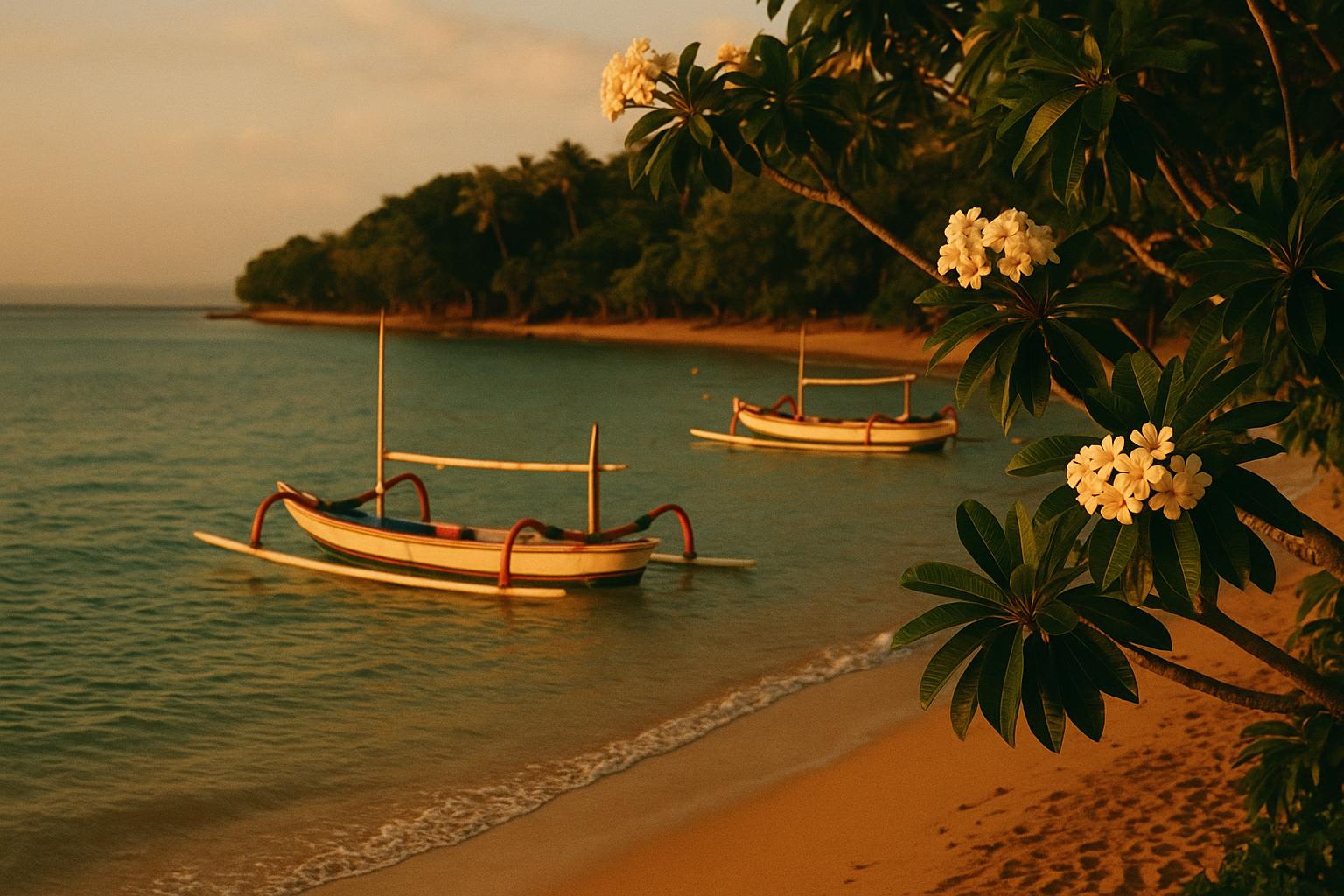
The northern stretch (roughly the first kilometre) passes older beachfront hotels with large gardens and open stretches of sand. This section is quieter and gives the widest unobstructed views of the open water and the Nusa islands. Jukung boats are typically beached here, and the fishermen preparing them in the pre-dawn dark add a layer of authentic activity that makes the walk feel earned rather than staged.
The central section passes through the heart of Sanur's beach strip — the section with the most cafés, guesthouses, and small resort entrances. The promenade here is wider and more manicured. By the time you reach the Sanur Night Market area, the sun is usually fully up and the beach vendors are beginning to set up.
The southern section approaching the boat terminal has a working port atmosphere and is less picturesque, but the views back north along the beach as the light strengthens can be the best photos of the walk.
The Jukung Departure
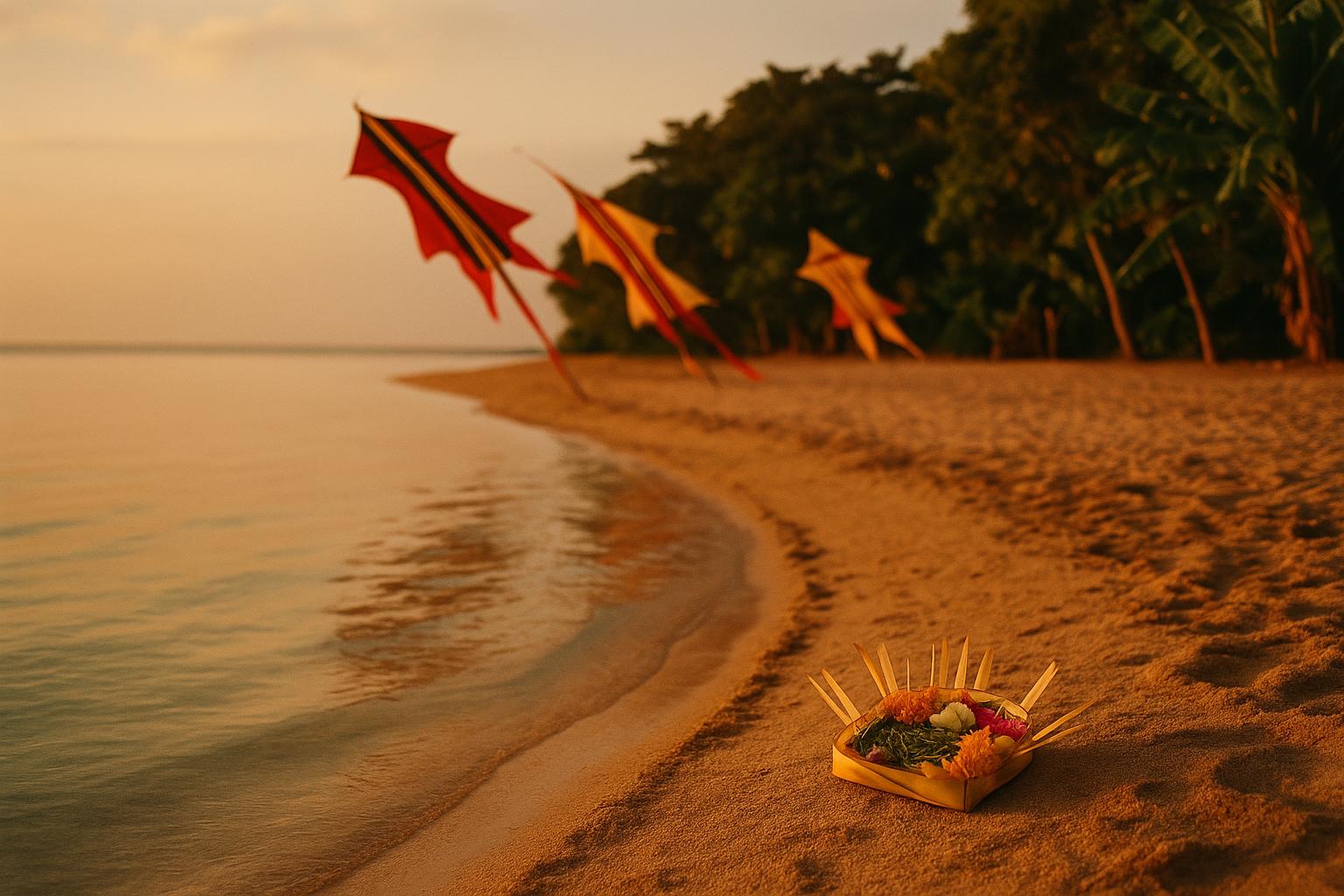
One of the defining images of a Sanur sunrise is the departure of the traditional outrigger fishing fleet. Jukung — narrow wooden proa outriggers with coloured sails — are pushed through the shallow lagoon in groups of two and three as the sky brightens. The fishermen work quietly and quickly, loading nets and heading out to the reef before the wind drops in the mid-morning calm.
The main launching area is Jukung Beach Sanur, in the central-northern section of the promenade. Standing here between 5:30am and 6:30am gives you both the boat departures and the sunrise horizon simultaneously. This is the single best vantage point on the beach for photography.
The boats are not staged for tourists. The fishermen are doing their actual job. Photograph respectfully and give the beach enough room for the work.
Early Coffee
The other logistical question: where to find decent coffee before 7am in Sanur.
Kopi Bali House on Jalan Danau Tamblingan opens at 7am and is worth building your post-walk timing around — the Balinese-style cold brew and the nasi jinggo (small rice parcels with sambal) are among the better early-morning combinations in the area.
Sanur Sunrise Café sits right on the promenade and opens at 6am specifically for the sunrise crowd. It is nothing elaborate — plastic chairs, a few smoothie bowls, strong Bali kopi — but the timing and position are ideal.
Pasar Sindhu, the local morning market just off the beach, opens before 6am and sells glasses of kopi tubruk (thick unfiltered Balinese coffee) for 5,000–8,000 IDR. The market is also the best place in Sanur to eat a real local breakfast — pisang goreng (fried banana), bubur (rice porridge), or a bungkus nasi (wrapped rice plate) assembled from whatever the stalls are cooking that morning.
Practical Notes
What to bring: A light layer for the pre-dawn walk — Bali mornings at the beach are warm by most standards, 24–26°C, but the sea breeze at 5:30am has a damp edge. Sandals rather than shoes, since the promenade transitions to sand at several points. A phone or camera for the boats and the sky. Cash for the market breakfast.
Crowds: Minimal before 7am. By 8am the beach fills with hotel guests on loungers and the window closes. The reward for arriving early is a completely uncrowded promenade, which is almost impossible to find anywhere else in southern Bali.
Best months: The dry season (April–October) gives the clearest skies and the most reliable sunrises. The wet season (November–March) can deliver spectacular dramatic skies — dark storm light over Nusa Penida with shafts breaking through — but mornings are hit or miss. November and January in particular are worth trying for the dramatic-weather photography.
The Sanur sunrise is one of those things that Bali's enormous tourism infrastructure has somehow left unhyped. There is no sunrise cruise marketed from here, no drone tour package, no ticketed viewpoint. It is just the beach, the boats, the horizon, and the light. Walk it once and it is difficult to understand how the rest of the island is sleeping.
See the full /region/sanur area guide for where to stay and what to do after the walk.