Sidemen's Rice Terraces: Walks, Views and the Valley That Slows You Down
Sidemen's terraced valley offers everything Tegalalang promised but rarely delivers — silence, scale, and the full weight of Agung rising above the paddies. Here's how to walk it right.
Sidemen's Rice Terraces: Walks, Views and the Valley That Slows You Down
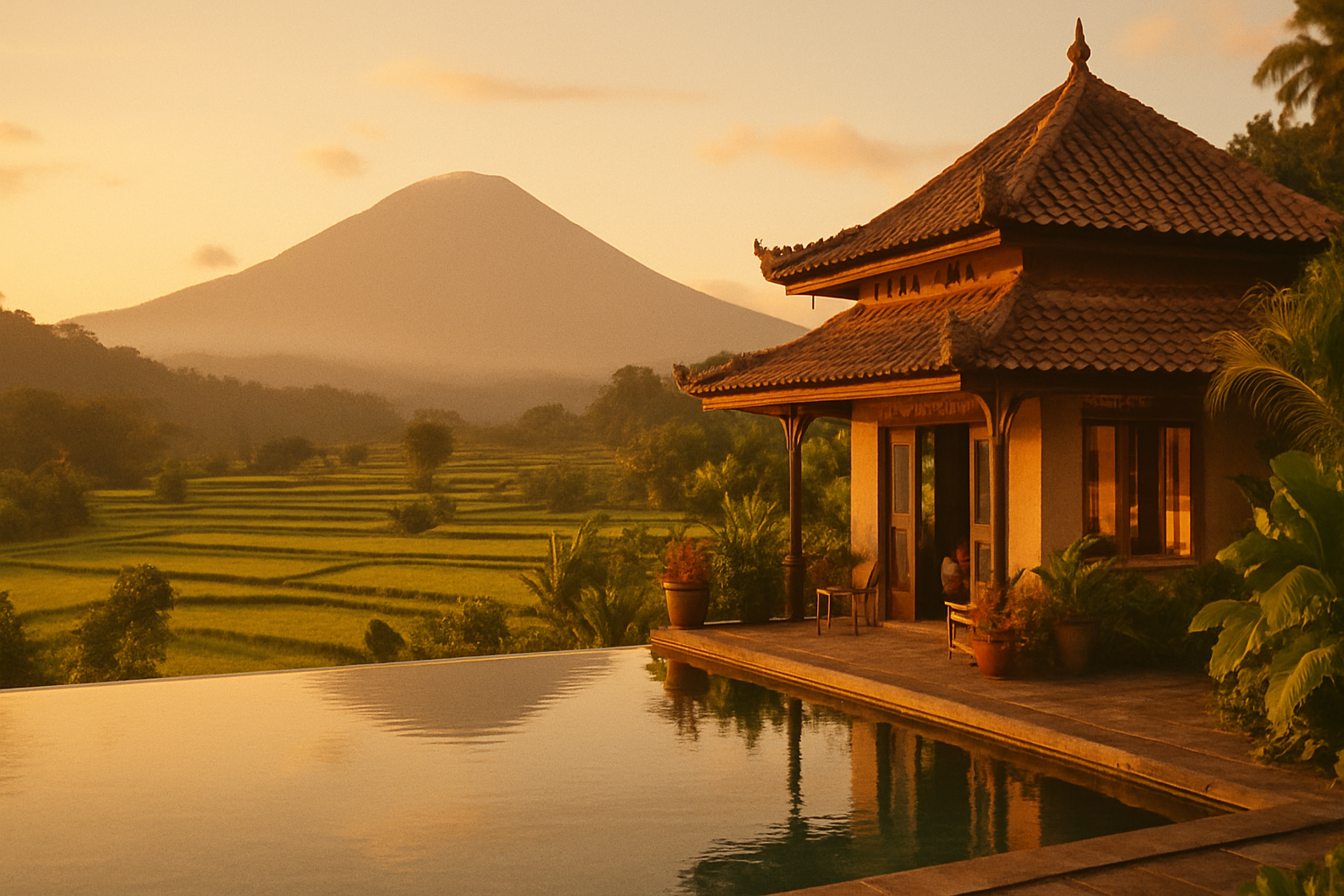
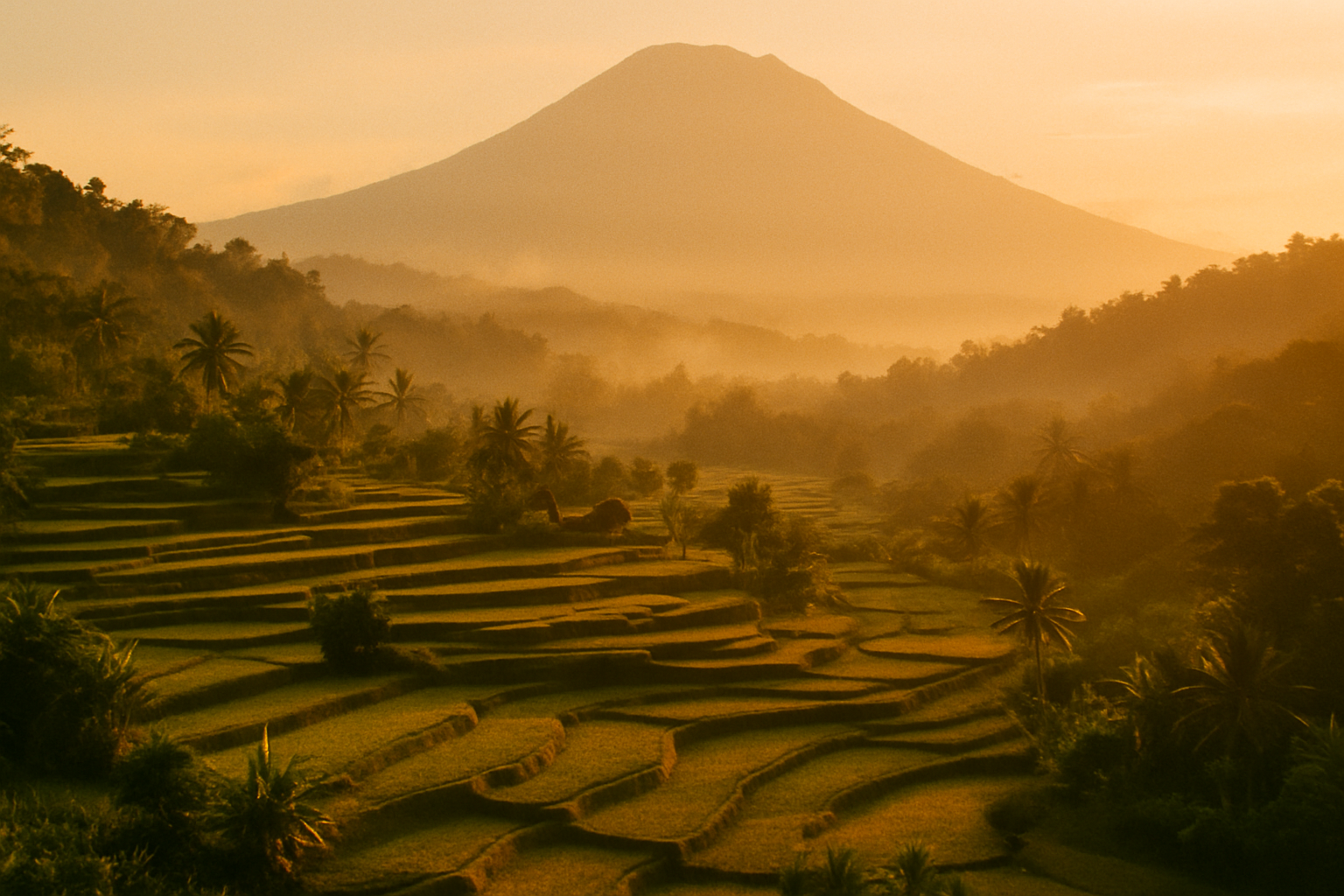
There's a particular kind of morning in east Bali that feels borrowed from another century. The mist sits low over the paddies, a rooster announces something urgent in the middle distance, and Mount Agung — all 3,142 metres of it — floats above the clouds like a rumour. You're standing at the edge of Sidemen Valley, and the only other humans in sight are two farmers knee-deep in an irrigation channel, unhurried.
This is what drew you here. And this is exactly what you'll find, if you know where to walk.
Why Sidemen's Terraces Are Different from Tegalalang
Tegalalang Rice Terraces, north of Ubud, are undeniably photogenic. They're also flanked by coffee shops, swing operators, and a steady stream of tour buses from 7 a.m. onwards. The beauty is real; the experience is packaged.
Sidemen is different in almost every meaningful way. The valley is broader, the terracing more intricate, and the agricultural activity entirely genuine — this is working farmland, not a backdrop. There are no entrance fees, no photo-spot queues, no vendors selling swing rides above the paddies. What you get instead is the landscape as it has functioned for centuries: green, layered, alive, and mostly left alone by the tourism industry.
The scale helps too. The Sidemen Valley runs roughly north to south for several kilometres, framed on the east by Gunung Seraya and dominated to the north by Agung. The terraces descend in steps from the village roads down to the Unda River, creating a depth of field that makes every photograph feel incidental to the actual experience of standing there.
The Subak System: Irrigation as Sacred Practice
What you're looking at when you see rice terraces anywhere in Bali is the physical expression of subak — a UNESCO-recognised cooperative irrigation system that dates back at least to the 9th century. Each terrace is connected to a network of channels, tunnels, and tempek (irrigation groups) coordinated through a water temple hierarchy.
In Sidemen, the system feeds dozens of active growing cycles simultaneously. You'll notice water moving in channels alongside walking paths, small shrines (bedugul) placed at irrigation junctions as offerings to Dewi Sri, the rice goddess, and the precise colour gradient of paddies at different growth stages — deep gold for rice near harvest, electric green for newly planted plots, silver-mirror for just-flooded fields.
Understanding this transforms a walk through the terraces. You're not looking at scenery. You're looking at a functioning civic and spiritual infrastructure.
The Best Walks from the Village
Sidemen Village sits at roughly 300 metres elevation and serves as the starting point for most terrace walks. The village road itself — a single lane running north from the main Klungkung–Karangasem highway — offers constant views west into the valley.
The Valley Floor Loop (Easy, 1–2 hours) Head down any of the narrow paths that branch west from the main road. Most lead to the Unda River at the valley base. The flat section along the river bank connects several farm tracks, and you can loop back up a different path to emerge further north on the main road. This is the most accessible walk: minimal elevation gain, constantly changing terrace views, and genuinely quiet even in high season.
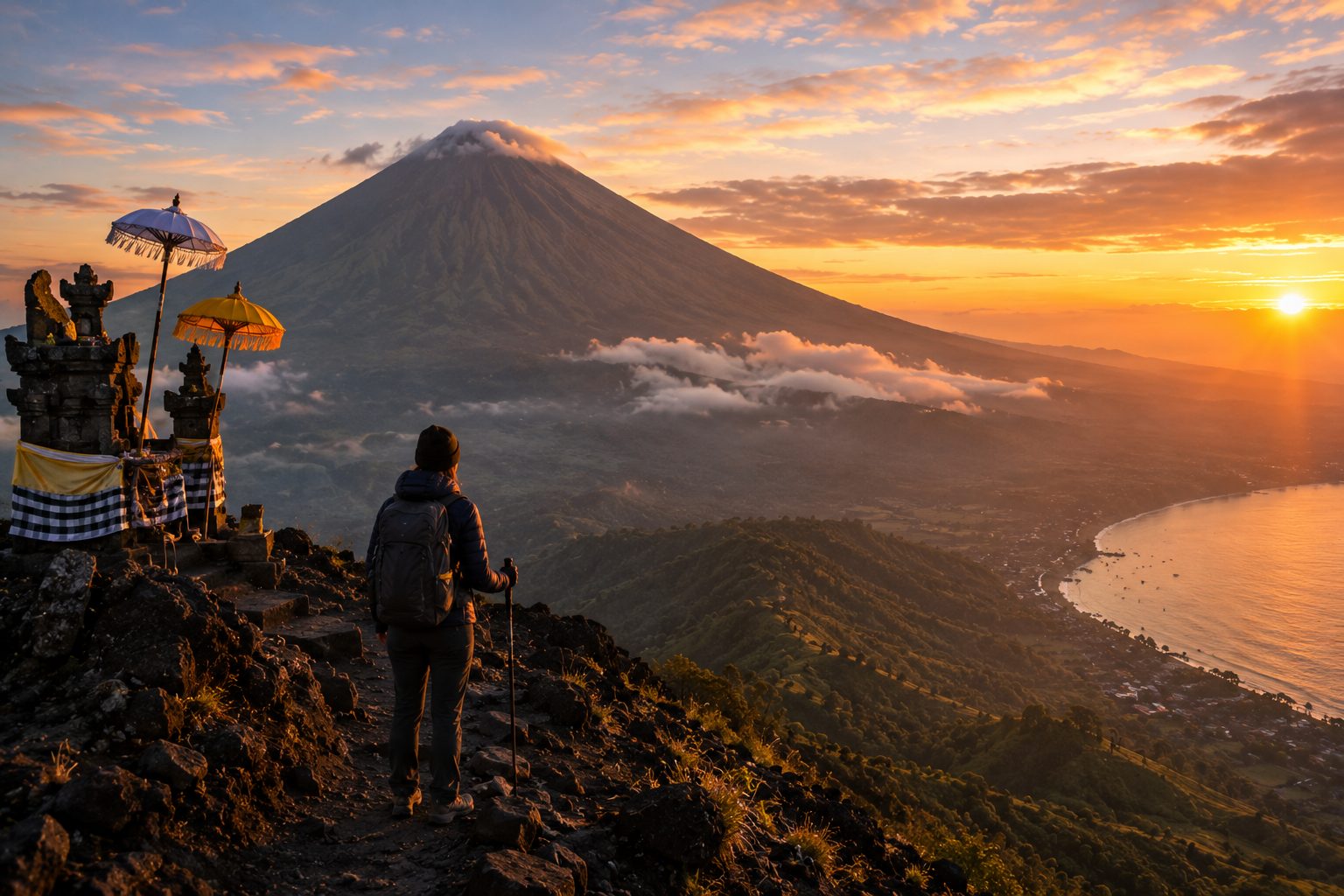
The Ridgeline Walk to Tangkup (Moderate, 2–3 hours) From the upper part of Sidemen village, a trail climbs east through mixed farmland and coconut groves before reaching the ridge above Tangkup. The views back west from here — terraces, valley, Agung — are among the best in east Bali at any elevation. This route requires basic fitness but no technical skill; local guesthouses can provide a hand-drawn sketch map or a guide for a small fee.
The Northern Valley Walk toward Iseh (Moderate, 3–4 hours) Continue north along the valley floor or the road toward Iseh, a quieter hamlet where Walter Spies and later Theo Meier made their homes and studios. The terraced landscape in this northern section is arguably more dramatic, with Agung increasingly dominant as you move closer. Most people turn back from Iseh, but the motivated can push on to the base of the Agung approach trails.
Dawn in the Valley: A Case for the Early Wake
The standard advice for rice terrace photography is golden hour. In Sidemen, there's a stronger case for pre-dawn. Agung's peak clears the cloud layer for approximately 45 minutes around sunrise on most dry-season mornings (May through September, roughly), and in that window the light falls on the terraces at an angle that makes every contour visible. By 8 a.m., low clouds typically reassert themselves around the middle slopes.
Bring a torch if you're leaving before dawn — the village paths are unlit. The highest points on the ridgeline walk give the best Agung sightlines, but even from the valley floor the view is affecting.
Practical Notes
When to visit: The dry season (May–September) offers the best visibility for Agung and the most reliable walking conditions. The wet season (November–March) brings daily rain but also the most vivid green in the paddies — aesthetically spectacular if you don't mind mud.
Getting there: Sidemen is 20–25 km northeast of Ubud and about 30 km northwest of Candidasa. The most common approach is by hired driver (1.5–2 hours from Ubud, around IDR 300,000–400,000 one-way) or scooter rental from Ubud if you're comfortable with mountain roads.
Guides: Not required for the valley floor loop. For the ridgeline or northern walks, a local guide (IDR 100,000–200,000 for a half-day) adds both navigation confidence and context about the subak system and specific crop varieties.
Entrance fees: None. Donations at village shrines are appropriate if you pass during a ceremony.
Guesthouses: Several small warung and simple guesthouses line the main road; some offer terrace-view platforms where a coffee and a slice of jaja (Balinese rice cake) will cost you IDR 20,000 and buy you 45 minutes with the best view in the house.
The Bigger Picture
Sidemen's rice terraces work because they haven't been optimised for tourism. The farmers aren't performing. The paths exist because they need to exist. The water moves because it has to move. Your presence there is, for the most part, incidental to the whole operation — which is precisely what makes the experience feel like something real.
Walk slowly. Get off the main road as soon as possible. And if an old woman in a sarong offers to show you a shortcut, take it. She probably knows something about the valley you don't.
Explore more of east Bali's interior at /region/sidemen.