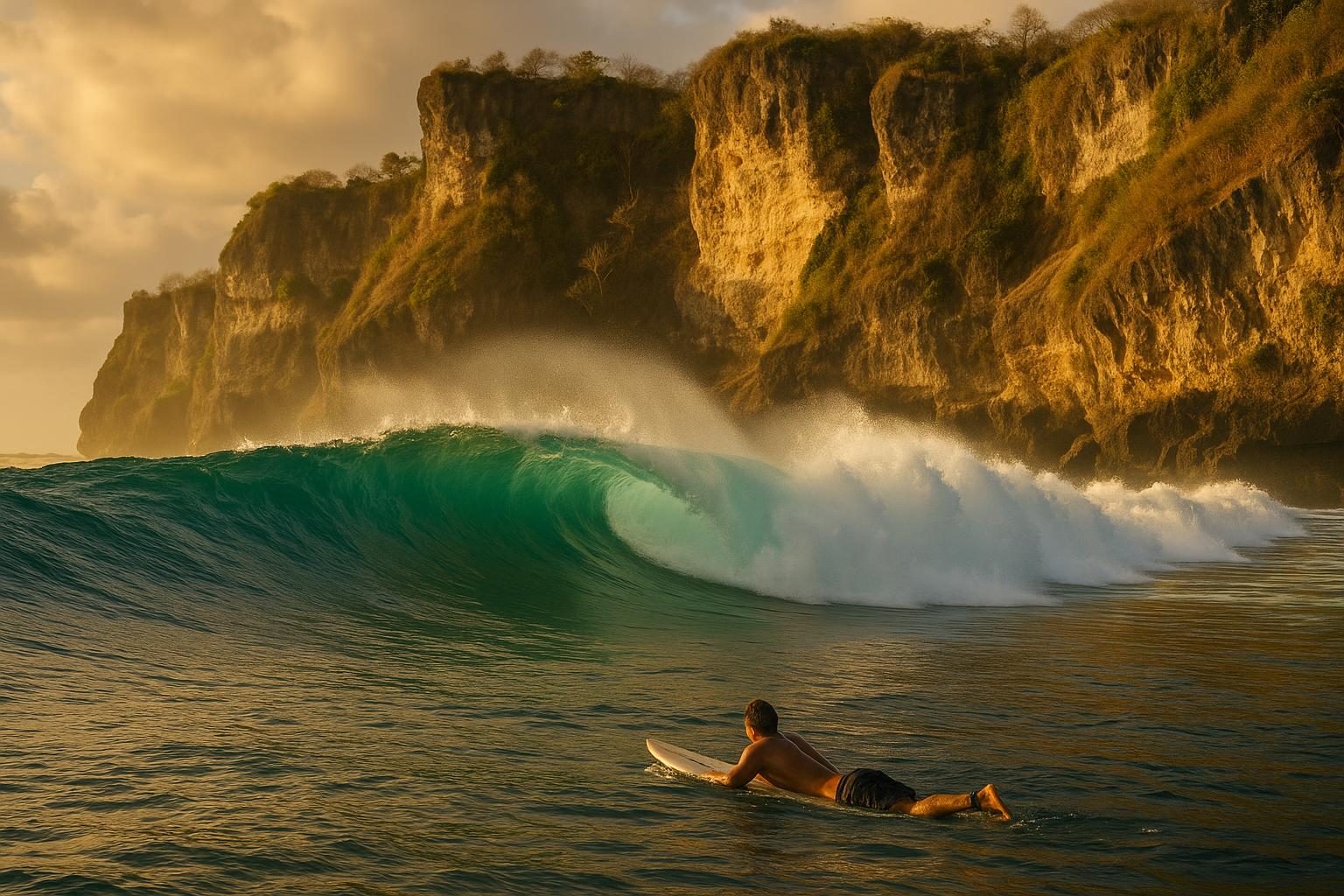
Surfing Uluwatu: Which Break Fits Your Level
From mellow Balangan to the reef barrels of Padang Padang, here is how to pick the right Uluwatu surf spot for your level, tide and season.
Uluwatu is the surf capital of Bali, and it can be intimidating. Sharp reef, cave entries and crowded line-ups are part of the legend. The good news: the same stretch of cliffs also holds gentle waves where beginners can learn. This guide sorts the main breaks by level so you can choose with confidence.
When to go
The dry season, roughly April to October, brings southeast trade winds that blow offshore in the morning and keep the faces clean. It is also the busiest period, with the biggest crowds in June to August. The wet season (around November to December) usually means smaller swell and fewer people, and dawn sessions can still be excellent. Check a tide and swell forecast the day before: at Uluwatu, the tide decides which section works.
Beginner to intermediate
Balangan Beach is a cliff-top access spot with a long left that is generally friendlier than the famous breaks further south, and the crowd is spread across several sections. The wave can be fast, so complete beginners should go with an instructor.
Dreamland Beach works for a wide range of levels depending on the swell. Low tide tends to suit the A-frame peak, but the shore break and the rocks on the inside deserve respect when it gets bigger.
Baby Padang, the right-hander at the end of Padang Padang Beach, is a popular choice for beginners and intermediates on small to medium days. A channel carries you to the line-up without fighting through white water. Note that reaching the beach means a steep staircase, and you carry your board down and back up.
Intermediate to advanced
Bingin Beach offers fast, hollow walls over reef and rock, and the line-up is dominated by experienced locals. Expect steps down to the beach and tide pools at low tide.
Impossibles is a fast, multi-peak wave reached by paddling through the Baby Padang channel. It rewards good wave selection. Not every wave gives a long ride.
Thomas Beach is quieter and generally works best around mid to high tide, but a strong current keeps many surfers away. Ask locally before paddling out.
Advanced only
Uluwatu itself (the Suluban area) is a left-hand reef break with several sections. The Peak likes mid to high tide, while Racetracks and Outside Corner work best at low tide. You enter through a cave cut into the cliff. At high tide you paddle straight out from the cave mouth, at low tide you walk across the reef. Missing the cave can push you toward Padang, and re-entering at high tide is tricky.
Padang Padang Lefts, nicknamed the Balinese Pipeline, needs a serious swell, at least head-and-a-half and ideally much bigger. On small days the ride is short and the quality is poor. This is a wave for experts only.
Taking a lesson
Most beginner lessons run around 1.5 to 2 hours and usually include a board, a rash guard and in-water coaching. Schools such as Padang Padang Surf Camp pick the spot each day based on conditions, typically choosing between Padang Padang, Balangan, Dreamland and nearby breaks. The water is warm all year, so no wetsuit is needed. Prices vary by school and season, so compare a few operators before booking.
Practical tips
- Wear reef booties and use a sturdy leash. The bottom is coral and sharp.
- Respect the line-up: wait your turn and never drop in on locals.
- Bring reef-safe sunscreen, water and a towel.
- If you want to be steps from the waves, Dreamsea Surf Camp Uluwatu is a surf-focused stay in the area.
- Rest day? Visit Uluwatu Temple on the clifftop. Wear a sarong and keep an eye on your belongings.
Pick the break that matches your honest level, watch the tide, and Uluwatu will reward you.