Uluwatu Temple: Kecak Dance, Cliff Monkeys and the Most Dramatic Sunset in Bali
Perched on a sheer 70-metre cliff above the Indian Ocean, Pura Luhur Uluwatu is one of Bali's six directional temples — a sacred site of immense spiritual weight that also happens to frame the most breathtaking sunset on the island. Add the hypnotic Kecak fire dance performed at the cliff's edge, and you have an evening that is simply unforgettable.
Perched on a sheer 70-metre cliff above the Indian Ocean, Pura Luhur Uluwatu is one of Bali's six directional temples — a sacred site of immense spiritual weight that also happens to frame the most breathtaking sunset on the island. Add the hypnotic Kecak fire dance performed at the cliff's edge as the sky turns amber and violet, and you have an evening that belongs on any list of experiences Bali has to offer.
Here is everything you need to know to visit Uluwatu Temple well — its history, the Kecak dance logistics, the notorious monkeys and how to dress for entry.
The Temple: Spiritual Significance and History
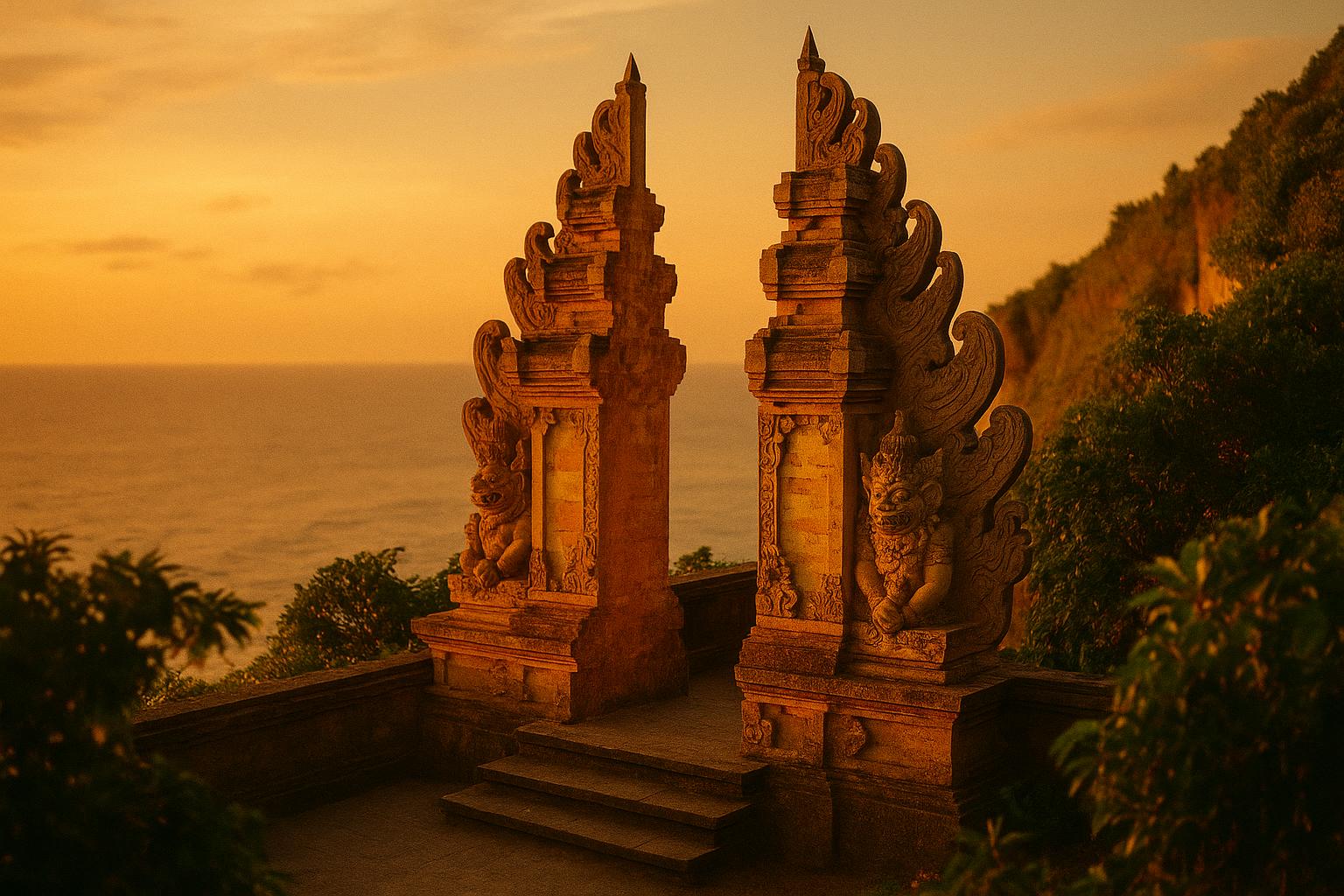
Pura Luhur Uluwatu is one of the sad kahyangan jagat — the six most important directional temples of Bali, each placed at a cardinal point to spiritually protect the island. Uluwatu guards the southwest, facing the open ocean and the boundless horizon.
The temple's origins trace back to the 11th century, when the Javanese sage Mpu Kuturan is believed to have established it. It was later developed in the 16th century by Dang Hyang Nirartha, a revered Hindu priest who is credited with spreading Balinese Hinduism and who is said to have achieved moksha — spiritual liberation — here at the cliff's edge. That association with transcendence runs through the entire site, and if you are even slightly sensitive to atmosphere, you will feel it.
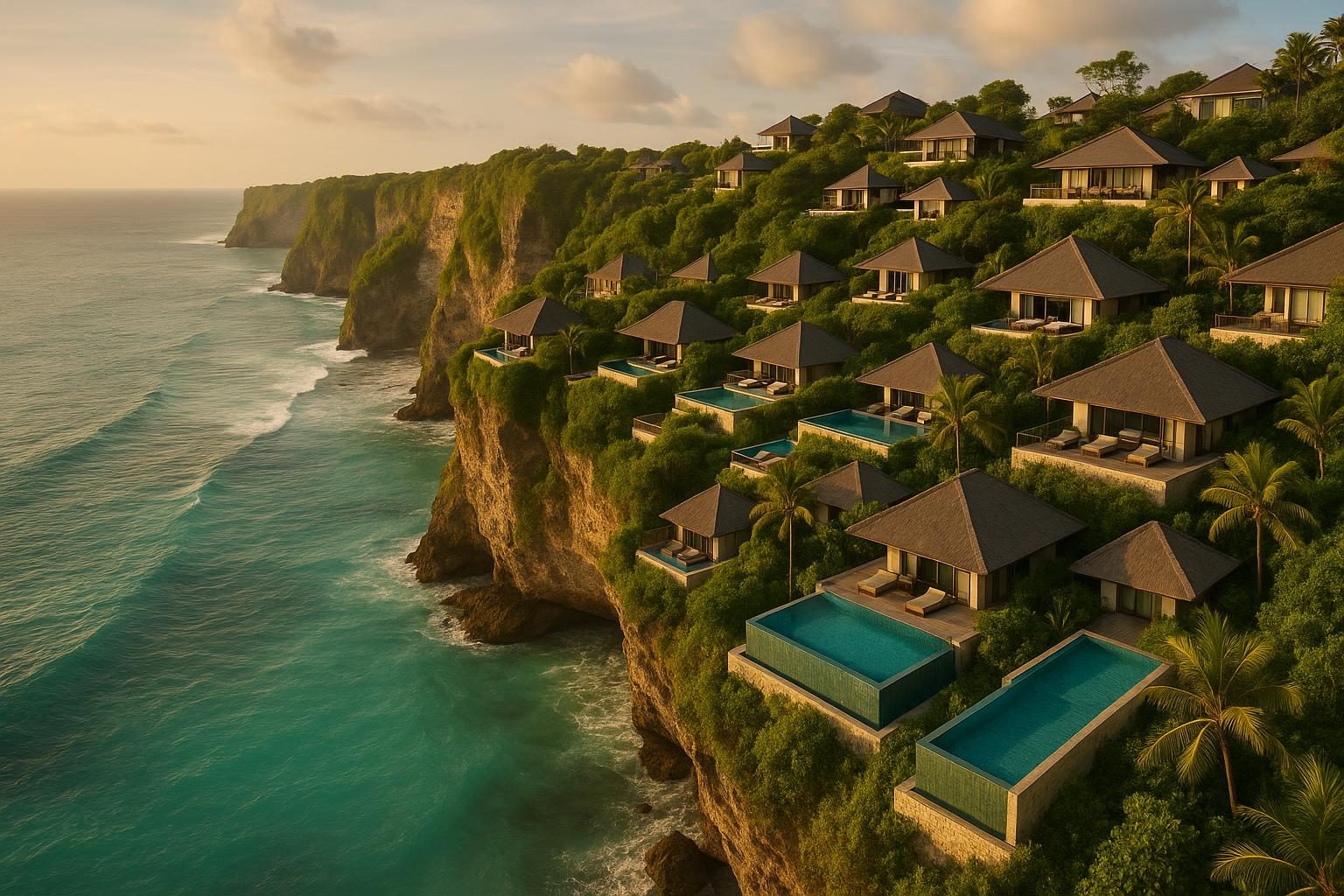
The temple itself is relatively compact and partly closed to non-Hindu worshippers, but the clifftop promenade that wraps around it — offering staggering views of the ocean far below and the surfers threading waves — is open to all. Walking the cliff path as the afternoon light changes is one of the simplest pleasures in Bali.
The Kecak Dance: Everything You Need to Know
The Kecak fire dance (Kecak is pronounced roughly "keh-chak") is performed every evening at the open-air amphitheatre beside the temple, timed to coincide with the sunset. It is not just a tourist performance — it is a genuine ritual art form, adapted from the sanghyang trance ritual and developed into its current narrative form in the 1930s in collaboration with the German painter and musician Walter Spies.
The performance tells episodes from the Ramayana — the battle between Rama and the demon king Ravana, featuring Hanuman the monkey god. Sixty or more men form concentric circles, chanting a hypnotic, rhythmic "cak-a-cak-a-cak" that fills the place of a gamelan orchestra. Dancers in elaborate costume act the story within the circle, and the climax involves real fire — a coconut husk soaked in coconut oil lit at the feet of the dancer playing Hanuman, who stomps it out with bare feet.
How to book and what to expect:
- Performances run daily, typically beginning around 6pm (confirm on arrival — times shift slightly with the season)
- Tickets are sold at the temple entrance and at the amphitheatre. The current price is around IDR 150,000 per person (subject to change)
- No advance booking is required, but the amphitheatre fills early — arrive 30–40 minutes before the performance starts to secure a good seat
- The best seats are along the outer edge of the amphitheatre, where you can see both the dancers and the ocean behind them. The cliff drops away just metres from the stage, and as the sun sets behind the performers, the effect is extraordinary
- The performance lasts approximately 45–60 minutes
Photography is permitted throughout, but a long lens or a camera that handles low light well serves you better than a phone as the sun dips.
The Monkeys: What to Know Before You Arrive
Let this be the section you read most carefully. The grey long-tailed macaques (Macaca fascicularis) that inhabit the temple grounds are sacred to the Balinese, who believe they guard the temple against evil spirits. They are also bold, fast, and relentlessly opportunistic.
They will take sunglasses from your face. They will unzip a bag left on the ground. They have been known to grab cameras, hats, water bottles and food with remarkable speed. Do not carry anything loosely — sunglasses should be on your face or deep in a pocket, not hanging from a collar or clipped to a bag.
If a monkey grabs your belongings, do not pull back aggressively — they have sharp teeth and the instinct to bite when challenged. Temple staff and local vendors are practiced at using a stick to encourage monkeys to drop items in exchange for a banana, and this exchange works remarkably reliably. Stay calm and alert the nearest staff member.
Keep food completely out of sight and smell. Do not feed the monkeys, despite the instinct to do so.
Dress Code and Entry
Uluwatu Temple is an active place of Balinese Hindu worship. Visitors must cover their legs and, for women, their shoulders. A sarong is mandatory and provided for free (or for a small voluntary donation) at the entrance — temple staff wrap it for you. Many visitors also bring their own light scarf or sarong.
The dress code is enforced respectfully but consistently. Arrive in shorts and you will be offered a sarong; the process takes thirty seconds and it costs nothing.
Getting There
Uluwatu Temple is at the far southwestern tip of the Bukit Peninsula, roughly 45 minutes to an hour from Seminyak, Kuta or Canggu by motorbike or car. Traffic near the temple picks up significantly in the hour before the Kecak performance — if you are arriving for the sunset show, aim to reach the car park by 5pm at the latest.
Gojek and Grab drivers are familiar with the route but can be harder to find for the return journey after the performance. Arranging a driver for the evening or travelling with a rental motorbike is more reliable.
The entrance fee to the temple grounds is separate from the Kecak ticket and currently around IDR 50,000 per person.
The Sunset Moment
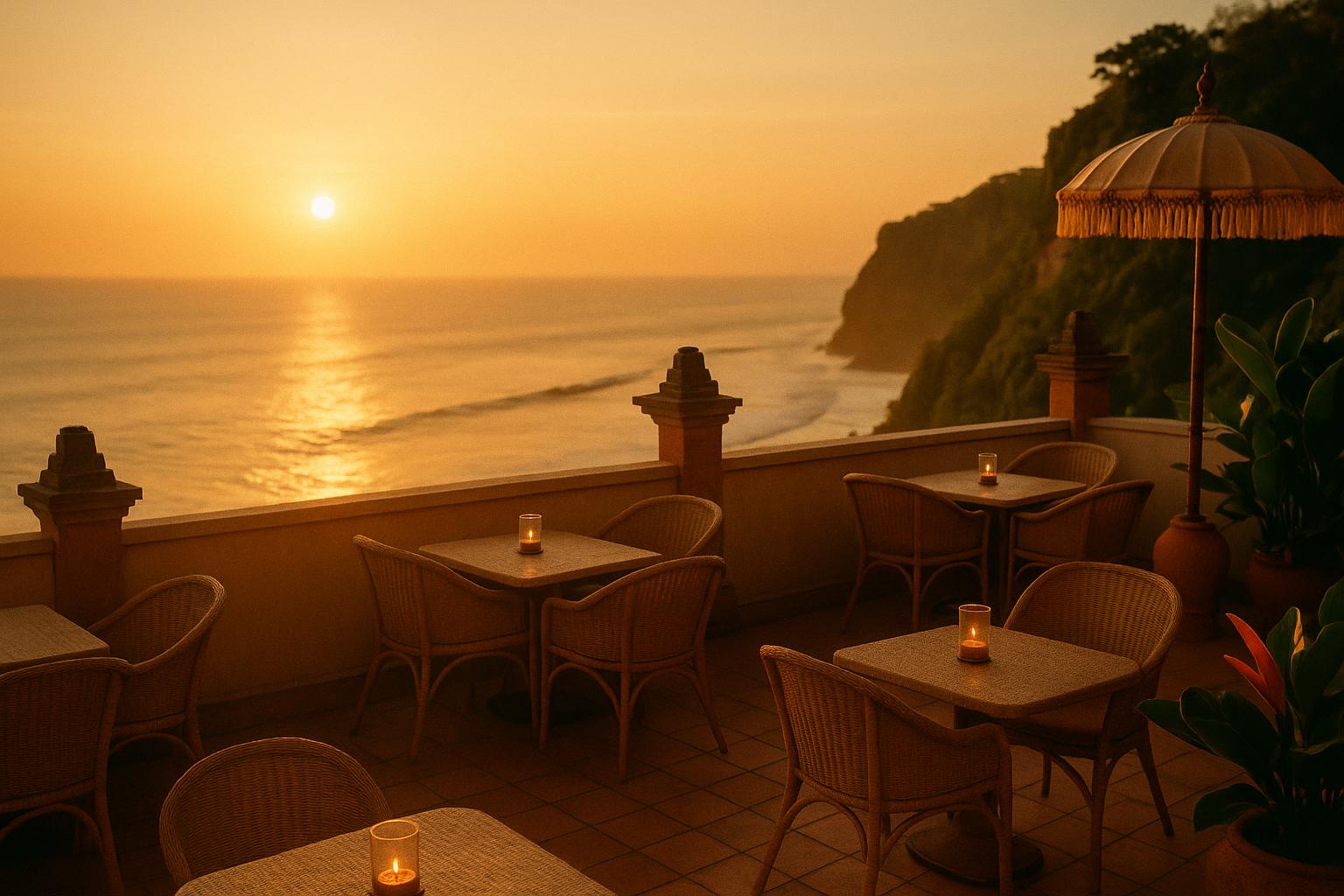
Nothing quite prepares you for the light at Uluwatu in the last forty minutes before dark. The cliff faces almost due west, and on a clear day the sun drops straight into the ocean, turning the water from silver to copper to deep orange. The temple's black volcanic stone silhouettes against the sky; incense smoke drifts through the coral trees. Below, if you lean to the railing, you can watch surfers far below riding the waves that made this place famous.
Even outside the Kecak performance, arriving at Uluwatu an hour before sunset and simply walking the cliff path is an experience of rare beauty. This is one of those places where Bali's particular magic — the collision of spiritual intention, natural drama and daily human devotion — feels most present.
Explore the rest of the peninsula: Uluwatu beaches, the surf break, and where to eat nearby.