Pemuteran's Biorock Reef: How Coral Restoration Brought Northwest Bali Back to Life
Pemuteran is home to one of the world's most successful coral restoration projects — a living, electric reef that has rewritten the rules of ocean recovery. Here's the full story of how a quiet fishing village became Bali's most important marine sanctuary.
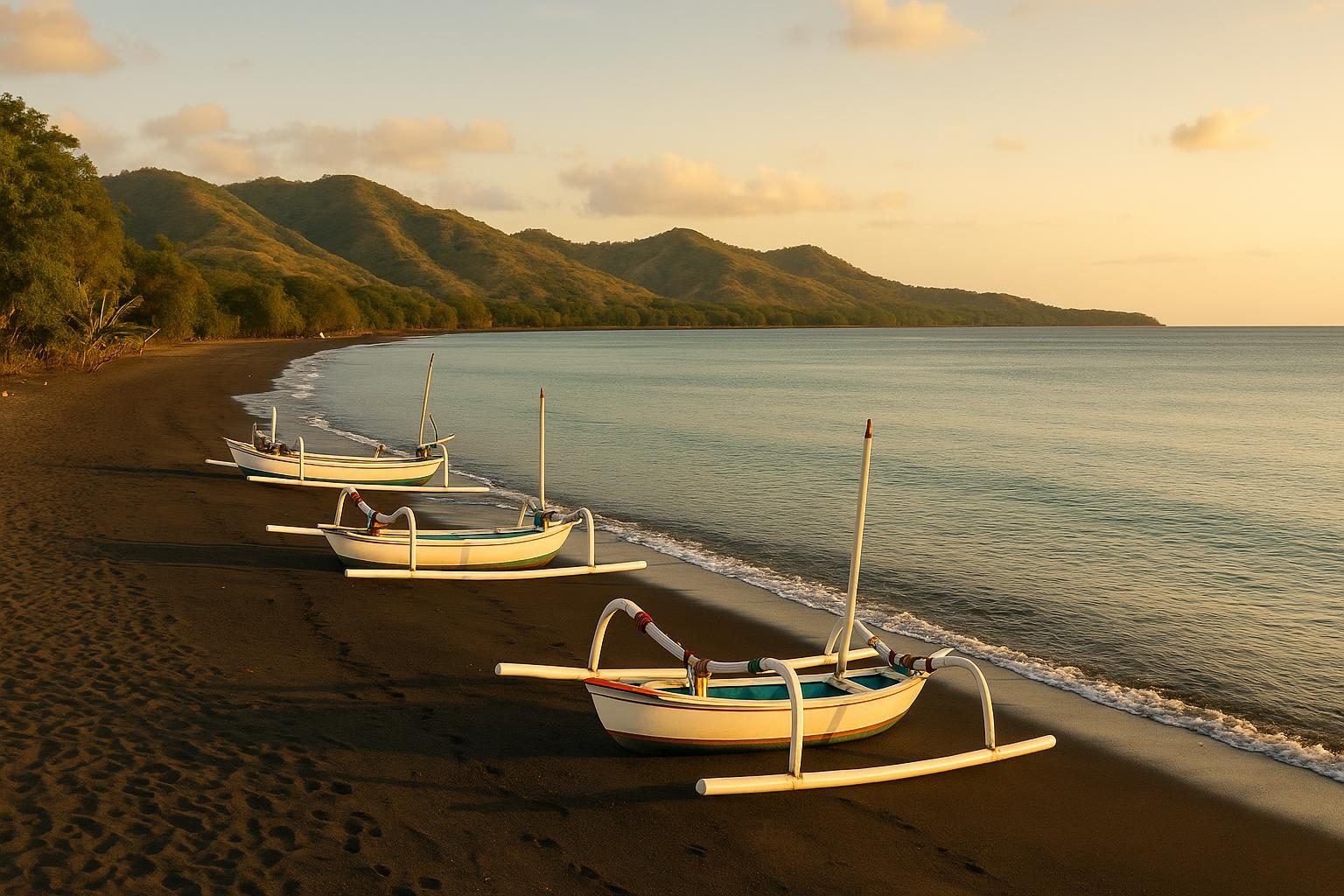
Far from the crowds of Kuta and the Instagram loops of Canggu, the bay of Pemuteran holds a secret that scuba divers and marine biologists travel from across the world to witness. Beneath the calm, glassy surface of northwest Bali's most sheltered bay, a reef is growing at a pace that should not be possible — coral structures that would normally require fifty years to establish have taken shape in less than a decade, electric with colour and teeming with life.
This is the story of the Karang Lestari Biorock Project: the largest coral reef restoration initiative in Asia, and arguably the most successful of its kind on the planet.
What Is Biorock — and How Does It Actually Work?
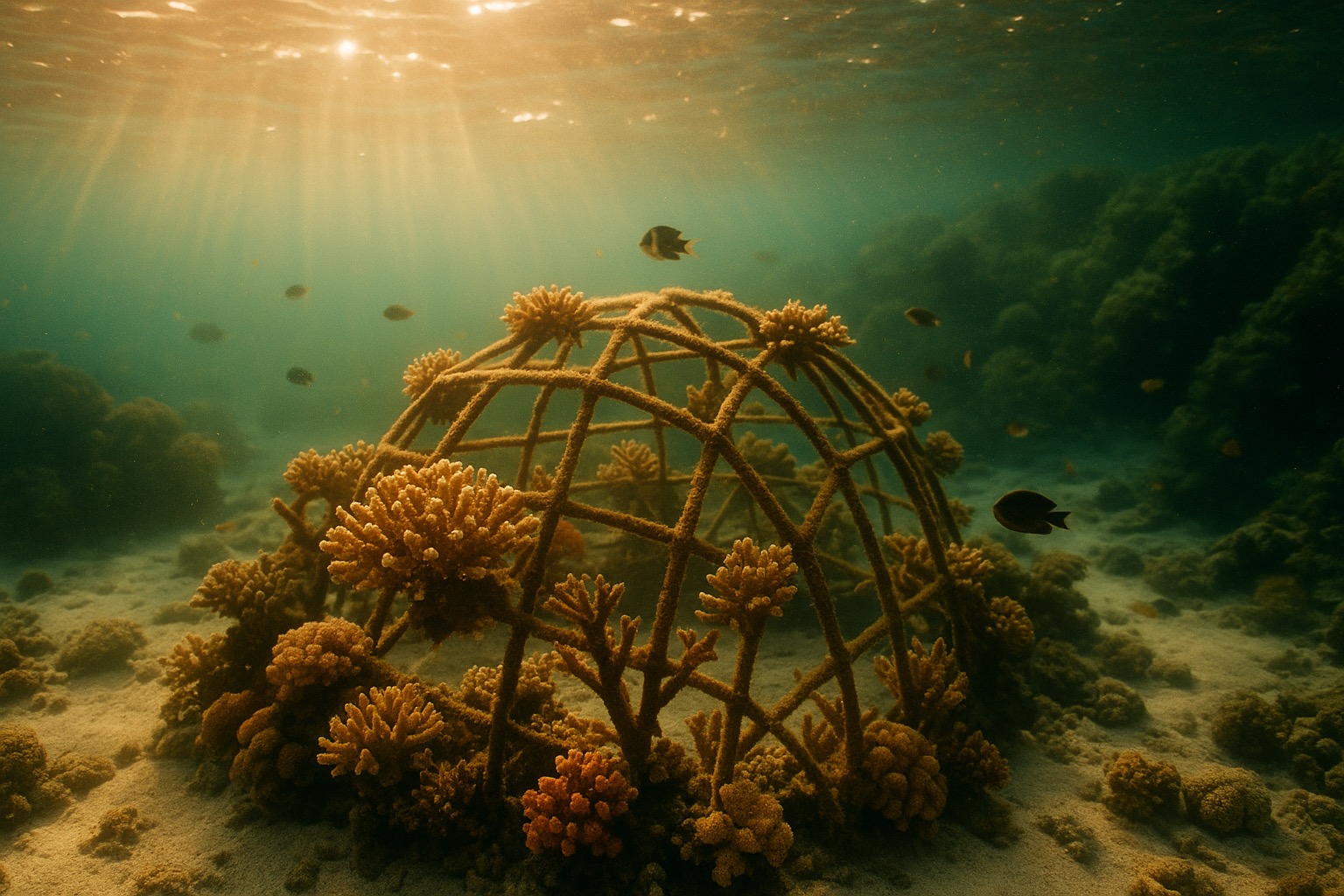
Biorock is not magic, though it looks very much like it from the surface. The technology was pioneered in the 1970s by architect and marine scientist Wolf Hilbertz, later developed in partnership with marine biologist Thomas Goreau. The principle is elegantly simple: pass a low-voltage direct current through seawater via submerged metal structures, and the electrical field triggers the accretion of calcium carbonate — limestone — directly onto the framework.
The result is that the metal structure itself becomes mineral, layered over time with the same material that coral polyps use to build their skeletons. Crucially, coral fragments attached to these structures grow two to six times faster than they would on a natural reef. They are also significantly more resistant to bleaching events caused by elevated sea temperatures — the electric field appears to boost the coral's metabolic function and stress tolerance.
At Karang Lestari, the project began in 2000, initiated by the local community alongside the resort Yayasan Karang Lestari and supported by international NGOs. The bay had been devastated by years of destructive fishing — dynamite blasting and cyanide poisoning had reduced much of the coral to rubble. Where there had once been a thriving ecosystem, there was sand and rock.
The Two Zones of Karang Lestari
The Biorock project in Pemuteran is divided across two primary areas of the bay, each with its own character and density of structures.
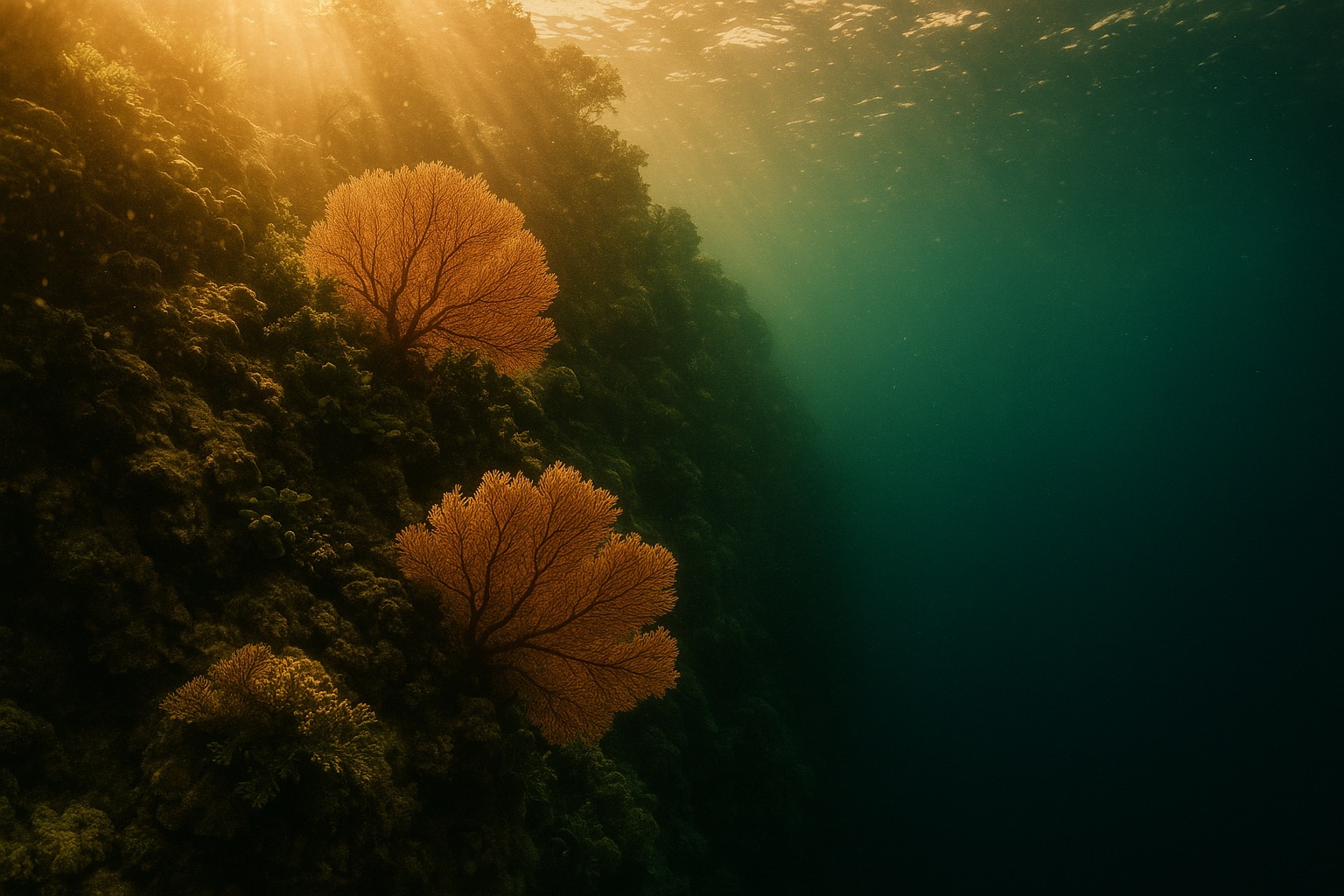
The inner zone, closest to the beach in front of the village's main dive operators, is the more established of the two. Here you will find dozens of Biorock frames — arches, domes, pyramids, spirals — many now so thoroughly encrusted with hard and soft coral that the original metal scaffolding is entirely invisible. Purple sea fans drape over the frames. Brain corals have expanded to the size of armchairs. Table corals stretch their flat canopies wide in the filtered light.
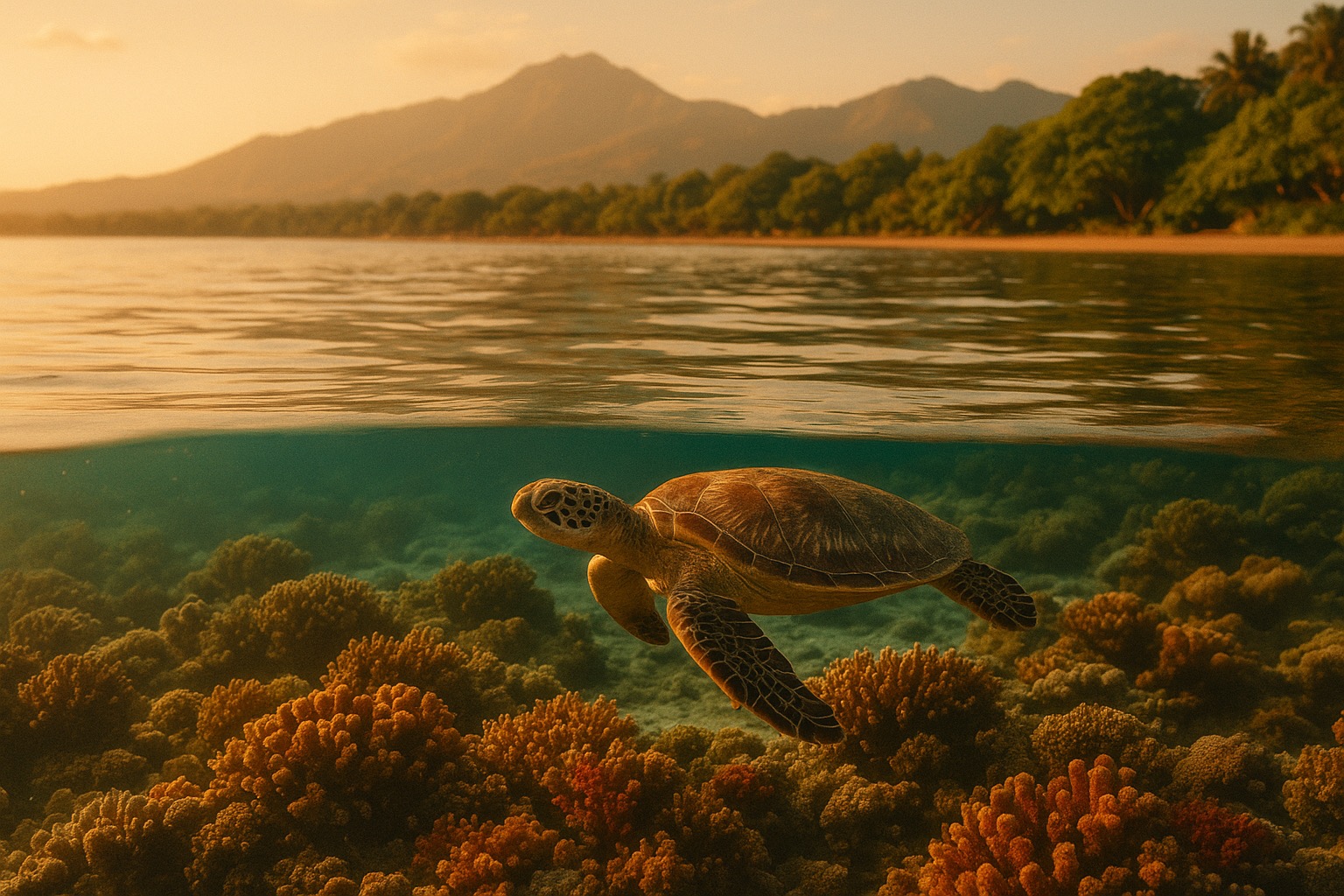
The outer zone extends further into the bay and includes some of the more recently deployed structures. These are newer, the coral growth less dense, but they attract enormous numbers of fish — the structures create shelter and feeding grounds, which in turn draw larger species. You are likely to see white-tip reef sharks resting on the sandy bottom nearby, and green sea turtles are a near-daily sighting at both zones.
Results That Rewrite the Timeline of Recovery
What makes Pemuteran's Biorock reef so remarkable is not simply that it works — it is the scale of what has been achieved relative to time and investment.
Within five years of the first structures being deployed, ecologists recorded coral coverage in the project area that would typically take fifty years of undisturbed natural growth to establish. The reef now supports over 70 species of coral and more than 1,000 species of fish and marine invertebrates. Critically, during the mass bleaching events of 2010 and 2016 — which devastated reefs across Southeast Asia — the Biorock corals showed significantly lower bleaching rates than surrounding natural areas.
For a bay that was largely dead at the turn of the millennium, this is extraordinary.
The Community That Built It
The Karang Lestari project is not an external conservation effort imposed on Pemuteran — it was born from within the community and remains community-led. Village fishermen who once used destructive methods became trained reef guardians. Local families who depended on what the sea provided understood, quickly and practically, that a healthy reef was worth far more alive than extracted.
Today, the project is sustained by a combination of tourism fees, dive operator contributions, and international conservation partnerships. Visitors who snorkel or dive over the Biorock structures contribute directly to maintenance costs — the electricity to power the frames runs continuously, 24 hours a day, and requires reliable funding.
This model — where the economic incentive and the conservation incentive are identical — is what makes Pemuteran's approach replicable. The village has not sacrificed its livelihood for the reef; the reef is the livelihood.
Responsible Tourism: What This Means for Your Visit
When you visit the Biorock reef, you are not simply a spectator. The rules of engagement matter.
Do not touch the coral or the Biorock frames. Even a single contact can fracture years of growth or introduce oils from your skin that inhibit coral polyp function. Buoyancy control is everything here — hovering a metre above the structures rather than kneeling on them is the difference between a visit that helps and one that harms.
Choose an operator that contributes to the project. Most of the dive centres and snorkel operators along the Pemuteran waterfront pay a reef fee that goes directly to Karang Lestari. Ask before you book. The reputable operators — Rocky's Dive Center, Reef Seen Aquatics — will be transparent about this.
Go in the morning. Visibility in the bay is best in the first few hours after dawn, before any afternoon wind chop disturbs the surface. For snorkellers, the light angle between 7am and 10am illuminates the shallower structures beautifully.
Seeing the Reef: Snorkelling vs Diving
You do not need to be a diver to experience the Biorock project — many of the most impressive structures sit in water between one and five metres deep, well within reach of a confident snorkeller. See our guide to snorkelling in Pemuteran for a full overview of what to expect at surface level.
For divers, the experience is deeper and more complete. The outer frames, the transition zones between the artificial structures and the natural reef slope beyond, and the sheer density of fish life at depth are only accessible to those with a tank on their back. The diving guide for Pemuteran and Menjangan covers the full picture.
Why This Matters Beyond Bali
The Pemuteran Biorock project has become a reference point for coral restoration initiatives worldwide. Delegations from the Philippines, the Maldives, Indonesia's eastern islands, and the Caribbean have visited to study the model. The technology is now deployed in over 40 countries.
What Pemuteran demonstrates — quietly, without fanfare, in a village most travellers skip on their way between Ubud and Lombok — is that recovery is possible. That the ocean's capacity to regenerate, when given the right conditions and a small electrical assist, is genuinely astonishing.
The reef at Pemuteran was dead. It is now alive. That is the story worth making the three-and-a-half-hour drive for.