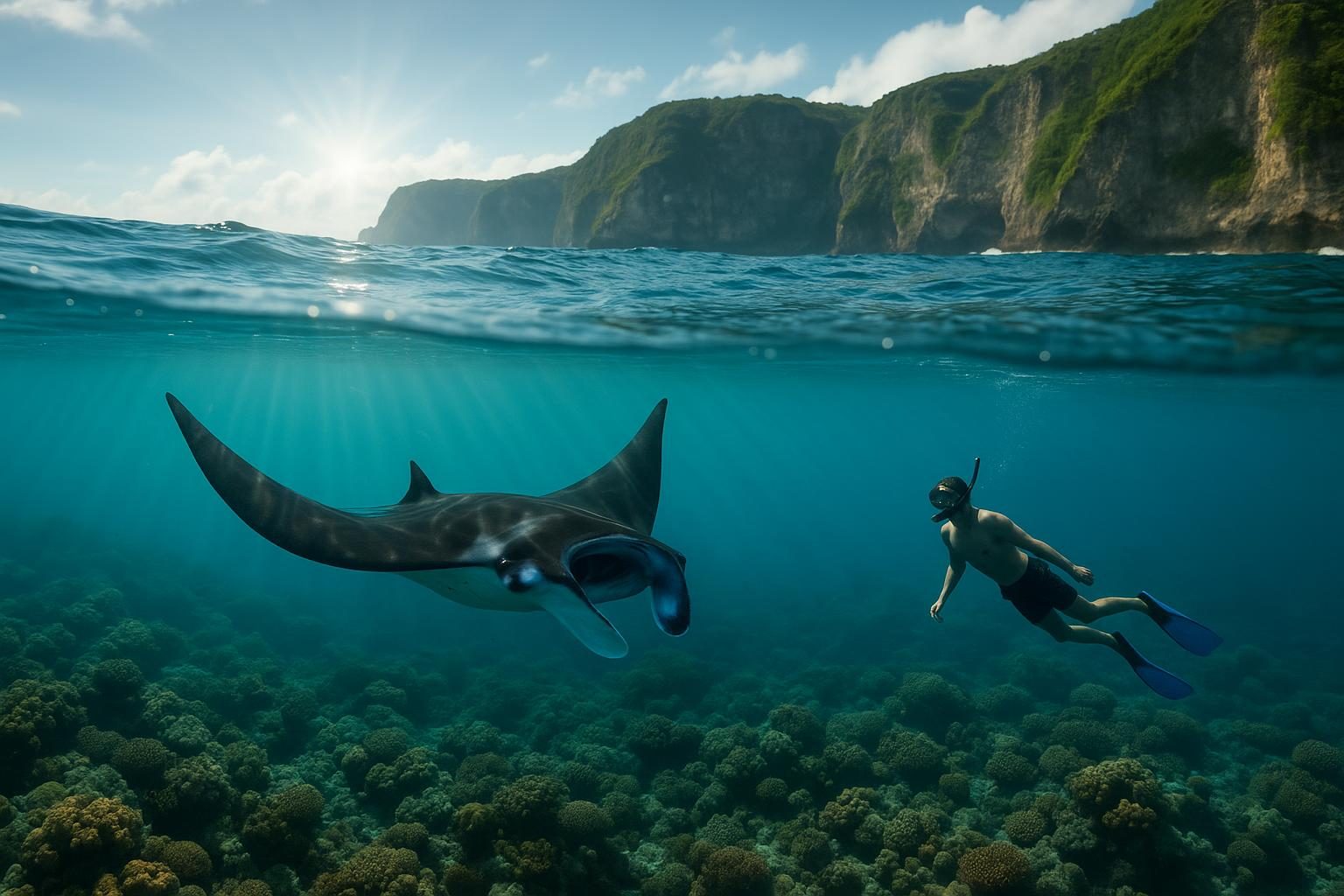
Diving from Sanur: Manta Rays & Mola Mola
Sanur's calm harbour is Bali's easiest launchpad for world-class diving in Nusa Penida. Here's how to get there, what you'll see, and who to dive with.
Most visitors picture Bali diving as a boat ride from busy tourist ports, but Sanur does it differently. This laid-back east-coast town has its own dedicated fast boat terminal, calm launch conditions, and a cluster of long-established PADI dive centers, which makes it one of the easiest places in Bali to go from breakfast to underwater with manta rays in under two hours.
Why Sanur Is Bali's Easiest Dive Base
Sanur sits directly across the strait from Nusa Penida and Nusa Lembongan, and its harbour is sheltered enough that boats run reliably in both the dry and wet seasons. The Sanur Fast Boat Terminal lets passengers board under a covered pier without wading through surf, which is a small detail that makes an early-morning dive trip far less stressful than departures from other parts of the island. Boats operate roughly from 6am to 6pm daily.
Getting to the Dive Sites
Fast boats from Sanur Harbour to Nusa Penida or Nusa Lembongan take about 30 to 45 minutes. One-way tickets are indicative from around IDR 100,000–150,000 depending on the operator and season, and booking a round-trip typically saves against buying two singles. Most dive centers based in Sanur include the boat transfer in their day-trip price, so you rarely need to book the ferry separately if you're diving with them.
What You'll See: Manta Rays and Mola Mola
The reason divers fly in specifically for Nusa Penida is the marine life. Manta Point and Manta Bay have resident reef manta rays that can be seen year-round, often gliding past at cleaning stations just a few metres from divers. The rarer prize is the Mola Mola, or oceanic sunfish, an enormous drifting fish that surfaces from deep water to be cleaned by smaller fish; the generally accepted Mola Mola season runs from July to October, when cooler upwelling currents bring them shallower. Beyond the two headline species, sites like Crystal Bay and Toyapakeh add strong coral cover, reef sharks, and macro life, though currents around Nusa Penida can be brisk and unpredictable, so a guided dive with a briefing is not optional here, it's essential.
Diving With a Local PADI Center
Rather than booking a generic day-trip online, it's worth diving with an operator actually based in Sanur, since they know the current patterns and tide windows around Nusa Penida best. Bali Breizh Divers is a PADI 5 Star IDC dive center on Sanur's quiet shoreline, running everything from discover-scuba pool sessions to full Divemaster and Instructor training, with day trips out to Nusa Penida's manta and Mola Mola sites as well as the USAT Liberty wreck further along the coast. Open Water certification is indicative from around $310, and instruction is offered in multiple languages, which is useful if you're travelling with family members at different experience levels. Other well-regarded Sanur-based operators, such as Two Fish Divers, run similar programs if you want to compare options before booking.
Not Ready to Dive? Start on the Surface
If scuba feels like a big first step, Sanur is a forgiving place to ease into the water. The reef break locals call Baby Reef produces soft, slow waves that are among the most beginner-friendly in Bali, best surfed from mid to high tide and quieter after 9am once the early local crowd clears out. On land, the Sanur Beach Promenade is a flat, shaded, 5km paved path running the length of the coastline, easy to walk or cycle, and a good way to scout the harbour and watch the dive boats come and go before committing to a trip of your own.
Practical Tips
- Book the day before if possible, especially in Mola Mola season (July–October), when dive boats fill up early.
- Bring a light jacket or rash guard for the boat ride; mornings on the water can be cool even when the beach feels warm.
- Currents can be strong around Nusa Penida. If you're a newer diver, say so when booking, most Sanur operators can route you to calmer sites like Toyapakeh instead of the more advanced Manta Point drift.
- Certification takes time. If you want to be Open Water certified before your Nusa Penida day trip, block out three to four days, not one.
- Prices above are indicative and change with season and fuel costs, always confirm the current rate directly with the operator.