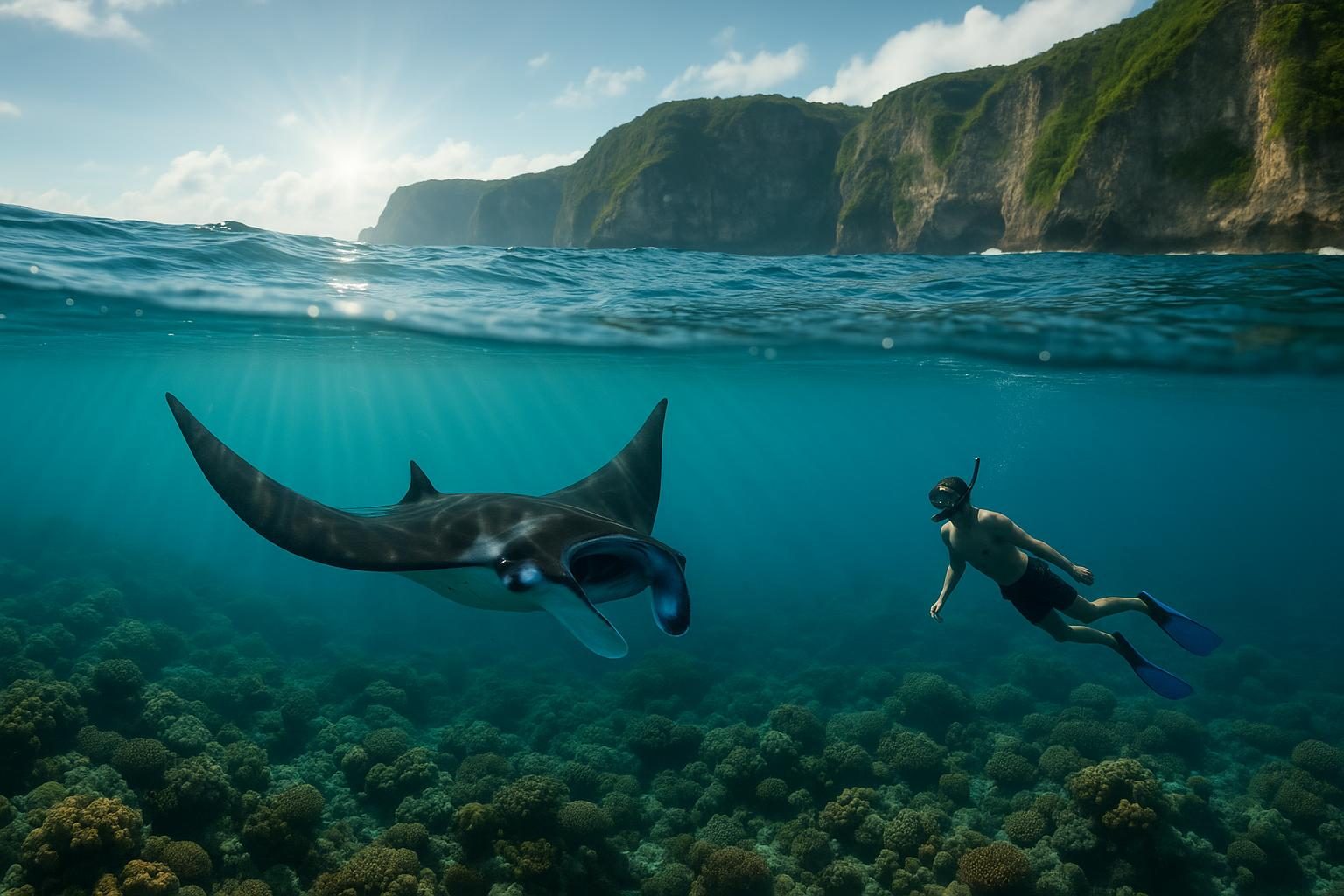
Snorkeling with Manta Rays in Nusa Penida: A Practical Guide
How to snorkel with manta rays at Nusa Penida: Manta Point vs Manta Bay, best season, indicative prices, safety and respect rules.
Gliding beside a manta ray with a wingspan of several metres is one of the few wildlife moments on Bali that really lives up to the hype. Nusa Penida, a short boat ride from the mainland, is one of the most reliable places in Indonesia to see them, and you do not need a scuba licence to try. Here is how to do it well.
Manta Point vs Manta Bay
Two names get mixed up constantly. Manta Point is the open-water cleaning station off the south-west coast, where mantas gather to be groomed by small fish. The water is deeper, more exposed and more likely to be choppy, but sightings are generally better. Manta Bay is a shallower, more sheltered area that many day tours use, and several travel writers describe it as busier with lower odds of a good encounter. Ask your operator which one they actually go to.
What a typical trip looks like
Most snorkel tours leave from the Toyapakeh side of the island in the morning, around 7:30 to 8:00, with a boat ride of roughly 30 to 40 minutes. You then spend about an hour in the water at the manta site. Many itineraries add a second or third stop: Crystal Bay for clearer, calmer snorkelling over coral, and sometimes Gamat Bay or the Toyapakeh wall. Expect to be back on land by late morning.
Mantas are filter feeders with no sting or barb, so they are not dangerous. Operators and visitors report seeing several on a good day, but it is wild animals, so nothing is guaranteed.
When to go
The dry season, roughly May to October, gives the calmest seas, the best visibility and the most comfortable weather. You can snorkel here all year, but the rainy season brings bigger swell, and tours are sometimes changed or cancelled when conditions are poor. Mornings are usually calmer and are the standard departure time.
What it costs (indicative)
Booking directly on Nusa Penida, a shared manta snorkel tour has been quoted at around 250,000 to 350,000 IDR per person, while tours sold through booking platforms or from the mainland are often higher, closer to 500,000 IDR or more. Treat these as indicative only; check what is included (equipment, photos, lunch, transfers) before you compare.
Safety first
This is open ocean, not a swimming pool. The water can be cold, the current can be strong, and in February 2026 a tourist died while snorkelling at Manta Point, which led local police to urge operators to check the health and fitness of guests and visitors to take responsibility for their own condition. Please take that seriously:
- Only go if you are a confident swimmer and comfortable in moving water.
- Wear the life vest or flotation aid your guide offers, especially if you are not a strong swimmer.
- Listen to the briefing and stay with your guide and boat.
- Skip the trip, or accept a change of plan, when the sea is rough or the guide says conditions are not right.
- Tell the crew about any heart, breathing or health issues beforehand.
Respect the mantas
Keep your distance, never touch or chase a manta, do not block its path, and keep your fins away from the reef. Use reef-safe sunscreen or, better, wear a rash guard. Choose operators who give a clear briefing and put animal welfare ahead of the perfect photo.
Want to go deeper?
If snorkelling whets your appetite, certified divers can explore the same waters with a local centre such as Blue Corner Divers. Confident breath-hold fans can look at Freedive Nusa, and if you are short on time, the Nusa Islands Speedboat is one way to reach the islands from Bali.
Practical tips
- Bring a towel, a change of clothes, water, snacks and a waterproof camera or phone case.
- Take motion-sickness tablets if you are prone to seasickness; the crossing can be bumpy.
- Book a few days ahead in high season, and confirm the meeting point and pickup time.
- Combine the trip with land sights such as Kelingking Cliff on another day rather than rushing both.
Seeing a manta glide beneath you is quietly unforgettable. Go in the right season, pick a careful operator, and treat the ocean with the respect it deserves.