Surfing Uluwatu: Bali's World-Class Wave Playground
From gentle Baby Padang to the legendary reef break at The Peak — everything you need to paddle out in Uluwatu, Bali's surf capital.
Uluwatu: Where Bali's Surf Legend Was Born
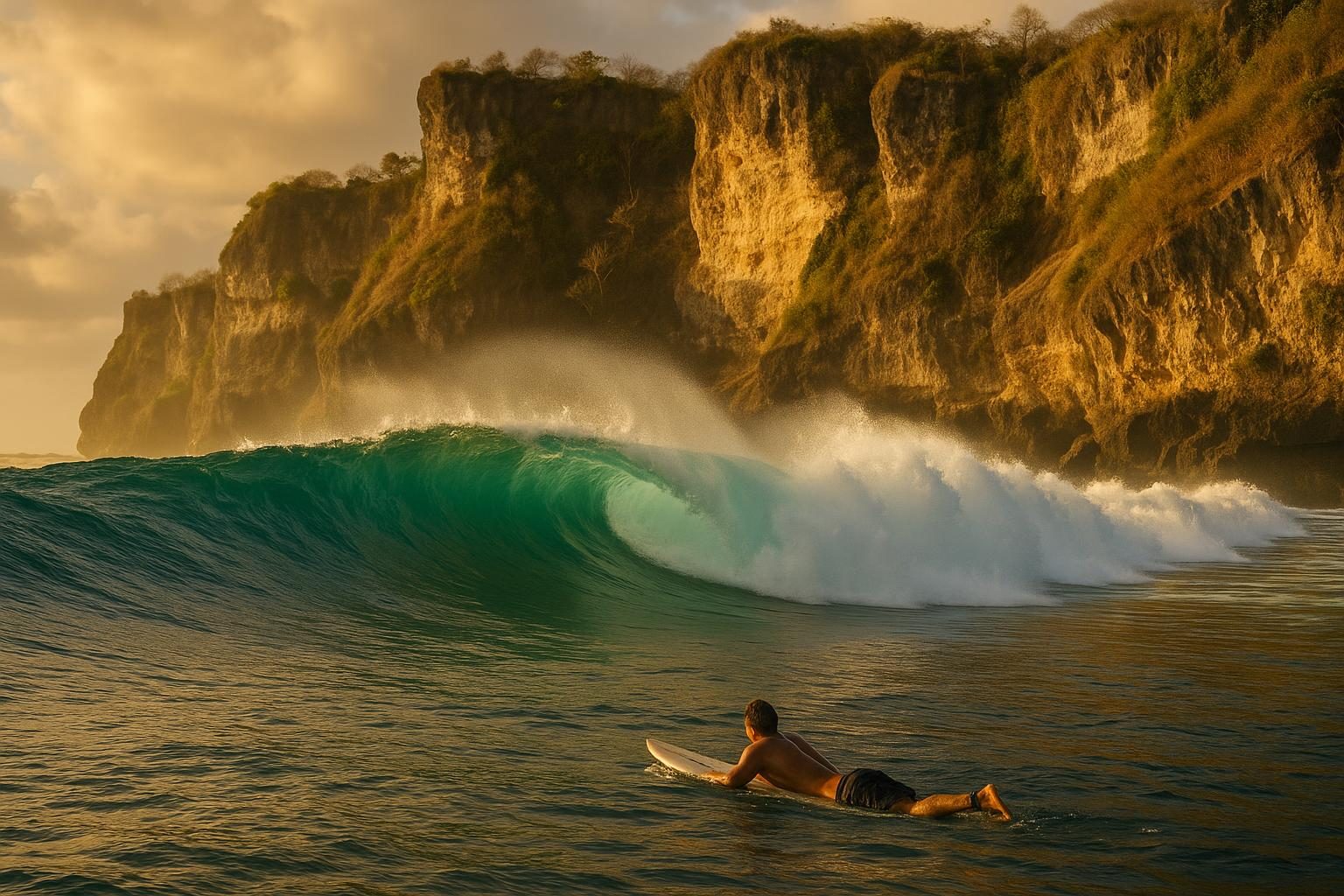
Long before Bali became a household name for travelers, it was already a name whispered among surfers. Uluwatu, perched on the limestone cliffs of the Bukit Peninsula, is where that reputation was built. The break beneath the clifftop temple has been drawing surfers since the early 1970s, and it remains one of the most photographed and most respected waves on the planet. What makes Uluwatu different from a beach break elsewhere in Bali is the setting: you climb down through a cave in the cliff face, paddle out over a shallow reef, and ride a wave that peels for hundreds of meters beneath sheer rock walls.
The Waves: From Baby Padang to The Peak
Uluwatu isn't one wave — it's a string of reef breaks along the same stretch of coast, each with its own character and its own crowd.
The main Uluwatu break itself is split into sections locals call The Peak, Racetrack, Outside Corner and Temple, each firing best at different tide and swell combinations. It's a fast, powerful left that rewards experience — strong currents, a shallow reef, and a serious local lineup mean this isn't the place to learn.
A short walk or boat ride south, Padang Padang offers two very different waves in one bay: Padang Padang Right, nicknamed Baby Padang, is one of the rare mellow, forgiving breaks in the area, with a sandy patch under the reef that makes it genuinely approachable for improving surfers. Padang Padang Left, on the other hand, is a world-class barrel that only shows its full power on bigger swells — June, July and August are when it fires hardest.
Between Bingin and Padang Padang sits Impossibles, a fast, long reef break with open walls that's excellent for carving on a mid-to-large swell, but again not a wave for beginners — the whitewater rolls in relentlessly and the reef sits close to the surface.
Best Time to Paddle Out
Bali's dry season, roughly April to October, is the reliable window for Uluwatu — the southeast trade winds blow offshore and groom the swell into clean, rideable walls. Within that window, June to August brings the year's biggest and most powerful swells, which is when Padang Padang Left and Impossibles turn on at their most spectacular — and most demanding.
If you're newer to surfing or simply prefer smaller, friendlier waves, aim for September to November, when swells ease off and Baby Padang becomes a genuinely good place to build confidence. The wet season (roughly November to March) brings smaller, less consistent surf and more onshore wind, which can actually suit beginners even if it's less exciting for the experienced crowd.
Lessons, Boards and Local Surf Camps
You don't need to arrive with your own board. Board rental around Uluwatu runs roughly 100,000 IDR per day at organized rental shops (indicative — beach-side rentals can run higher), and most shops include a rash guard and reef booties, which are worth wearing regardless of your level given how shallow and sharp the reef gets at low tide.
For lessons, private 2-hour sessions with a local instructor typically run in the range of 400,000–750,000 IDR (indicative, varies by school and season), with equipment included. If you'd rather stay where the waves are, Dreamsea Surf Camp Uluwatu is set up specifically around surf trips, with instructors and board storage on site — a practical base if you're planning several days in the water rather than a single session.
Reef Safety and Local Etiquette
Every break around Uluwatu sits over live coral and sharp limestone, not sand. Reef booties are cheap insurance against cuts, and it pays to learn the paddle-out channels before your first session rather than trying to cross the reef itself. Tides matter too — some sections that are rideable at mid tide become dangerously shallow at low tide.
The lineup at Uluwatu, Bingin and Impossibles is shared with local Balinese surfers and long-term expats who know these waves far better than any visitor will on a first trip. Learning the priority system, waiting your turn, and staying patient goes a long way toward a good session — and a good welcome.
After the Session: Sunset at the Cliffs
Uluwatu's real bonus round happens after you're out of the water. The cliffs along this stretch of coast catch some of Bali's best sunsets, and Sundara Beach Club is a good spot to watch the sky turn over the same water you were just surfing, with a drink in hand and sand-free feet.
Practical Tips
- Getting there: Uluwatu sits on the southern tip of the Bukit Peninsula, roughly 40–60 minutes by car from Kuta or the airport depending on traffic.
- What to bring: reef booties (rent or buy locally), reef-safe sunscreen, and a rash guard for reef protection and sun.
- Respect the cliffs: paths down to the breaks are steep and can be slippery after rain — take your time, especially carrying a board.
- Combine it: many surfers pair an Uluwatu session with a visit to the clifftop temple nearby, timed for late afternoon light and the Kecak fire dance at sunset.
Whether you're chasing a barrel at Padang Padang or just working on pop-ups at Baby Padang, Uluwatu earns its reputation the moment you paddle out. Go with respect for the reef and the lineup, and it tends to be returned.